Can Dogs Eat Cheese? Safe Amounts & Risks
Start here
Yes — most dogs can eat cheese in small amounts, and it makes an excellent training treat. But cheese is high in fat and salt, and many dogs are somewhat lactose intolerant, so too much can cause an upset stomach. Skip it for dogs that are overweight, prone to pancreatitis, or sensitive to dairy, and always keep portions small.
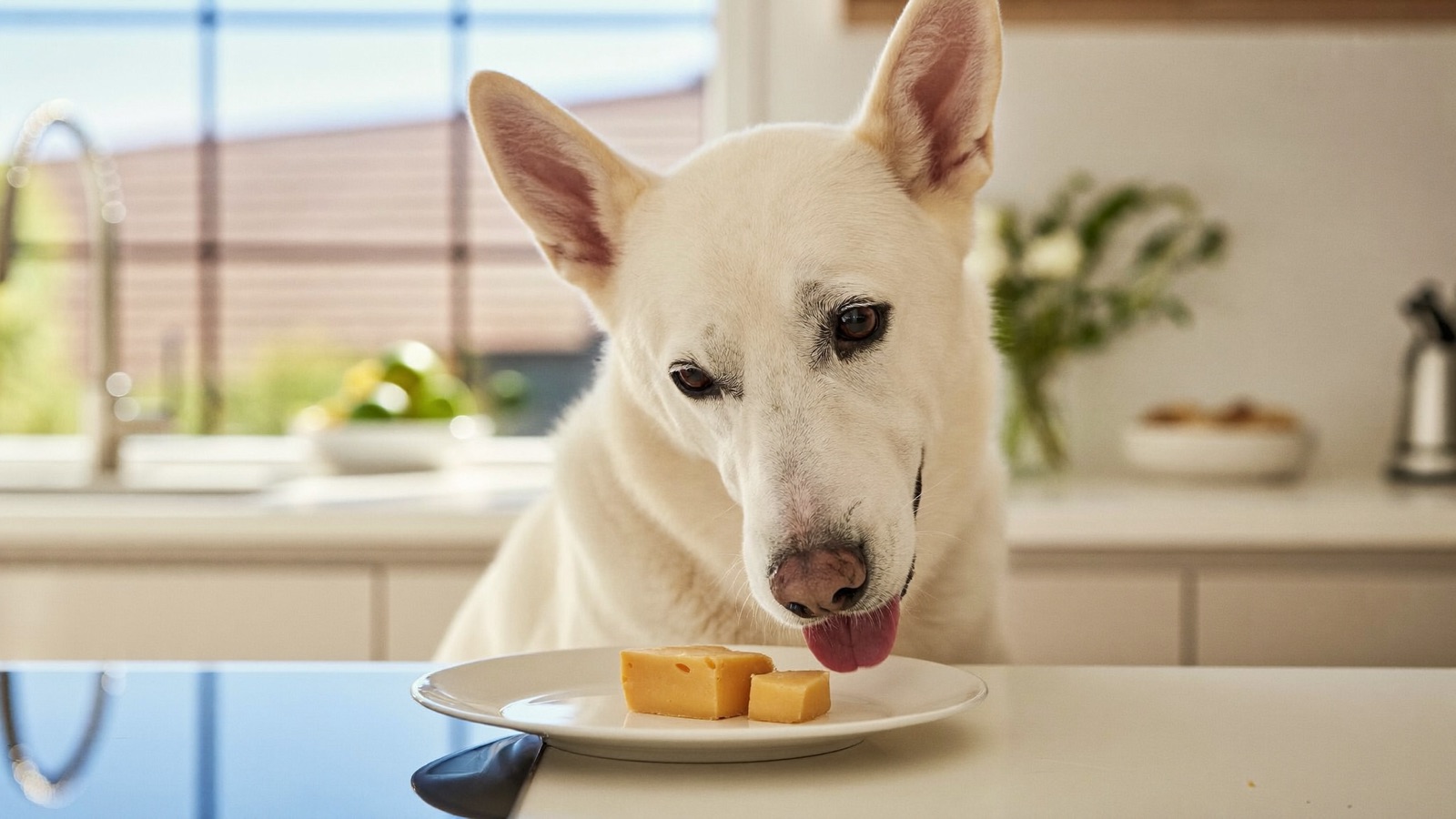
Is cheese safe for dogs?
For most healthy dogs, a small piece of cheese is a safe, tasty treat — and because dogs love it, it's one of the best high-value rewards for training or hiding a pill. Cheese provides protein, calcium and some vitamins.
The catch is that cheese is rich, fatty and salty, and dogs digest dairy less efficiently than we do. That means moderation matters, and cheese is a treat rather than a regular part of the diet.
Lactose and dairy sensitivity
Puppies produce the enzyme lactase to digest their mother's milk, but many dogs make less of it as adults — so they're partially lactose intolerant. A small amount of cheese (which is lower in lactose than milk) is usually tolerated, but larger amounts can cause:
- Gas and bloating
- Loose stool or diarrhea
- Vomiting or general stomach upset
Practical take: Introduce cheese in a tiny amount and watch for digestive upset over the next day before making it a regular treat.
Best and worst cheeses for dogs
Some cheeses are better choices than others:
| Better choices | Avoid or limit |
|---|---|
| Low-fat mozzarella | Blue cheeses (Roquefort, Stilton, Gorgonzola) |
| Plain cottage cheese (low-fat) | High-fat or heavily aged cheeses |
| Small bits of mild cheddar | Cheeses with herbs, garlic or onion |
| Plain string cheese (in moderation) | Very salty or processed cheese products |
Blue-veined cheeses deserve special caution — they can contain a substance (roquefortine C) that some dogs react badly to, causing tremors or worse. And any cheese flavored with garlic or onion is off-limits, since those are toxic to dogs.
How much cheese is okay
Treats, cheese included, should stay within the 10% rule — no more than about 10% of daily calories. In practice that means:
- Small dogs: a few pea-sized pieces at most.
- Medium dogs: a small cube or two.
- Large dogs: a slightly larger piece, still modest.
Choose low-fat options where you can, and count cheese as part of the day's treats, not on top of them.
Which dogs should skip cheese
Cheese isn't a good idea for every dog. Be cautious or avoid it if yours:
- Is overweight or on a diet — cheese is calorie-dense.
- Has had pancreatitis or needs a low-fat diet — the fat can trigger a painful flare.
- Has a dairy sensitivity or gets diarrhea from cheese.
- Is on a sodium-restricted diet for heart or kidney disease.
When in doubt, ask your vet whether cheese fits your dog's overall plan.
Using cheese wisely
Cheese shines as a targeted tool rather than an everyday snack: use a tiny piece to reward a hard-won training moment, or to wrap a pill your dog otherwise refuses. Because it's so appealing, you can use very small amounts and still get a big reaction. Logging new treats and any tummy upset helps you learn exactly how much your individual dog can handle.
Keep tabs on treats and your dog's weight
Tavi tracks your dog's weight and lets you log treats, new foods and any reactions over time — so cheese stays a fun reward without quietly padding the waistline. Free for your first pet.
Frequently asked questions
Is cheese bad for dogs?
Cheese isn't toxic and is safe for most dogs in small amounts, but it's high in fat and salt, and many dogs are somewhat lactose intolerant. Too much can cause stomach upset or weight gain, and it should be avoided in dogs prone to pancreatitis or on low-fat diets.
What kind of cheese can dogs eat?
Low-fat options like mozzarella, plain low-fat cottage cheese, and small bits of mild cheddar are the best choices. Avoid blue cheeses, very high-fat or salty cheeses, and any cheese flavored with garlic or onion, which are toxic to dogs.
Can cheese make dogs sick?
In large amounts or in lactose-sensitive dogs, cheese can cause gas, diarrhea and vomiting. High-fat cheese can also trigger pancreatitis in prone dogs, and blue cheeses may cause tremors in some dogs. Keep portions small and introduce it gradually.
Can I use cheese to give my dog pills?
Yes — a small piece of cheese is a classic and effective way to hide a pill, as long as your dog tolerates dairy and the medication can be given with food. Check with your vet, since a few medications shouldn't be given with dairy or should be taken on an empty stomach.
Can puppies eat cheese?
Puppies generally handle small amounts of cheese well since they still produce lactase, and it can be a useful training treat. Keep portions tiny, choose low-fat cheese, and watch for any digestive upset, as puppy stomachs are sensitive.
Tavi's guides are informational and not a substitute for professional veterinary advice, diagnosis or treatment. When in doubt, call your veterinarian.