Can Cats Eat Dog Food? Why It's Not Enough
Start here
A cat can eat a little dog food occasionally without harm, but it must never be their regular diet. Dog food isn't toxic to cats, so a stolen bite from the dog's bowl is no cause for panic. The problem is nutrition: cats have very different requirements from dogs, and dog food lacks enough taurine, animal protein, arachidonic acid and vitamin A for a cat. Long term, that leads to serious deficiencies.
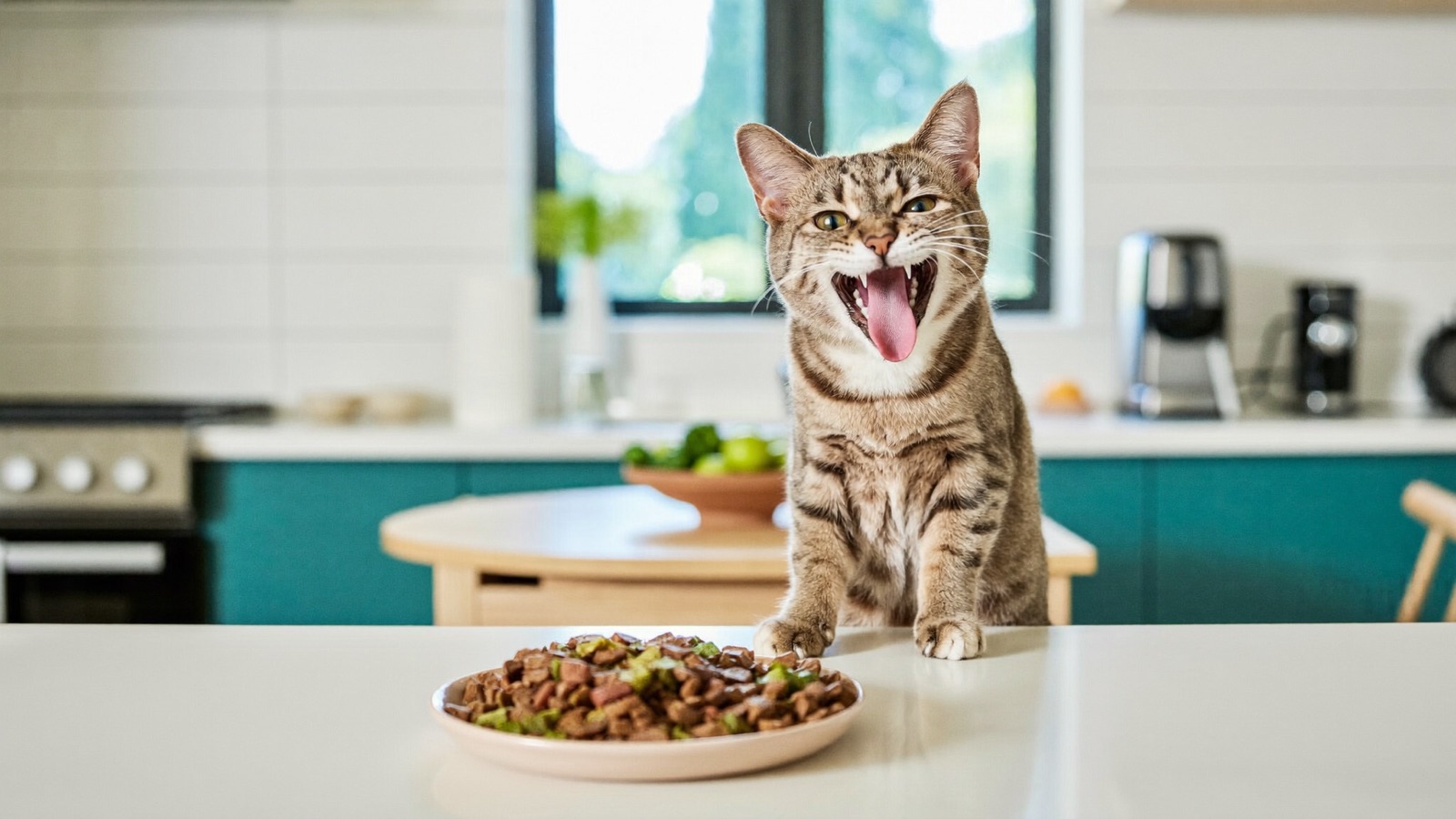
Why cats and dogs need different food
Dogs are omnivores and can thrive on a varied diet. Cats are obligate carnivores — their bodies are built to get essential nutrients only from animal tissue, and they can't make certain nutrients themselves the way dogs can. Cat food is formulated to meet those specific needs; dog food is not.
That's why a bite here and there is harmless, but a steady diet of dog food slowly starves a cat of things they can't live without.
The key nutrients dog food lacks for cats
Several nutrients cats must get from their diet are too low (or absent) in dog food:
| Nutrient | Why cats need it |
|---|---|
| Taurine | An essential amino acid cats can't make enough of; deficiency causes heart disease (dilated cardiomyopathy) and blindness. |
| Animal protein | Cats need more protein than dogs, and from animal sources. |
| Arachidonic acid | A fatty acid cats can't synthesize themselves. |
| Vitamin A (preformed) | Cats can't convert plant beta-carotene into vitamin A like dogs can. |
Practical take: Taurine deficiency is the classic danger — it can cause irreversible heart damage and vision loss if a cat lives on dog food for long.
What happens if a cat eats only dog food
A single meal won't cause these problems, but weeks to months of dog food as the main diet can lead to:
- Taurine deficiency — heart disease and vision loss
- Muscle loss and weakness from inadequate protein
- Poor coat and skin problems
- General malnutrition, weight loss and low energy
These deficiencies develop quietly and some of the damage can be permanent, which is why dog food should never be a cat's regular food.
Managing a multi-pet household
If you have both a cat and a dog, a little planning keeps everyone eating the right food:
- Feed separately — different rooms or different times.
- Put the cat's food up high where the dog can't reach, and pick up bowls after meals.
- Consider a microchip-activated feeder if pets keep raiding each other's food.
- Don't let the dog finish the cat's bowl or vice versa — each needs their own complete diet.
Keep an eye on who's eating what
In a busy multi-pet home it's surprisingly easy to lose track of who's eating what, especially if bowls get shared or a picky cat starts snacking from the dog's dish. If your cat's appetite, weight or energy shifts, having a record of their eating habits helps you and your vet figure out whether nutrition is part of the picture. Logging meals and weight over time turns a vague hunch into something you can actually see.
Track meals and weight in a multi-pet home
Tavi lets you log each pet's food and weight separately, so you can tell who's eating what and catch changes early — even when the cat and dog share a kitchen. Free for your first pet.
Frequently asked questions
Is dog food toxic to cats?
No, dog food isn't toxic to cats, so an occasional stolen bite won't hurt them. The problem is nutritional: dog food doesn't contain enough taurine, animal protein and certain vitamins that cats need, so it can't be a cat's regular diet without causing deficiencies over time.
What happens if a cat only eats dog food?
Over weeks to months, a cat living on dog food can develop serious deficiencies — most notably taurine deficiency, which can cause heart disease and blindness, along with muscle loss, a poor coat and general malnutrition. Some of this damage can be permanent, so dog food should never replace cat food.
My cat ate some dog food — should I worry?
A small amount of dog food on a one-off basis is not dangerous and rarely causes more than mild tummy upset, if anything. Just make sure your cat's regular food is proper cat food, and take steps to keep them out of the dog's bowl going forward.
Can cats and dogs share the same food?
No. Even though a shared bite is harmless, the two species have different nutritional needs, so neither food is complete for the other. Cats especially need more protein and taurine than dog food provides, so each pet should eat food formulated for its own species.
How do I stop my cat and dog eating each other's food?
Feed them separately by room or time, place the cat's food up high where the dog can't reach, and pick up bowls after meals. Microchip-activated feeders that open only for the right pet can help in homes where food-stealing is a persistent problem.
Tavi's guides are informational and not a substitute for professional veterinary advice, diagnosis or treatment. When in doubt, call your veterinarian.