Can Dogs Eat Peanut Butter? Yes, But Check This
Start here
Yes — most peanut butter is safe for dogs in moderation, but you must check the label for xylitol first. Xylitol (sometimes listed as birch sugar) is a sweetener that's harmless to us but deadly to dogs, and some peanut butters contain it. Choose a plain, unsalted, xylitol-free peanut butter, keep it to a small amount, and you have a great high-value treat.
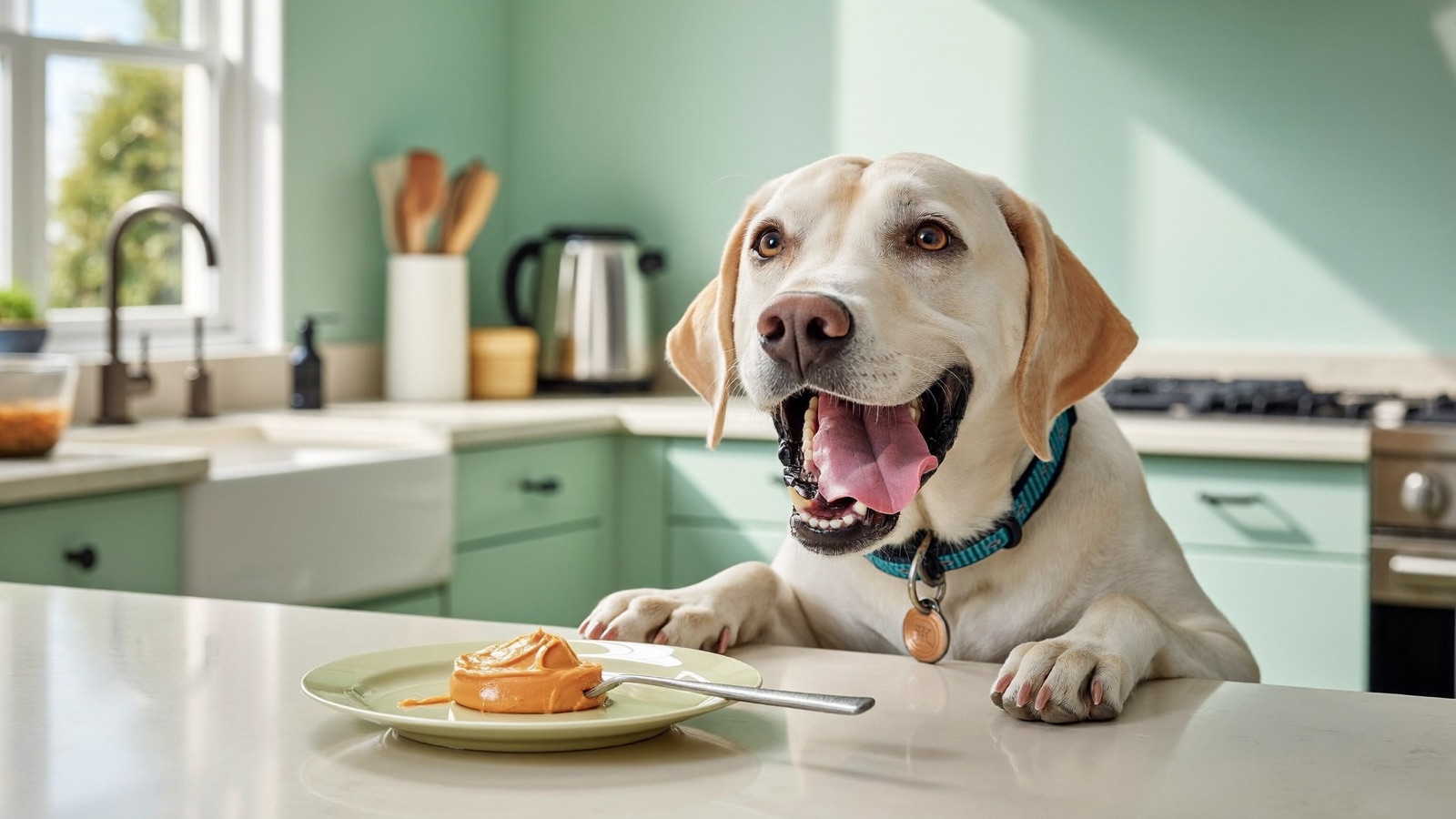
Check the label for xylitol first
Never give your dog peanut butter until you've confirmed it's xylitol-free. Xylitol causes a sudden, dangerous drop in blood sugar and liver failure in dogs — even a small amount can be fatal.
Xylitol may appear on labels as "xylitol" or "birch sugar," and it's most common in "sugar-free," "no sugar added," or diet peanut butters. If your dog eats peanut butter containing xylitol, call your vet or a poison control line (ASPCA Animal Poison Control or Pet Poison Helpline) immediately.
Once you've confirmed the jar is safe, peanut butter is one of the most useful treats you can keep on hand.
Why peanut butter is a good treat
Plain peanut butter offers protein, healthy fats, and vitamins like B and E. More practically, it's high-value and sticky, which makes it perfect for:
- Hiding pills for a dog that won't take medication
- Stuffing a food toy to keep a dog busy
- Distraction during nail trims, baths or vet visits
- Training a tricky new behavior
Because dogs love it so much, a little goes a long way — which is good, because moderation is the whole game with peanut butter.
How much is safe
Peanut butter is calorie-dense and fatty, so treats like it should stay within the 10% rule — no more than about 10% of your dog's daily calories from treats. Rough starting guidance:
| Dog size | Reasonable amount |
|---|---|
| Small (under 20 lb) | About ½ teaspoon |
| Medium (20–50 lb) | About 1 teaspoon |
| Large (over 50 lb) | Up to about 1 tablespoon |
These are ceilings for an occasional treat, not daily targets. If your dog is watching its weight, use less — you can check portions with a dog feeding calculator.
What to avoid
Not all peanut butter is created equal. Steer clear of:
- Anything with xylitol or "birch sugar" — non-negotiable.
- High-salt and high-sugar varieties — go for plain and unsalted.
- Chocolate-swirl or flavored spreads — chocolate is toxic to dogs.
- Overly large amounts — the fat can trigger stomach upset or, in prone dogs, pancreatitis.
Practical take: The safest choice is a peanut butter with a single ingredient: peanuts. Natural, unsalted, xylitol-free.
Which dogs should be careful
Peanut butter isn't ideal for every dog. Be cautious if yours:
- Is overweight or on a weight-loss plan — see is my dog overweight.
- Has a history of pancreatitis or needs a low-fat diet.
- Has a diagnosed food allergy (peanut allergies in dogs are uncommon but possible).
- Has kidney disease or another condition where your vet limits certain nutrients.
When in doubt, check with your vet before adding a new regular treat.
Serving it safely
Introduce peanut butter in a small amount the first time and watch for any digestive upset over the next day. Smear a thin layer inside a rubber toy, use a dab to hide a pill, or freeze a stuffed toy for a longer-lasting treat. If your dog gets loose stools or vomiting, cut back or stop. Logging new foods and any reactions makes it easy to tell what agrees with your dog and what doesn't.
Keep treats from quietly adding up
Tavi tracks your dog's weight and lets you note treats, new foods and any reactions over time — so you can enjoy peanut butter without the extra calories sneaking up. Free for your first pet.
Frequently asked questions
Is peanut butter safe for dogs?
Yes, plain peanut butter is safe for most dogs in moderation, as long as it doesn't contain xylitol. Choose an unsalted, xylitol-free variety and keep portions small. Always check the label before sharing.
What kind of peanut butter is bad for dogs?
Avoid any peanut butter containing xylitol or 'birch sugar,' which is toxic to dogs, as well as chocolate-flavored spreads and high-salt or high-sugar varieties. The safest option is a natural peanut butter made only from peanuts.
How much peanut butter can I give my dog?
Keep it within the 10% treat rule — roughly half a teaspoon for small dogs, a teaspoon for medium dogs and up to a tablespoon for large dogs, and only occasionally. It's fatty and calorie-dense, so less is better if your dog is watching its weight.
What should I do if my dog ate peanut butter with xylitol?
Treat it as an emergency and call your vet or a poison control line immediately. Xylitol can cause a dangerous blood-sugar crash and liver failure quickly, so don't wait for symptoms. Bring the jar so the amount can be assessed.
Can puppies eat peanut butter?
A tiny amount of plain, xylitol-free peanut butter is generally fine for puppies as an occasional treat, but their calorie needs and stomachs are more sensitive. Introduce it in small amounts and check with your vet, especially if your puppy has a sensitive tummy.
Tavi's guides are informational and not a substitute for professional veterinary advice, diagnosis or treatment. When in doubt, call your veterinarian.