Can Dogs Eat Popcorn? Plain Only, No Butter
Start here
Yes — plain, air-popped popcorn is safe for dogs in small amounts. It's low in calories when unbuttered and unsalted. The problems come from toppings (butter, salt, oil, caramel) and from unpopped or partially popped kernels, which can choke a dog or crack a tooth. Keep it plain and occasional.
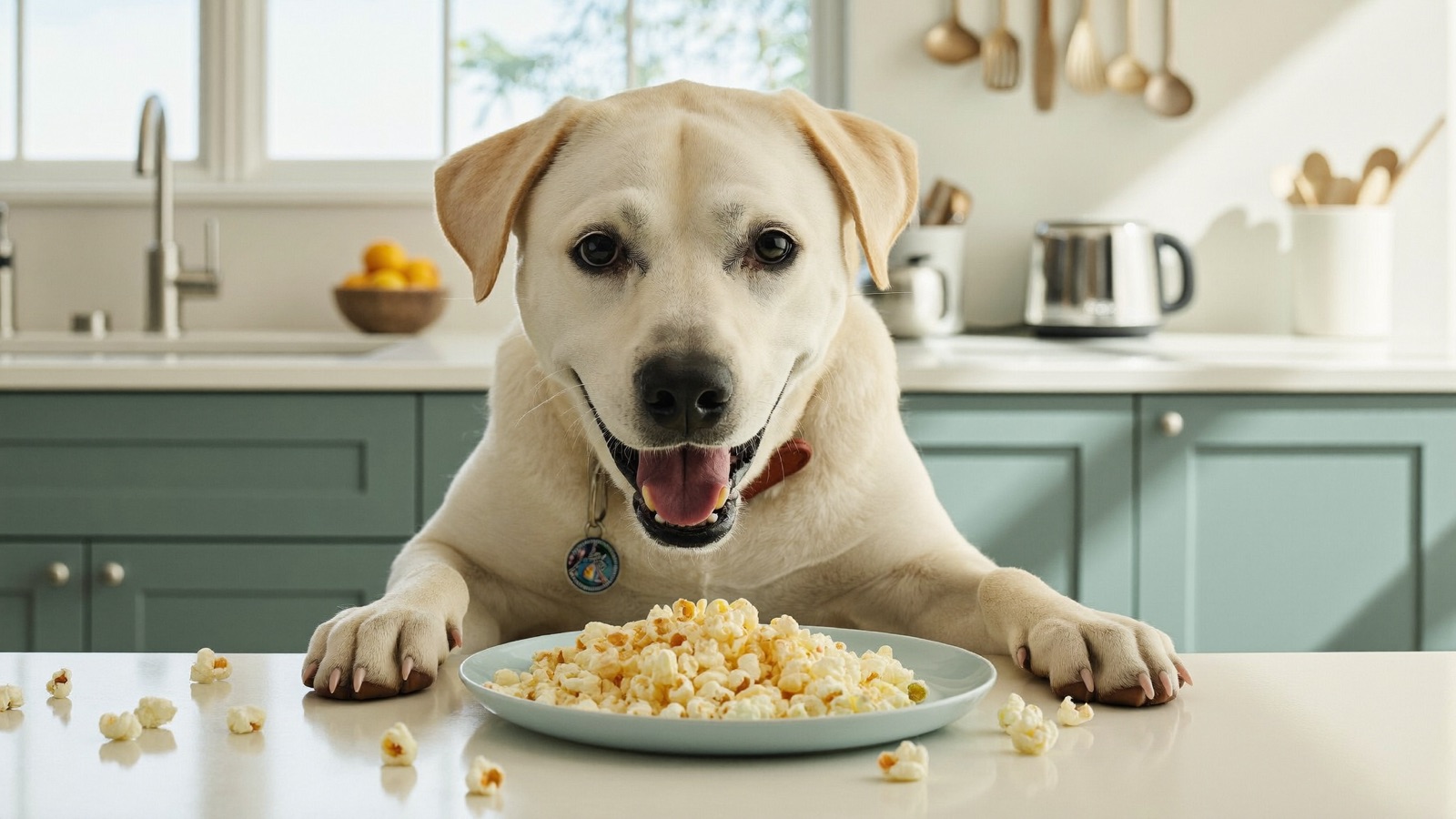
Is popcorn OK for dogs?
Popcorn itself — the fully popped, plain kernel — isn't toxic to dogs, and plain air-popped popcorn is a low-calorie, whole-grain snack that most dogs can enjoy in moderation. It even contains small amounts of minerals like magnesium and fiber.
The trouble is that popcorn is rarely served plain. The butter, salt, oil and sugary coatings that make it tasty for people are exactly what make it unhealthy for dogs.
Skip the butter, salt and flavorings
Loaded popcorn can cause real problems:
- Butter and oil add fat that can upset the stomach and, over time, contribute to weight gain or pancreatitis.
- Salt in large amounts is unhealthy for dogs.
- Caramel, kettle corn and sugary coatings pile on sugar.
- Cheese, garlic and "movie theater" flavorings often contain ingredients like garlic or onion powder that are toxic to dogs.
Practical take: If you want to share, pop a small batch plain and air-popped — no butter, no salt, nothing added.
Watch for unpopped kernels
Unpopped and half-popped kernels are the biggest hazard. The hard kernels can crack a tooth, get lodged in the throat as a choking risk, or wedge between teeth or gums. Before sharing, pick out every hard or partially popped piece, and give only fully popped, fluffy popcorn.
Feed a few pieces at a time rather than letting your dog gulp a handful, especially for small dogs and fast eaters.
How much popcorn can a dog have?
Popcorn is a treat, not a meal — keep it to about 10% of daily calories, which for most dogs means just a few pieces:
| Dog size | Reasonable amount |
|---|---|
| Small (under 20 lb) | A few plain popped pieces |
| Medium (20–50 lb) | A small handful |
| Large (over 50 lb) | A small handful |
It's an occasional snack, not a daily habit — the calories and any added fat add up faster than you'd think.
When to skip popcorn
Some dogs are better off without it:
- Dogs prone to pancreatitis or on low-fat diets — even a little buttery popcorn is risky.
- Overweight dogs — choose a lower-cal veggie treat instead.
- Dogs with dental issues or small breeds — extra care with kernels and choking.
If treats like popcorn are a regular part of your dog's day, logging them alongside weight helps you catch creeping weight gain before it becomes a problem.
Keep treats from quietly adding pounds
Tavi charts your dog's weight and lets you log treats and snacks, so you can see when the extras start to add up and adjust before it shows on the scale. Free for your first pet.
Frequently asked questions
Can dogs eat buttered popcorn?
It's best avoided. The butter, oil and salt add fat and sodium that can upset the stomach and, over time, contribute to weight gain or pancreatitis. If you want to share popcorn, give plain air-popped pieces with nothing added.
Is popcorn bad for dogs' teeth?
Fully popped plain popcorn is soft, but unpopped or half-popped kernels are hard and can crack a tooth or get stuck between teeth and gums. Always remove hard kernels and feed only fully popped, fluffy pieces.
How much popcorn can I give my dog?
Just a few plain popped pieces as an occasional treat, keeping all treats to about 10% of daily calories. Popcorn shouldn't be a daily snack, and the amount should be smaller for small dogs.
Can popcorn make dogs sick?
Plain air-popped popcorn rarely causes problems in small amounts. Sickness usually comes from buttery, salty or sugary toppings, flavorings containing garlic or onion, or from choking on unpopped kernels. Keep it plain and remove hard kernels to avoid these issues.
Can puppies eat popcorn?
It's safest to wait and stick to puppy-appropriate foods. Puppies are more prone to choking and their nutrition should come from a complete puppy diet. If you do share, offer only a piece or two of plain popped popcorn and check with your vet.
Tavi's guides are informational and not a substitute for professional veterinary advice, diagnosis or treatment. When in doubt, call your veterinarian.