Is My Dog Overweight?
Start here
You can check at home in about a minute: feel for the ribs, look for a waist from above, and look for a belly tuck from the side. If the ribs are hard to feel and the waist has disappeared, your dog is likely overweight. Your vet confirms it with a 9-point body condition score.
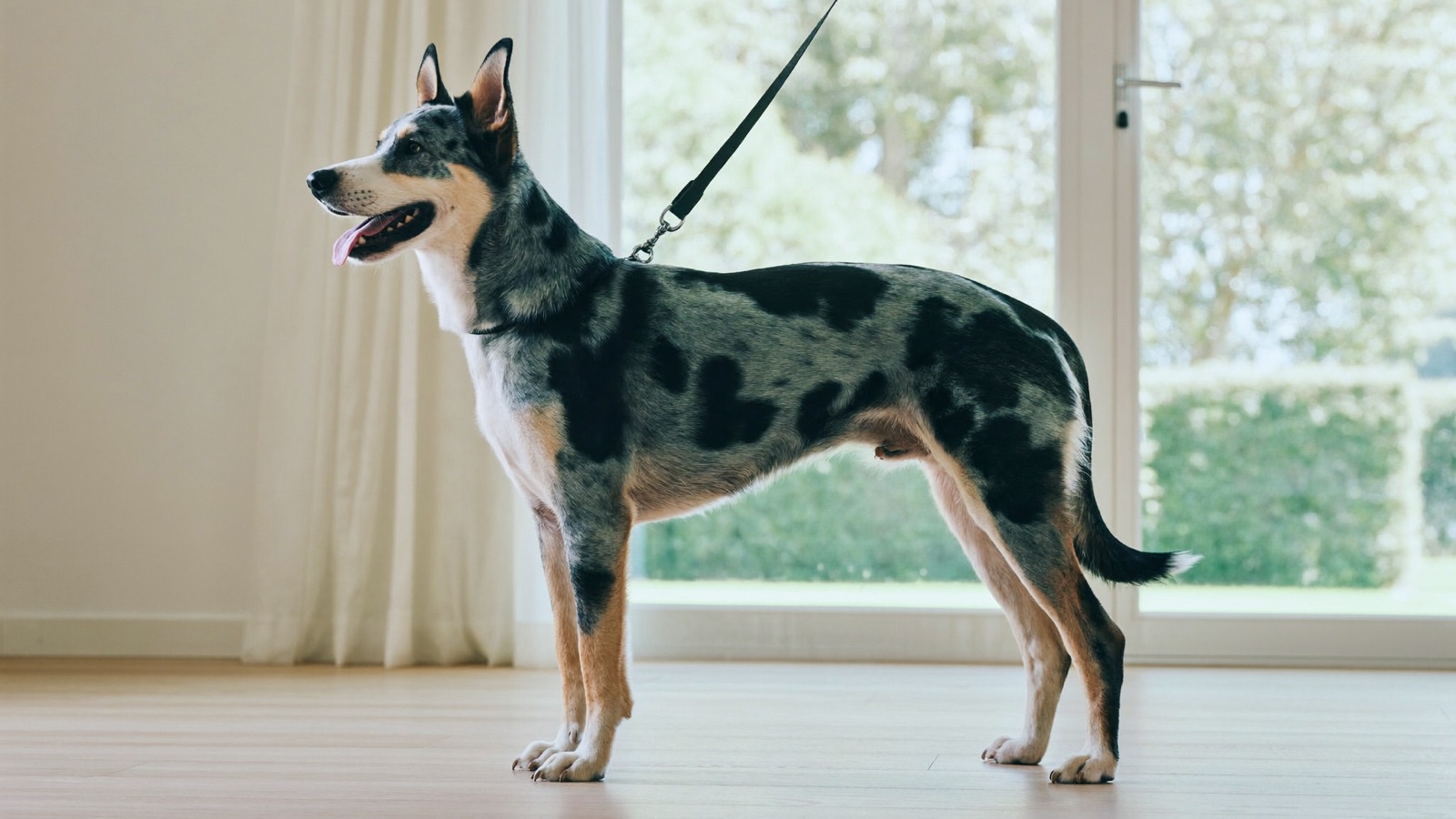
Extra weight is the most common preventable health problem in dogs, and it creeps up so slowly that it is easy to miss. The good news: you do not need a scale to spot it. A quick hands-on check tells you far more than the number of kilograms your dog weighs.
The 60-second overweight test
Vets judge weight by body shape and feel, not by the scale alone, because a healthy weight depends entirely on breed and frame. Run through these three checks with your dog standing:
- Ribs (feel): Run your hands along both sides of the chest with light pressure. In an ideal dog you can feel each rib easily under a thin layer of fat — much like feeling the bones on the back of your hand. If you have to press to find them, there is too much fat over them.
- Waist (look from above): Stand over your dog and look down. You should see the body narrow to a visible waist behind the ribs, giving a gentle hourglass shape. A straight or bulging outline suggests extra weight.
- Belly tuck (look from the side): Crouch to your dog's level. The belly should slope up from the bottom of the ribcage toward the hips. If it hangs level or sags down, that points to excess fat.
The 9-point body condition score, explained
The body condition score (BCS) is the standard tool vets use, most commonly a 9-point scale developed and endorsed by groups like the World Small Animal Veterinary Association (WSAVA) and used in the AAHA weight guidelines. A 4 to 5 out of 9 is ideal. Here is what each band feels and looks like:
| Score (/9) | Category | What you feel and see |
|---|---|---|
| 1–2 | Too thin | Ribs, spine and hip bones visible from a distance with no fat cover; obvious loss of muscle. Needs veterinary attention. |
| 3 | Underweight | Ribs easily felt and may be visible; tops of the spine bones show; waist and tuck very pronounced. |
| 4 | Lean / ideal | Ribs easily felt with minimal fat; waist clearly visible from above; belly tuck obvious from the side. |
| 5 | Ideal | Ribs felt without pressing, under a thin fat layer; waist visible behind the ribs; belly neatly tucked up. |
| 6 | Overweight | Ribs felt with slight difficulty under a little extra fat; waist visible but not obvious; tuck still present. |
| 7 | Overweight | Ribs hard to feel under a heavy fat layer; fat deposits over the lower back and tail base; waist absent or barely there; little or no tuck. |
| 8–9 | Obese | Ribs cannot be felt or only under firm pressure; heavy fat over the back, tail base and chest; no waist; belly rounded and distended. |
Some clinics use an older 5-point scale instead — on that version, 3 out of 5 is ideal. Either way the checks are the same; only the numbering differs. Ask your vet which scale they use so your notes match theirs.
Why extra weight matters
Overweight is not just a cosmetic issue. Carrying too much fat is linked to a range of serious problems, and surveys by the Association for Pet Obesity Prevention (APOP) suggest more than half of dogs in the US are overweight or obese. The health toll can include:
- Joint disease and arthritis — extra load wears joints and worsens pain; weight loss is one of the most effective ways to ease it.
- Diabetes and other hormonal problems.
- Heart and breathing strain, reduced stamina and heat intolerance.
- Higher anaesthetic and surgical risk.
- Some cancers and a generally weakened quality of life.
- A shorter life. A well-known lifetime study of Labrador littermates found dogs kept lean lived a median of around two years longer than those fed more freely.
The encouraging flip side is that dogs respond quickly. Even losing a small percentage of body weight can visibly improve mobility, energy and comfort.
What to do if your dog is overweight
Do not crash-diet your dog. Sudden, severe calorie cuts can cause muscle loss and nutritional gaps, and in some cases rapid weight loss is dangerous. Instead:
- Confirm with your vet. They will score your dog, rule out medical causes (such as an underactive thyroid), and set a realistic target weight.
- Measure meals precisely — weigh food on a kitchen scale rather than scooping, and account for treats, which should stay under about 10% of daily calories.
- Increase gentle activity gradually, tailored to your dog's joints and fitness.
- Track the trend. Re-check body condition and weight every few weeks so you are adjusting to a pattern, not a single reading.
Track your dog's weight and body condition
Tavi lets you log weigh-ins and body condition over time, so you can see the trend and catch drift early instead of guessing. Free for your first pet.
How to weigh your dog at home
The scale is best used for tracking a trend, not for a one-off verdict. To weigh at home:
- Small dogs: weigh yourself on a bathroom scale, then weigh yourself again holding your dog, and subtract the difference.
- Larger dogs: most veterinary clinics keep a walk-on scale in the waiting room and are happy for you to pop in and use it — a quick, free weigh-in with no appointment.
- Be consistent: use the same scale, ideally at the same time of day, and record the figure about once a month. Pair it with the body-condition check so you are watching both shape and numbers.
Frequently asked questions
How can I tell if my dog is overweight?
Do the three-part hands-on check. Feel along the ribs — you should feel them easily under a thin layer of fat. Look from above for a waist that narrows behind the ribs. Look from the side for a belly that tucks up. If ribs are hard to find and the waist has disappeared, your dog is likely carrying extra weight.
What is a body condition score for dogs?
A body condition score (BCS) is a standardised way vets rate how much fat a dog carries, most often on a 9-point scale. A score of 4 to 5 out of 9 is ideal, 6 is overweight, and 7 to 9 indicates increasing obesity. It is more useful than the scale alone because it reflects body shape, not just kilograms.
What number on the scale means my dog is overweight?
There is no single number — a healthy weight depends entirely on breed and frame, so 30 kg is lean for one dog and obese for another. Use body condition to judge shape, then track the scale over time. A steady upward trend without a lifestyle change is the signal to act.
Why is being overweight bad for my dog?
Extra weight is linked to arthritis and joint pain, diabetes, heart and breathing strain, higher anaesthetic risk, some cancers and a shorter life. A well-known lifetime study found dogs kept lean lived noticeably longer than their overweight littermates. Even modest weight loss can ease joint pain and improve energy.
How do I weigh my dog at home?
For small dogs, weigh yourself on a bathroom scale, then weigh yourself holding the dog and subtract the difference. For larger dogs, most veterinary clinics have a walk-on scale you can use for free. Weigh on the same scale about once a month and record the trend.
My dog looks fine but the vet says overweight — who is right?
Overweight has become so common that many owners now see it as normal, so a rounder dog can look right even when it is not. Your vet assesses by feel using body condition scoring, which is more reliable than eye alone. Trust the hands-on check and ask your vet to show you where your dog sits.
Tavi's guides are informational and not a substitute for professional veterinary advice, diagnosis or treatment. Body condition is a guide, not a diagnosis — always confirm your dog's weight target and any diet change with your own veterinarian, especially if weight is changing quickly or your dog has a health condition. Sources include the World Small Animal Veterinary Association (WSAVA), the American Animal Hospital Association (AAHA), the Association for Pet Obesity Prevention (APOP), the Merck Veterinary Manual, PetMD and Preventive Vet.