How Much to Feed Your Dog
Start here
There's no single number — the right amount depends on your dog's weight, age, activity and whether they're neutered. Start with the feeding guide on your food's label matched to your dog's ideal weight, split it across meals, then adjust every few weeks using body condition. Confirm with your vet.
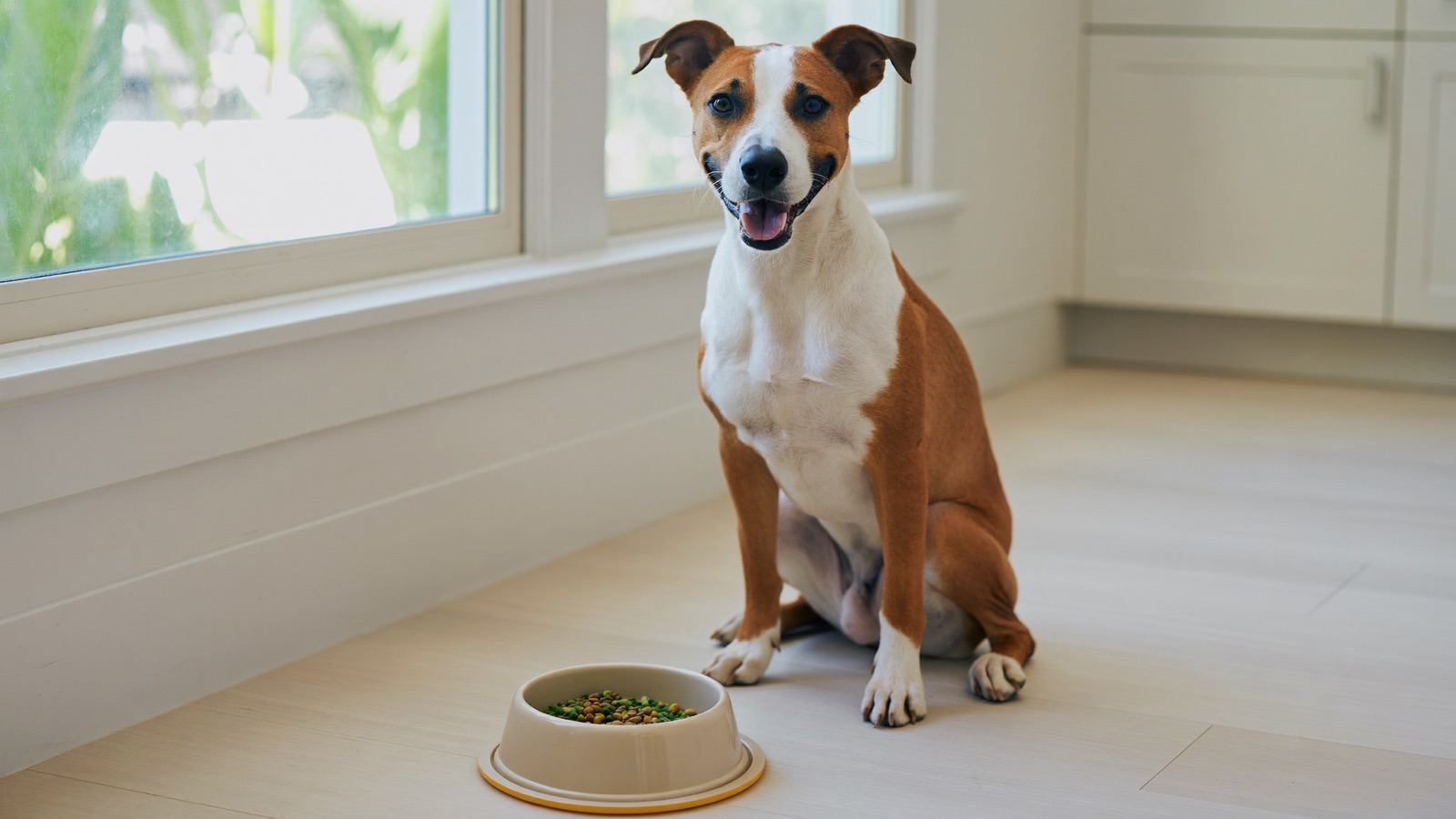
Feeding charts are a great starting point, but no chart knows your individual dog. The reliable approach is: begin with a sensible amount, then let your dog's body condition and weight trend fine-tune it over time.
What actually decides how much your dog needs
Two dogs of the same weight can need noticeably different amounts. The main drivers:
- Ideal body weight — feed for the weight your dog should be, not necessarily their current weight if they're over or under.
- Age and life stage — growing puppies need more calories per kilogram; seniors often need fewer.
- Activity level — a working or highly active dog can need considerably more than a couch companion.
- Neuter status — neutered dogs typically need fewer calories and gain weight more easily.
- Body condition — the single best real-world check (see below).
- The food itself — calorie density varies a lot between products, which is why cups-per-day only makes sense alongside the specific food's guide.
- Health conditions and treats — some conditions change needs; treats should stay under about 10% of daily calories.
How to read your food's feeding guide
Every complete dog food carries a feeding guide, usually a table of daily amounts by weight (and sometimes by age). To use it well:
- Find the row for your dog's ideal weight, not just today's weight.
- Note whether the figure is a daily total — you then divide it across the day's meals.
- Check the units. Grams (weighed on a kitchen scale) are far more accurate than cups, which vary with kibble size and scooping.
- Treat the range as a starting estimate. Label guides are averages based on an active, unneutered dog, so many pets need somewhat less.
- If you switch foods, recheck the amount — calorie content differs, so the same weight of a new food isn't the same number of calories.
Meals per day by age
| Life stage | Typical meals per day | Notes |
|---|---|---|
| Puppy, under 4 months | 3–4 | Small, frequent meals of a complete growth diet |
| Puppy, 4–12 months | 3 | Gradually reduce frequency as they grow |
| Adult (roughly 1–7 years) | 2 | Two meals ~12 hours apart suits most dogs |
| Senior (roughly 7+ years) | 2 | Often slightly fewer calories; watch weight closely |
Feeding chart by weight (general estimates)
The ranges below are rough daily totals for a typical adult dog at maintenance on a standard dry food, before splitting into meals. They're deliberately wide because the right amount depends on the food's calorie content and your individual dog.
| Dog ideal weight | Approx. dry food per day | Best split as |
|---|---|---|
| 2–5 kg (5–11 lb) | ~⅓–¾ cup | 2 meals |
| 5–10 kg (11–22 lb) | ~¾–1¼ cups | 2 meals |
| 10–15 kg (22–33 lb) | ~1¼–1¾ cups | 2 meals |
| 15–25 kg (33–55 lb) | ~1¾–2½ cups | 2 meals |
| 25–35 kg (55–77 lb) | ~2½–3¼ cups | 2 meals |
| 35–45 kg (77–99 lb) | ~3¼–4 cups | 2 meals |
| 45 kg+ (99 lb+) | ~4+ cups | 2 meals |
Get a portion tailored to your dog
The Tavi dog feeding calculator estimates daily food from your dog's weight, age, activity and neuter status — then you can save it and get reminders as they grow. Free for your first pet.
Adjust using body condition, not just the chart
The most reliable feedback loop is your dog's own body. Vets use a body condition score (BCS), and you can do a simplified version at home:
- Ribs: you should feel them easily under a thin layer of fat, without pressing hard — like the back of your hand.
- Waist from above: a visible tuck-in behind the ribs.
- Profile from the side: the belly should tuck up, not hang level or sag.
If ribs are hard to find and the waist has vanished, your dog is likely carrying too much — reduce the daily amount by around 10% and recheck in a few weeks. If ribs, spine and hips are sharply visible, feed a little more and check with your vet, since weight loss can also signal illness. Make changes gradually and weigh regularly so you're adjusting to a trend, not a single day.
Puppy vs adult vs senior
- Puppies need a complete growth diet and more calories per kilogram to build muscle and bone, spread over more meals. Follow the puppy label based on expected adult weight, and don't overfeed — rapid growth isn't healthy, especially in large breeds.
- Adults move to a maintenance diet, usually two meals a day. This is where body condition monitoring matters most, as it's easy to drift into overfeeding.
- Seniors often need slightly fewer calories as they slow down, but some lose weight or muscle and need more support. Watch weight closely and let your vet guide any diet change, since senior dogs may have conditions that affect feeding.
Frequently asked questions
How much should I feed my dog per day?
It depends on weight, age, activity, and whether your dog is neutered. The most reliable starting point is the feeding guide on your food's label, matched to your dog's ideal weight, then split across meals. Adjust up or down every few weeks based on body condition, and confirm with your vet.
How many times a day should I feed my dog?
Most adult dogs do well on two meals a day, roughly twelve hours apart. Puppies need more frequent meals: three to four a day until about four months, then three, then two by adulthood. Splitting the daily amount into meals helps digestion and reduces begging.
Should I feed the amount on the bag?
Use the label as a starting point, not a fixed rule. Label guides are generous averages based on ideal weight, and many dogs need somewhat less, especially if neutered or less active. Feed to your dog's body condition and weight trend, then fine-tune every few weeks.
How do I know if I'm feeding my dog too much?
Use a body condition score. You should be able to feel the ribs easily with a light covering, see a waist from above, and see a tummy tuck from the side. If ribs are hard to feel and the waist disappears, reduce portions gradually and recheck with your vet.
How much should I feed a puppy versus an adult dog?
Puppies need a complete growth diet and eat more per kilogram than adults to fuel development, spread over three to four meals a day. Follow the puppy label based on expected adult weight. Adults move to a maintenance diet and usually two meals; seniors often need slightly fewer calories.
Tavi's guides are informational and not a substitute for professional veterinary advice, diagnosis or treatment. Feeding needs vary by individual dog and food — always confirm amounts against your food's calorie content and feeding guide, and with your own veterinarian, especially for puppies, seniors, or dogs with health conditions. Sources include PetMD, the American Kennel Club (AKC), Preventive Vet, the Merck Veterinary Manual and the American Animal Hospital Association (AAHA).