Dog Age in Human Years
Start here
Forget "one dog year equals seven human years" — it is a myth. Dogs age fast early on, then slow down, and bigger dogs age quicker. A dog's first year is roughly 15 human years, the second reaches about 24, and each year after adds around four to seven, depending on size.
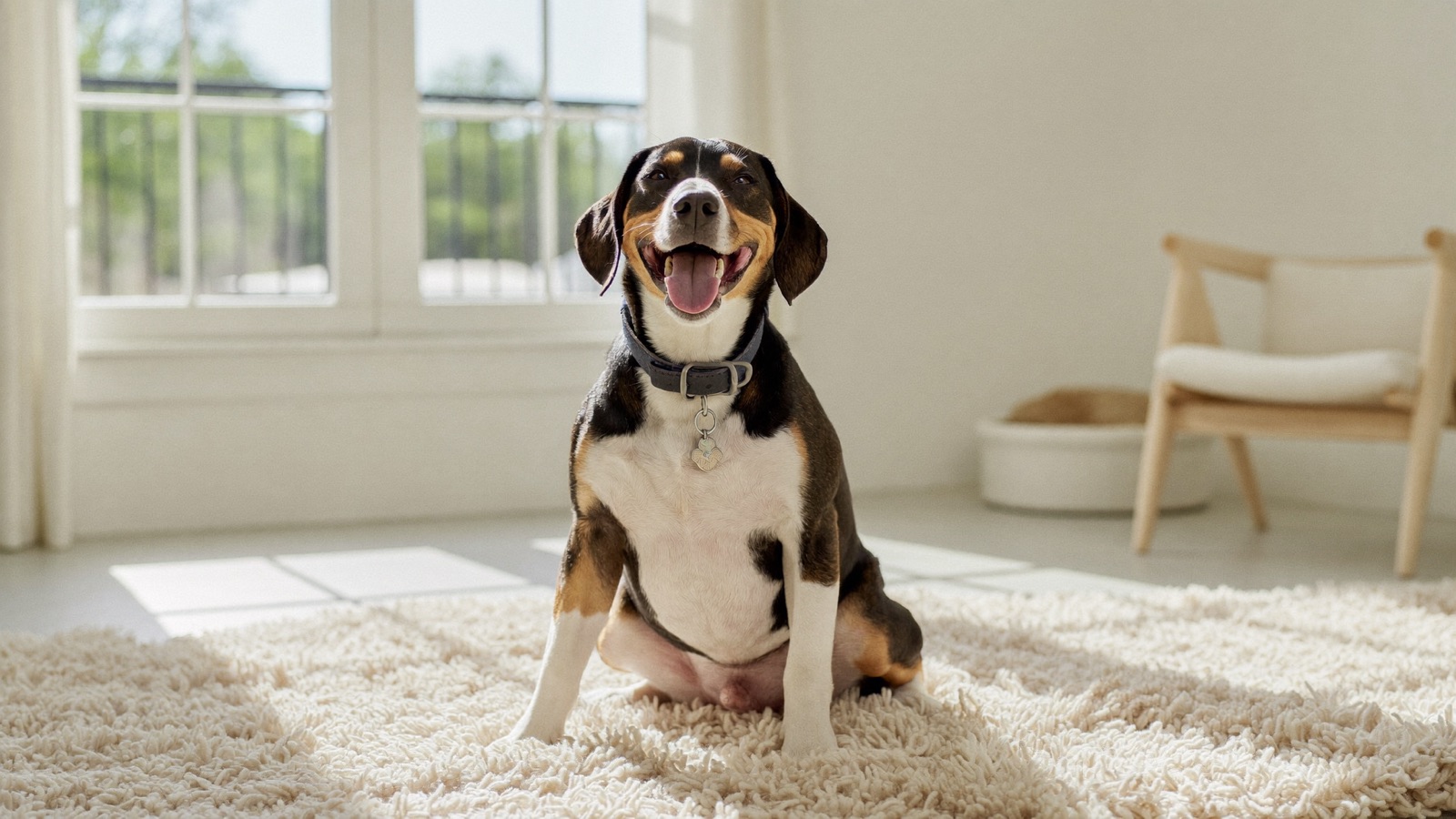
Working out your dog's "human age" is more than a fun fact — it tells you which life stage they are in, and that shapes their diet, exercise and how often they should see the vet. The catch is that the old times-seven shortcut gets it wrong.
The "times seven" myth
The idea that you multiply a dog's age by seven has been around for generations, but it was never based on biology. It seems to have come from a rough comparison in the mid-1900s, when people lived to about 70 and dogs to about 10 — so someone divided one by the other. Tidy, but wrong.
Real ageing does not work as a straight line. Dogs mature very quickly at first: a one-year-old dog is physically much more like a human teenager than a seven-year-old child, and can already reproduce. Then the pace slows. On top of that, size changes everything — a truth the single-multiplier rule ignores completely.
The modern size-based chart
Today's standard, used by the American Kennel Club (AKC) and grounded in guidance from the American Veterinary Medical Association, converts age by both years lived and body size. Small dogs age more gently; giant breeds age fastest. The chart below shows approximate human-year equivalents:
| Dog's age | Small (≤9 kg / 20 lb) | Medium (10–23 kg / 21–50 lb) | Large (23–41 kg / 51–90 lb) | Giant (>41 kg / 90 lb) |
|---|---|---|---|---|
| 1 year | 15 | 15 | 15 | 15 |
| 2 years | 24 | 24 | 24 | 24 |
| 3 years | 28 | 28 | 28 | 28 |
| 4 years | 32 | 32 | 32 | 32 |
| 5 years | 36 | 36 | 37 | 38 |
| 6 years | 40 | 42 | 45 | 49 |
| 7 years | 44 | 47 | 50 | 56 |
| 8 years | 48 | 51 | 55 | 64 |
| 9 years | 52 | 56 | 61 | 71 |
| 10 years | 56 | 60 | 66 | 79 |
| 11 years | 60 | 65 | 72 | 86 |
| 12 years | 64 | 69 | 77 | 93 |
| 13 years | 68 | 74 | 82 | 100 |
| 14 years | 72 | 78 | 88 | 107 |
| 15 years | 76 | 83 | 93 | 114 |
Why bigger dogs age faster
It is one of the odder facts in biology: in most of the animal kingdom, larger species live longer — but among dogs the reverse is true. A small terrier may live into its late teens, while a giant breed may be considered geriatric by around seven. Researchers think rapid growth and greater body size accelerate ageing, though the full picture is still being studied. The practical upshot is that a large or giant breed reaches middle and senior age noticeably sooner than a small one.
The science: an epigenetic formula
In 2020, researchers proposed a more biological method based on DNA methylation — chemical tags on DNA that accumulate with age in both dogs and humans. Their formula is:
human age = 16 × ln(dog's age) + 31
By that math a one-year-old dog maps to about 31 human years and an eight-year-old to about 64. It captures the fast-then-slow pattern well, but it was calibrated mainly on Labrador Retrievers, so it does not account for size differences and is best treated as an interesting research model rather than the last word for your particular dog.
Know your dog's stage, tailor their care
Tavi tracks your dog's age, weight and vet visits so their life stage is always front of mind — and reminds you when a senior check-up is due. Free for your first pet.
What your dog's real age means for care
Knowing the true life stage is the point of all this — it changes what your dog needs:
- Diet: puppies need growth food, adults a maintenance diet, and many seniors slightly fewer calories or a senior formula. Use the dog feeding calculator as a starting point and confirm with your vet.
- Exercise: plenty for a healthy adult, but adjusted for growing puppies' joints and for older dogs' stiffness.
- Vet visits: annual for healthy adults, but many vets recommend twice-yearly check-ups and screening bloodwork once a dog is a senior, to catch age-related problems early.
- What to watch: as dogs age, keep an eye out for stiffness, weight change, lumps, dental issues, cloudy eyes and changes in thirst or appetite — and mention them promptly.
When your dog crosses into their senior years, it is worth reading our senior dog care guide to adjust their routine and screening.
Frequently asked questions
Is one dog year really seven human years?
No — the times-seven rule is a myth. Dogs age much faster in their first two years and then more slowly, and larger breeds age faster than small ones. A one-year-old dog is closer to a 15-year-old human than a seven-year-old, so a single multiplier cannot capture how dogs really age.
How do I calculate my dog's age in human years?
Use the size-based chart rather than a single multiplier. As a rough guide, a dog's first year is about 15 human years and the second adds about nine, reaching roughly 24. After that, each dog year adds about four to five human years for small breeds and up to seven or more for giant breeds.
Why do small dogs live longer than big dogs?
Small dogs generally live longer and age more slowly than large and giant breeds, which reach middle and old age sooner. The reasons are not fully understood, but faster growth and larger body size appear to speed ageing. It is why a giant breed may be a senior by five while a small dog is not until seven or later.
Is there a scientific formula for dog years?
A 2020 study proposed a formula based on DNA methylation — chemical marks on DNA that change with age — giving human age equals 16 times the natural log of the dog's age, plus 31. It was calibrated mainly on Labrador Retrievers, so it is a useful research model rather than a precise answer for every dog.
When is a dog considered a senior?
It depends on size. Many small dogs are seniors around 7 to 10 years, medium dogs around 7, large breeds around 6, and giant breeds as early as 5. Rather than a birthday, watch for slowing down, stiffness or greying, and ask your vet to start senior wellness checks and screening bloodwork.
Does my dog's age change how I should care for them?
Yes. Knowing your dog's true life stage guides diet, exercise, vaccination and how often to see the vet. Senior dogs benefit from twice-yearly check-ups and screening tests to catch problems early, while puppies and adults have their own needs. Your vet tailors care to your dog's stage, size and health.
Tavi's guides are informational and not a substitute for professional veterinary advice, diagnosis or treatment. Age conversions are estimates that vary with breed, size, genetics and health — use them to understand life stage, not as exact figures, and let your veterinarian guide age-appropriate care. Sources include the American Kennel Club (AKC), the American Veterinary Medical Association (AVMA), the 2020 Cell Systems epigenetic-clock study, the Merck Veterinary Manual and PetMD.