Can Dogs Eat Chicken? Safe Prep & Bone Warning
Start here
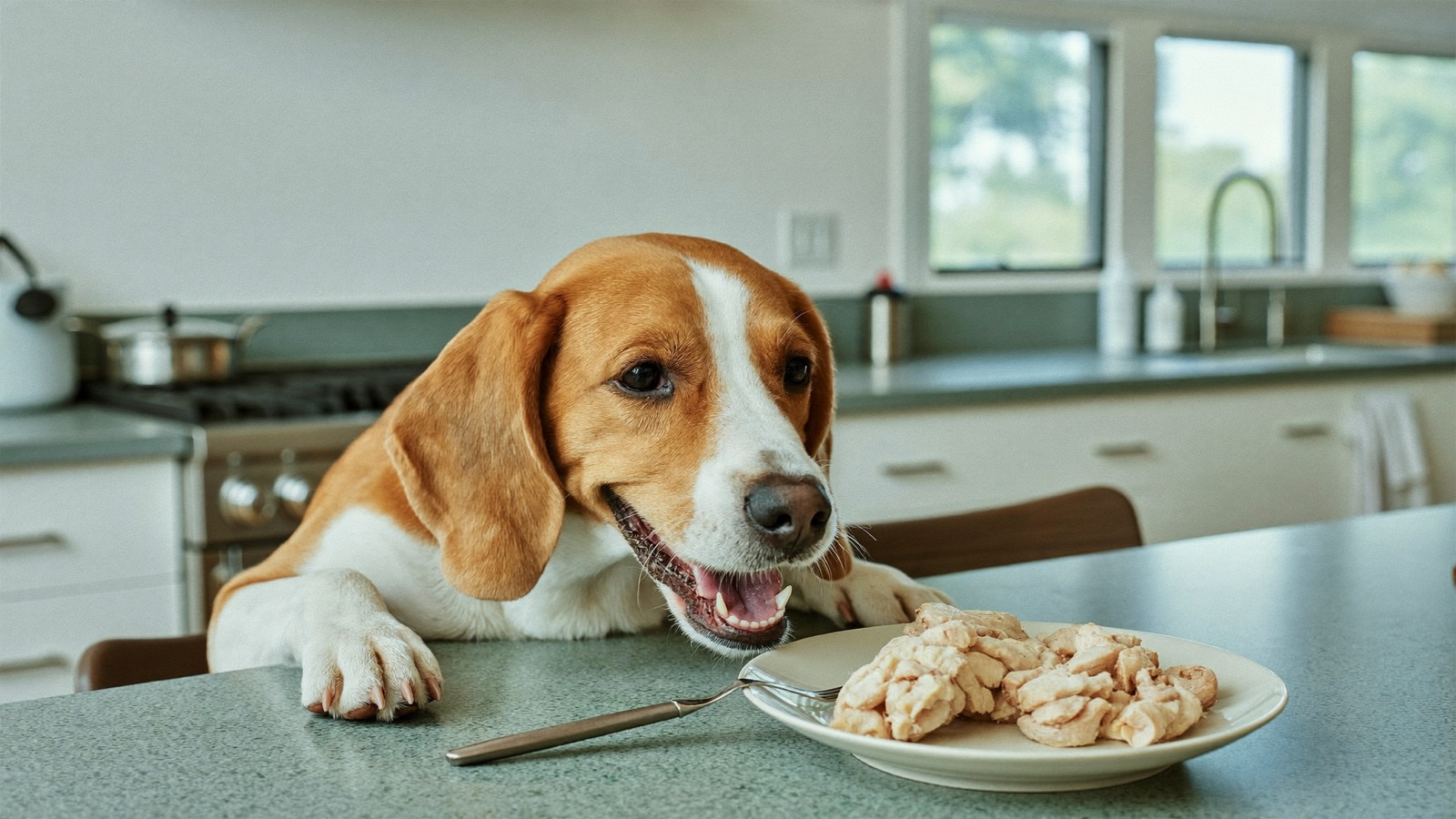
Yes — plain, cooked, boneless chicken is safe and healthy for most dogs. It's a lean, highly digestible protein found in many dog foods and bland diets. The key rules: cook it fully, remove all bones, and skip the salt, oil, onion and garlic. Never feed cooked chicken bones, which can splinter and cause serious injury.
The bone warning comes first
Never feed cooked chicken bones. Cooking makes bones brittle, and they can splinter into sharp shards that cause choking or tear the mouth, throat, stomach or intestines. If your dog swallows a cooked bone, watch for gagging, drooling, vomiting, a distended or painful belly, or trouble passing stool — and call your vet or an emergency clinic right away.
Always debone chicken completely before serving, and keep leftover carcasses, wings and drumsticks well out of reach.
Why chicken is a good protein for dogs
Chicken is one of the most common proteins in dog food for good reason. It's lean, high in protein, and easy to digest, supplying amino acids that support muscle, plus some B vitamins and minerals. Plain boiled chicken is also a staple of the bland diet vets recommend for an upset stomach, usually mixed with white rice.
As a treat or topper, small pieces of cooked chicken can make meals more appealing for picky eaters or older dogs.
How to prepare chicken safely
Keep it plain and thoroughly cooked:
- Cook it fully — boil, bake or grill until there's no pink; this kills bacteria like Salmonella.
- Remove all bones and skin — the skin is fatty and can upset the stomach or, over time, contribute to pancreatitis.
- No seasoning — skip salt, butter, oil, and especially onion and garlic, which are toxic to dogs.
- Cut into bite-size pieces and let it cool before serving.
Practical take: Plain boiled, shredded chicken breast is the gold standard — lean, gentle, and easy to portion.
What about raw chicken?
Raw chicken carries a real risk of bacteria such as Salmonella and Campylobacter, which can make both dogs and the people in the household sick. Raw bones can also crack teeth or cause blockages. Many veterinary organizations, including the AVMA, advise against feeding raw diets for these reasons.
If you're considering a raw or homemade diet, talk to your vet or a veterinary nutritionist first, and follow strict food-safety and balance guidelines.
Chicken allergies and moderation
Chicken is a common protein, and it's also one of the more common food allergens in dogs. Signs of a food allergy include itchy skin, ear infections, and ongoing digestive upset. It's not a reason to avoid chicken for most dogs — but if your dog shows these signs, mention it to your vet.
As with any treat, keep chicken to about 10% of daily calories so it doesn't unbalance a complete diet. If you suspect a food reaction, logging what your dog eats alongside symptoms like itching or ear trouble helps your vet pinpoint the trigger.
Connect the diet dots on itching and upset
Tavi lets you log meals, treats and symptoms like itching or GI upset in one place, so food-related patterns surface and your vet gets a real history. Free for your first pet.
Frequently asked questions
Can dogs eat chicken every day?
Plain cooked chicken can be part of a dog's regular diet, but on its own it isn't complete nutrition. As a treat or topper, keep it to about 10% of daily calories, and if you want chicken to be a main protein, use a balanced dog food or work with your vet on a recipe.
Why can't dogs eat cooked chicken bones?
Cooking makes bones brittle, so they can splinter into sharp pieces that cause choking or tear the digestive tract. Always remove every bone before feeding chicken, and if your dog eats a cooked bone, contact your vet right away.
Is boiled chicken good for a dog's upset stomach?
Yes, plain boiled, skinless, boneless chicken mixed with white rice is a classic bland diet for mild digestive upset. It's gentle and easy to digest, but it treats symptoms only, so call your vet if problems last more than a day or two or worsen.
Can dogs eat raw chicken?
It's risky. Raw chicken can carry Salmonella and Campylobacter that can sicken dogs and people, and many veterinary groups advise against raw diets. If you're set on raw feeding, consult your vet or a veterinary nutritionist about safety and balance first.
Can dogs be allergic to chicken?
Yes, chicken is one of the more common food allergens in dogs. Signs include itchy skin, recurrent ear infections and digestive upset. Most dogs tolerate chicken well, but if you notice these symptoms, talk with your vet about a diet trial.
Tavi's guides are informational and not a substitute for professional veterinary advice, diagnosis or treatment. When in doubt, call your veterinarian.