Can Dogs Eat Salmon? Cook It — Never Raw
Start here
Yes — fully cooked, boneless salmon is a healthy treat for dogs, but raw salmon can be dangerous. Cooked salmon is rich in omega-3 fatty acids that support skin, coat and joints. Raw or undercooked salmon can carry a parasite that causes potentially fatal salmon poisoning disease. Always cook it plain and remove every bone.
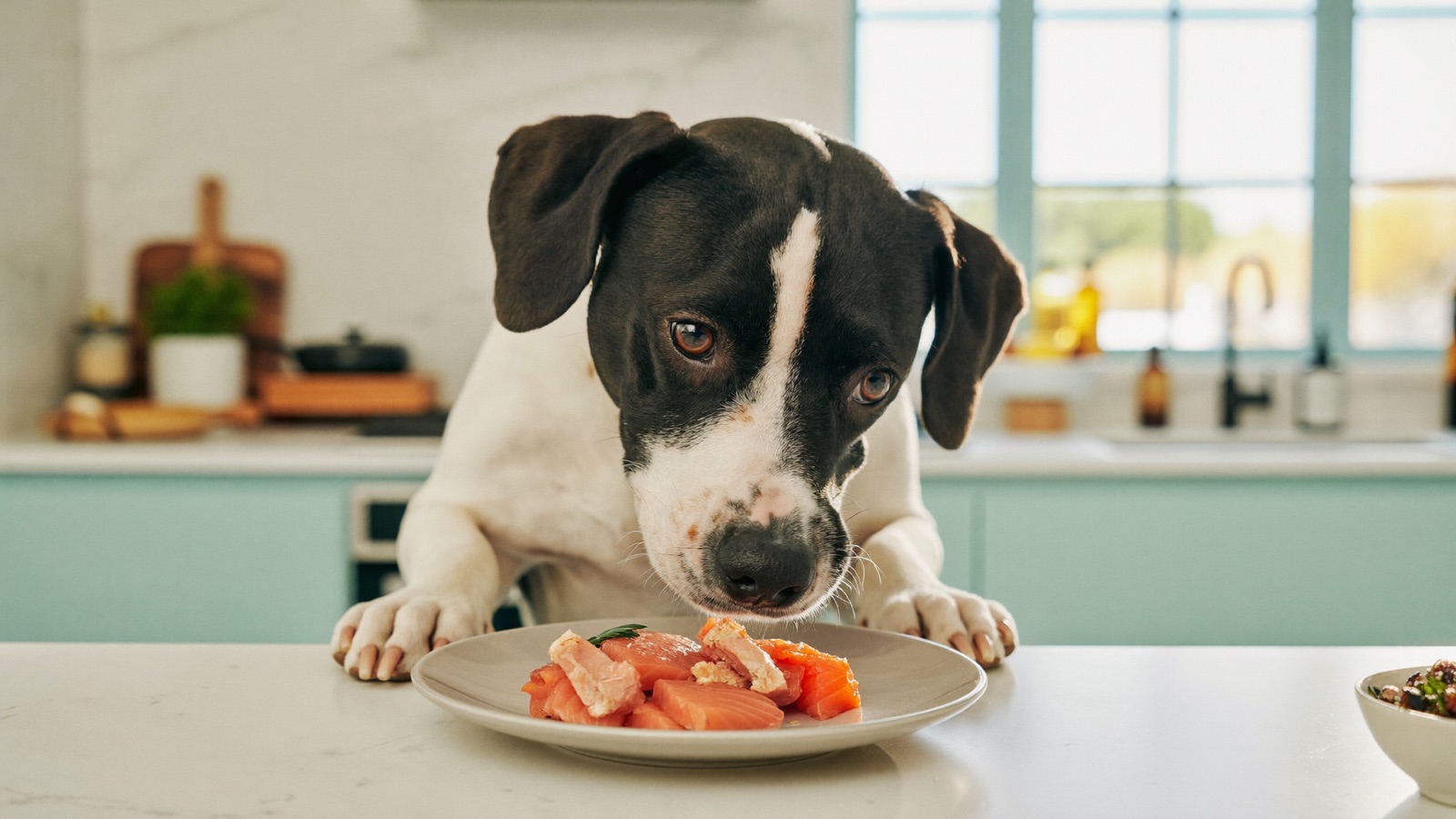
Never feed raw salmon
Raw or undercooked salmon can cause "salmon poisoning disease," a serious and potentially fatal illness in dogs caused by a parasite (a fluke) that can carry harmful bacteria. It's most associated with raw fish from the Pacific Northwest. Signs appear within about a week and include vomiting, diarrhea, fever, lethargy, loss of appetite and swollen lymph nodes. If your dog ate raw salmon or shows these signs, call your vet promptly — it's treatable when caught early but dangerous if ignored.
Cooking salmon thoroughly kills the parasite, which is why cooked salmon is safe and raw is not.
Why cooked salmon is good for dogs
Cooked salmon is a nutritious, dog-friendly protein. Its standout feature is omega-3 fatty acids (EPA and DHA), which support a healthy skin and coat, help calm inflammation, and benefit joints, heart and brain. It's also a good source of high-quality protein and vitamins like B12 and D.
This is why salmon and salmon oil show up in many premium dog foods and skin-and-coat supplements.
How to prepare salmon safely
Safe salmon comes down to how you cook and serve it:
- Cook it fully — bake, steam, grill or poach until it flakes and is no longer translucent.
- Remove all bones — salmon bones are small, brittle and can choke a dog or lodge in the throat or gut.
- Serve it plain — no salt, butter, oil, garlic, onion or seasoning.
- Skip smoked and cured salmon — it's very high in salt and may still carry parasites.
Practical take: Plain baked or poached boneless salmon fillet, cooled and flaked, is the safest way to share.
How much salmon can a dog eat?
Salmon is rich and fatty, so moderation matters. Keep it to about 10% of daily calories:
| Dog size | Reasonable amount |
|---|---|
| Small (under 20 lb) | A small bite or two |
| Medium (20–50 lb) | A small piece |
| Large (over 50 lb) | A modest portion |
Too much fatty fish at once can cause an upset stomach, and over time excess fat can contribute to weight gain or, in some dogs, pancreatitis. Once or twice a week is plenty.
When to check with your vet
A few dogs should have salmon only with guidance:
- Dogs prone to pancreatitis — even lean-looking fish adds fat.
- Overweight dogs — mind the calories.
- Dogs on a fish-based prescription diet — check before adding extras.
If you feed salmon for skin and coat benefits, tracking your dog's coat condition, itching and weight over time helps you and your vet judge whether it's helping — the change is gradual and easy to miss day to day.
See the slow wins in skin, coat and weight
Tavi lets you log diet, weight and skin or coat changes over time, so gradual improvements — or new problems — show up as a clear trend for your vet. Free for your first pet.
Frequently asked questions
Can dogs eat raw salmon?
No — raw or undercooked salmon can carry a parasite that causes salmon poisoning disease, which can be fatal if untreated. Always cook salmon thoroughly, which kills the parasite, and remove all bones before feeding.
Is cooked salmon good for dogs?
Yes. Fully cooked, plain, boneless salmon is rich in omega-3 fatty acids that support skin, coat, joints and heart health, along with quality protein. Feed it in moderation, without salt or seasoning, as an occasional treat or topper.
Can dogs eat salmon skin?
Cooked, plain salmon skin isn't toxic, but it's very high in fat, which can upset the stomach or contribute to pancreatitis in sensitive dogs. It's safest to feed only the cooked flesh and give skin sparingly, if at all.
How often can dogs eat salmon?
About once or twice a week is a reasonable limit for most dogs, keeping portions to roughly 10% of daily calories. Salmon is fatty, so too much too often can cause stomach upset or weight gain.
What are the signs of salmon poisoning in dogs?
Signs usually appear within about a week of eating raw salmon and include vomiting, diarrhea, fever, lethargy, loss of appetite and swollen lymph nodes. It's a medical emergency, so contact your vet right away if you see these signs or know your dog ate raw fish.
Tavi's guides are informational and not a substitute for professional veterinary advice, diagnosis or treatment. When in doubt, call your veterinarian.