Can Dogs Eat Apples? Yes — Skip the Seeds
Start here
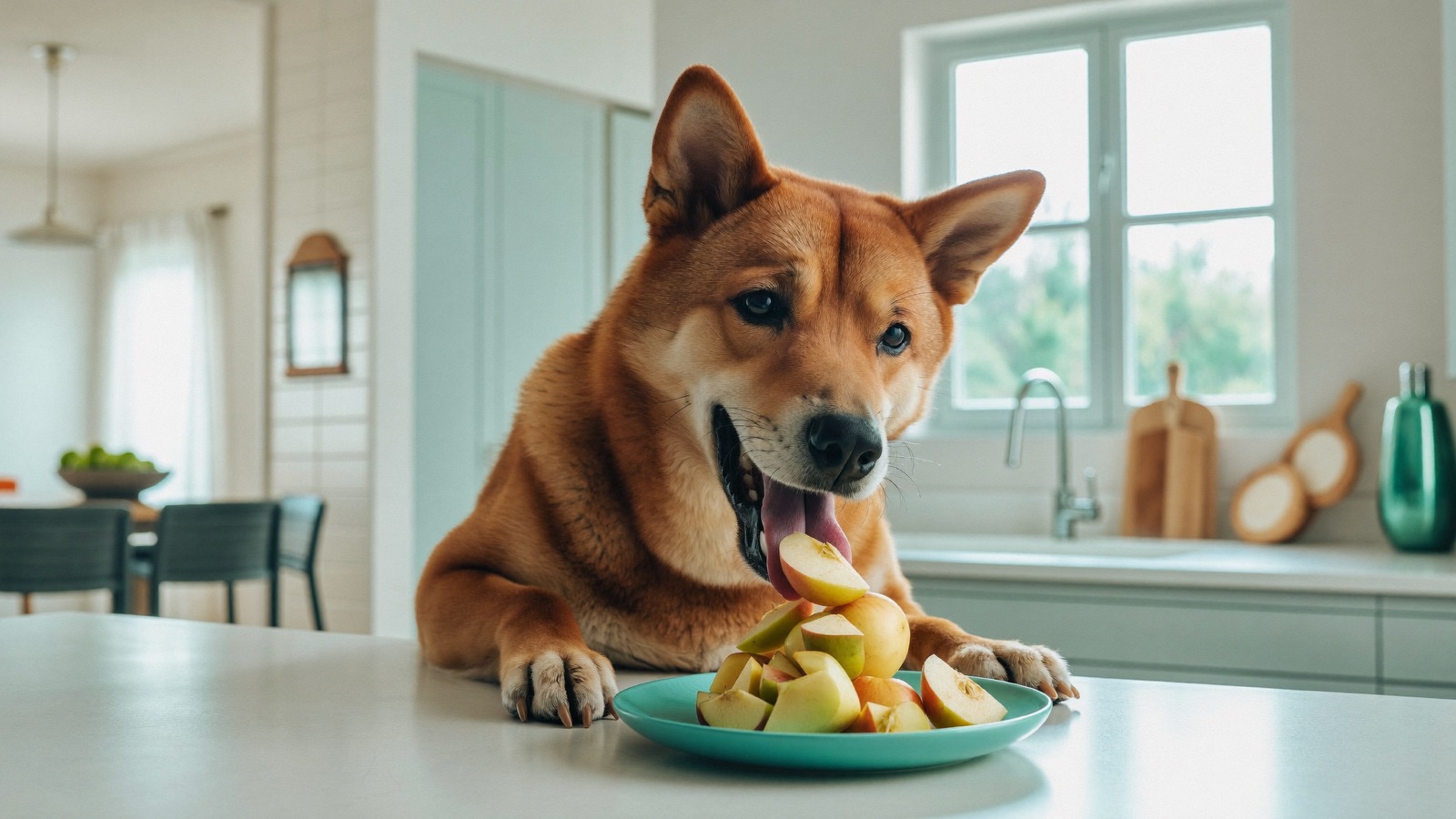
Yes — dogs can eat apples, and they're a healthy, crunchy, low-calorie treat. Apples offer fiber and vitamins A and C. The key is preparation: always remove the core and seeds (which contain small amounts of cyanide) and cut the fruit into bite-sized pieces. Serve in moderation, since apples do contain natural sugar.
Are apples good for dogs?
Apples are one of the better fruit treats for dogs. In moderation they provide:
- Fiber to support digestion
- Vitamin C and vitamin A
- A satisfying crunch that many dogs love
- Low fat and low calories, making them a good choice for dogs watching their weight
The crisp texture can even help scrape the teeth a little as your dog chews, though it's no substitute for real dental care.
Remove the core and seeds
Always remove the apple core and seeds before feeding. Apple seeds contain amygdalin, which releases small amounts of cyanide when chewed. A stray seed or two is unlikely to harm a dog, but you should never let your dog eat the seeds regularly or in quantity — and the hard core is also a choking and blockage risk.
If your dog swallows a few seeds by accident, don't panic, but do avoid making it a habit. If your dog ate a large number of seeds or the whole core and seems unwell, call your vet.
How to serve apples safely
Simple preparation makes apples a great treat:
- Wash the apple to remove pesticide residue.
- Core it and remove all seeds.
- Cut into bite-sized slices or cubes sized for your dog to prevent choking.
- Serve plain — no caramel, no added sugar, and never anything with xylitol, which is toxic to dogs.
Practical take: Frozen apple chunks make a refreshing, teething-friendly summer treat.
How much apple is okay
Apples are healthy but still count toward the 10% rule for treats. A rough guide:
| Dog size | Reasonable amount |
|---|---|
| Small (under 20 lb) | 1–2 small slices |
| Medium (20–50 lb) | A few slices |
| Large (over 50 lb) | Up to a handful of slices |
Too much apple can cause loose stool or gas because of the fiber and sugar, so start with a small amount and adjust.
When to be cautious
Apples suit most dogs, but take care if yours:
- Is diabetic — apples contain natural sugar.
- Has a sensitive stomach — introduce slowly to avoid loose stool.
- Is a gulper — cut pieces small to avoid choking.
Skip apple products aimed at people, like apple pie, applesauce with added sugar, or apple chips, which often contain sugar, spices or preservatives your dog doesn't need.
Fitting apples into treat time
Apples are a great everyday-friendly treat because they're low in calories, but they still add up alongside other snacks and training rewards. Introduce them gradually and note how your dog reacts. Keeping a simple log of new foods and any digestive changes helps you dial in the right amount and gives your vet useful context if anything ever seems off.
Keep treats and weight in balance
Tavi tracks your dog's weight and lets you log treats, new foods and any reactions over time — so healthy snacks like apple stay a smart choice, not extra calories. Free for your first pet.
Frequently asked questions
Can dogs eat apple seeds?
No — you should remove all apple seeds before feeding. They contain amygdalin, which releases small amounts of cyanide when chewed. A stray seed is unlikely to harm a dog, but you should never let your dog eat seeds regularly or in quantity.
Can dogs eat apple skin?
Yes, apple skin is safe and contains fiber and nutrients. Just wash the apple first to remove pesticide residue, and cut the fruit into appropriately sized pieces. Some dogs with sensitive stomachs digest peeled apple more easily.
How much apple can a dog eat?
Keep apple within the 10% treat rule — a slice or two for small dogs, a few slices for medium dogs, and up to a handful for large dogs. Too much can cause loose stool or gas from the fiber and sugar, so start small.
Can dogs eat applesauce?
Only plain, unsweetened applesauce in small amounts, and check the label for xylitol and added sugar. Many store-bought applesauces contain extra sugar or sweeteners your dog doesn't need, so fresh apple pieces are usually the better choice.
Are apples good for a dog's teeth?
The crunch of a fresh apple slice can help scrape away a little plaque and freshen breath, but it's not a replacement for tooth brushing or professional dental care. Think of it as a small bonus, not a dental treatment.
Tavi's guides are informational and not a substitute for professional veterinary advice, diagnosis or treatment. When in doubt, call your veterinarian.