Can Dogs Eat Almonds? Safety & Risks
Start here
Not recommended. Almonds aren't classified as toxic to dogs the way macadamia nuts are, but they're a poor and risky treat. A single stolen almond is unlikely to cause harm, but almonds are hard to digest, high in fat, and a real choking and obstruction hazard. There are far safer treats, so it's best to skip them.
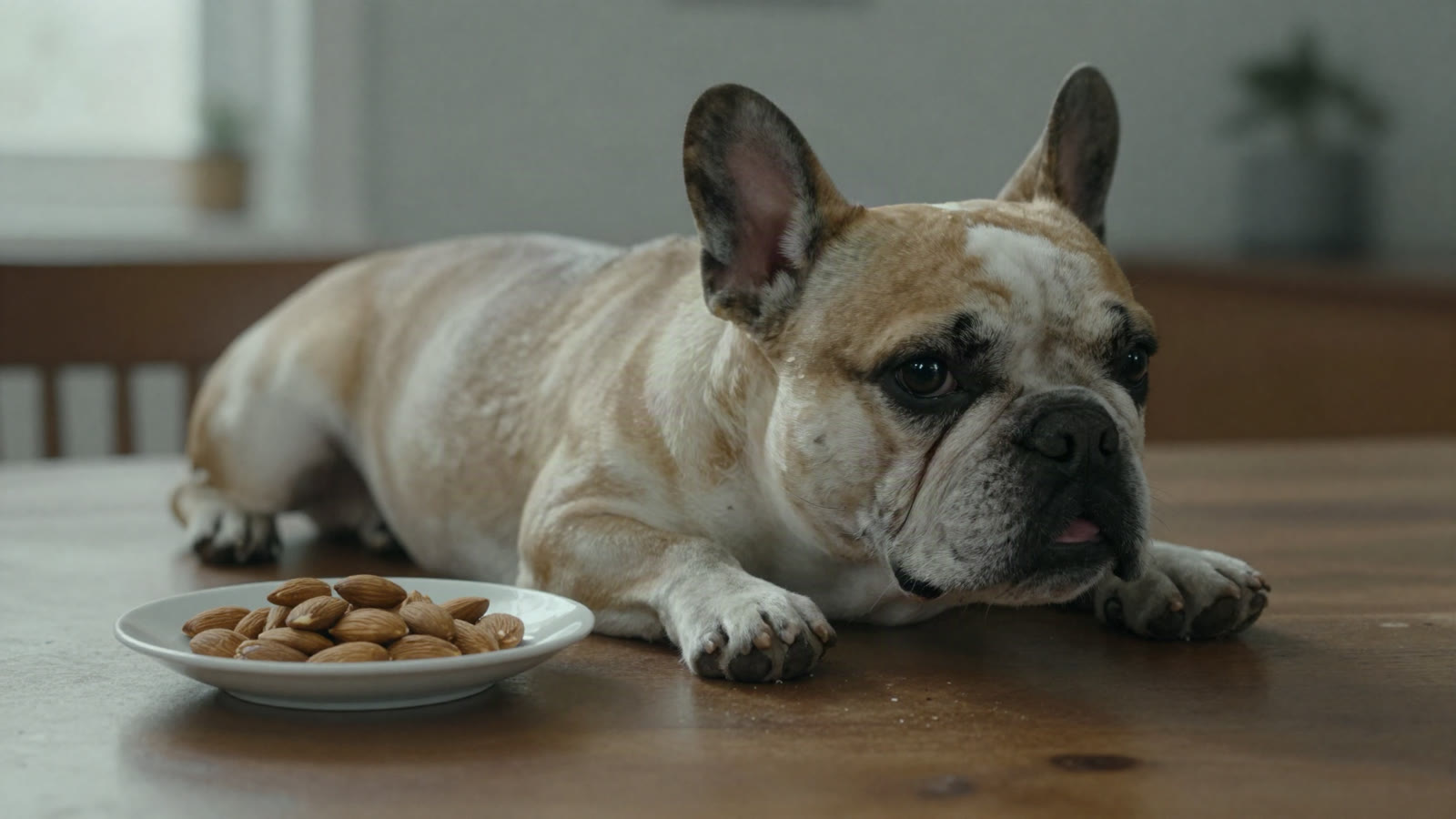
Are almonds safe for dogs?
Almonds are not on the ASPCA's list of foods that are directly poisonous to dogs, so they're different from truly toxic nuts like macadamias. That said, "not toxic" is not the same as "good for them." Dogs don't produce the enzymes needed to break down nuts efficiently, so almonds often pass through poorly and can upset the stomach.
The bigger concerns are the fat content, the choking risk, and the risk of an intestinal blockage in small dogs. Flavored almonds are worse still: salted, smoked, or seasoned varieties can add too much sodium, and anything coated in chocolate, garlic, or onion powder introduces genuinely toxic ingredients.
What are the main risks?
Here's what makes almonds a treat worth avoiding:
- Choking and obstruction: Whole almonds can lodge in the throat, esophagus, or intestines, especially in small and medium dogs. Obstructions can become surgical emergencies.
- Pancreatitis: Almonds are high in fat. A large or repeated amount can trigger pancreatitis, a painful and sometimes serious inflammation of the pancreas.
- GI upset: Vomiting, diarrhea, gas, and general stomach discomfort are common because dogs digest nuts poorly.
- Salt and seasonings: Flavored almonds may contain too much salt or toxic additions like onion and garlic powder.
- Mold: Nuts can carry aflatoxin-producing molds, which are harmful.
What if my dog ate a few almonds?
If your dog swallowed one or a couple of plain almonds, there's usually no need to panic. Offer fresh water, hold off on other rich foods, and watch for vomiting, diarrhea, or signs of discomfort over the next 24 hours.
Call your vet promptly if your dog ate a large quantity, ate chocolate-covered or heavily salted almonds, is a small breed, or shows signs of choking, repeated vomiting, a painful or bloated belly, weakness, or trouble passing stool. These can signal an obstruction or pancreatitis that needs care. When you're not sure, logging what was eaten and when in Tavi's symptom checker gives you a quick, clear record to share with your vet.
What are better treat options?
Skip the almonds and reach for treats that are both safer and easier to digest. Good choices include plain carrot sticks, cucumber slices, green beans, blueberries, or small pieces of plain cooked chicken. If you like the idea of a healthy fat, a spoonful of xylitol-free, unsalted peanut butter is a much better fit than nuts.
Whatever you choose, keep treats to about 10% of your dog's daily calories, introduce new foods one at a time, and keep the almond jar well out of counter-surfing range.
Frequently asked questions
Are almonds poisonous to dogs?
No, almonds are not classified as toxic the way macadamia nuts, chocolate, or xylitol are. However, they are still a risky treat because they're hard to digest, high in fat, and can cause choking or intestinal blockages. "Not toxic" doesn't mean safe, so it's best to avoid them.
How many almonds are dangerous for a dog?
There's no set toxic number, since almonds aren't a poison. One or two plain almonds rarely cause harm in a medium or large dog. Larger amounts raise the risk of pancreatitis and GI upset, and even one whole almond can be a choking or obstruction hazard for a small dog.
Can dogs eat almond butter?
Plain, unsalted almond butter in a tiny amount is unlikely to be harmful, but it's very high in fat and calories, so it's not a good regular treat. Always check the label to be sure it contains no xylitol, which is highly toxic to dogs. Unsalted peanut butter is a more common choice.
What about almond milk?
A small amount of plain, unsweetened almond milk is generally not toxic, but it offers no real benefit and can cause stomach upset. Avoid any almond milk sweetened with xylitol, and skip flavored versions. Fresh water is always the better drink for your dog.
Tavi's guides are informational and not a substitute for professional veterinary advice, diagnosis or treatment. When in doubt, call your veterinarian.