Can Dogs Eat Peas? Benefits & Cautions
Start here
Yes, in moderation. Green peas (garden, snap, and snow peas) are safe and nutritious for most dogs and appear in many commercial dog foods. Serve them plain and fresh, frozen, or thawed, avoid canned peas high in sodium, and skip them for dogs with kidney issues.
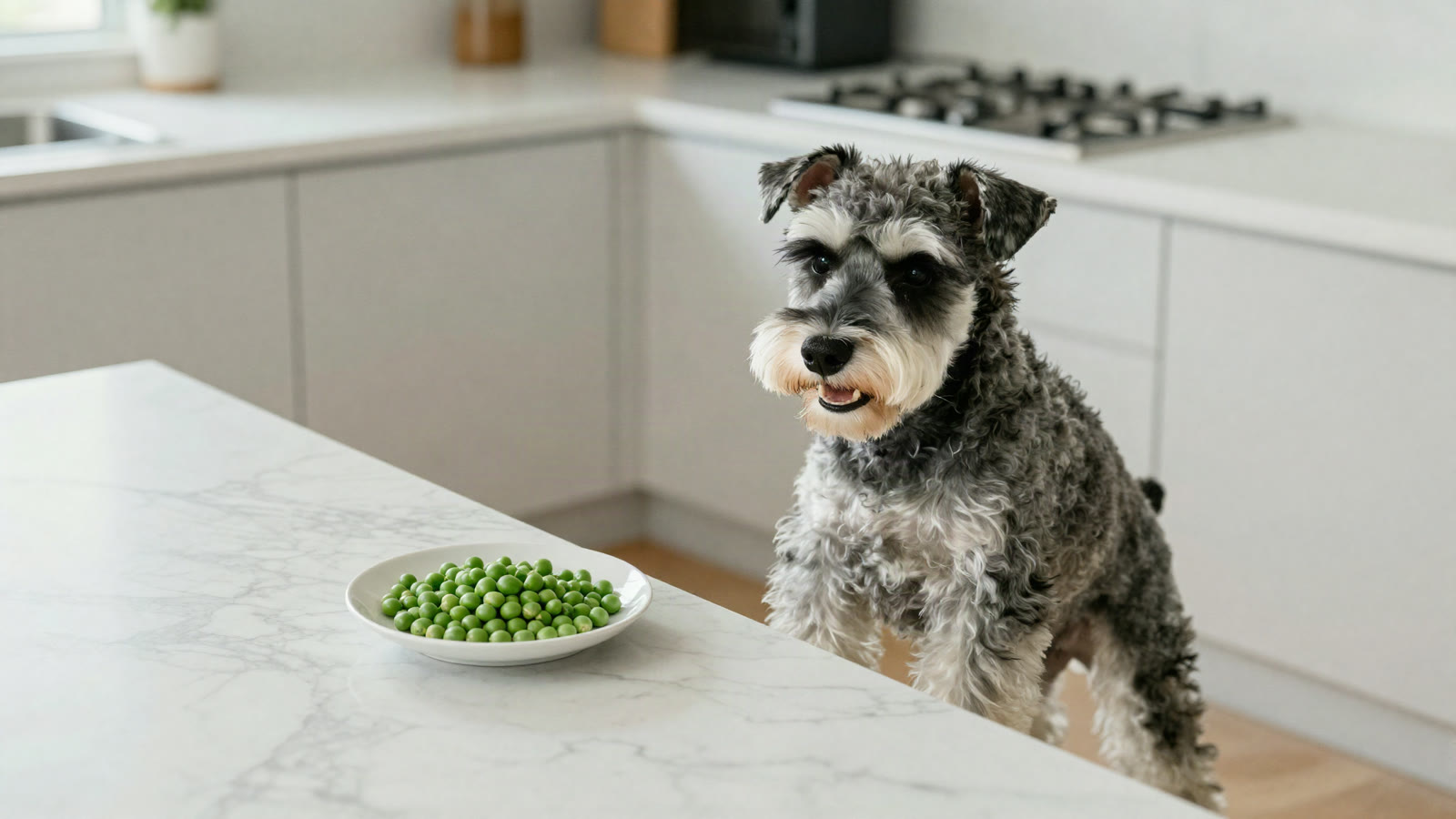
Are peas good for dogs?
Green peas are a safe, healthy treat for dogs in moderation. They're a common ingredient in commercial dog foods for good reason: they provide plant protein, fiber, vitamins A, K, and several B vitamins, plus minerals like iron, zinc, and potassium.
Garden peas, snap peas, and snow peas are all fine. They make a low-calorie, nutrient-dense snack that many dogs enjoy. As with any treat, they should supplement a complete, balanced diet rather than replace it.
How should I serve peas?
Keep them plain and simple:
- Serve fresh, frozen, or thawed peas, plain.
- No salt, butter, or seasoning.
- Remove peas from the pod for small dogs, and cut snap or snow pods into pieces if needed.
- Avoid canned peas, which are often high in added sodium.
A small spoonful mixed into food or offered as a snack is plenty. Frozen peas can double as a fun, crunchy hot-weather treat. Start small to see how your dog handles them.
What cautions should I know?
Peas are safe for most dogs, but keep these in mind:
- Kidney concerns: peas contain purines, which produce uric acid. Dogs with kidney disease should avoid them unless a vet approves.
- Gas and upset: too many peas can cause gas or loose stool.
- Sodium: canned peas can carry too much salt.
- Portion: keep servings small, as with all treats.
There has also been discussion about peas and legumes in grain-free diets possibly linking to heart concerns; the research is ongoing. Peas as an occasional whole-food treat are different from a diet built heavily around them, but if you have concerns about your dog's food, talk to your vet.
What if my dog ate a lot of peas?
A large helping of plain peas usually causes only gas or mild loose stool. Offer water, hold off on more treats, and it should resolve within a day. Watch for persistent vomiting or diarrhea and call your vet if it doesn't settle.
If your dog has kidney disease and ate a significant amount, or the peas were canned and salty, check with your vet. Tracking your dog's weight and any diet tweaks in Tavi makes it easier to notice patterns over time.
Frequently asked questions
Can dogs eat all types of peas?
Green garden peas, snap peas, and snow peas are all safe for dogs in moderation. Avoid canned peas, which often contain added sodium. Also skip peas cooked with butter, salt, onion, or garlic. Fresh, frozen, or thawed plain peas are the best choices, served in small amounts as an occasional treat.
Are peas bad for dogs with kidney disease?
They can be. Peas contain purines, which the body converts to uric acid, and this can be a problem for dogs with kidney disease or certain urinary conditions. If your dog has kidney issues, avoid peas unless your vet specifically approves them. Healthy dogs can enjoy peas in moderation without concern.
Are peas in dog food safe?
Yes, peas are a common and generally safe ingredient in commercial dog foods, providing protein, fiber, and nutrients. There has been ongoing discussion about legumes in some grain-free diets and heart health, and research continues. If you're concerned about your dog's specific food, talk to your vet about the best diet.
How many peas can a dog eat?
A small spoonful as an occasional treat is right for most dogs. Too many peas can cause gas or loose stool, and treats should stay within about 10% of daily calories. Start with a small amount, serve them plain, and remove larger pods or cut them up for small dogs.
Tavi's guides are informational and not a substitute for professional veterinary advice, diagnosis or treatment. When in doubt, call your veterinarian.