Can Cats Eat Shrimp? Safe Serving
Start here
Yes, cats can eat cooked shrimp in small amounts. Plain, fully cooked, peeled shrimp is a safe, protein-rich treat most cats love. Avoid raw shrimp, and skip the shell, tail, and any seasoning, butter, or garlic.
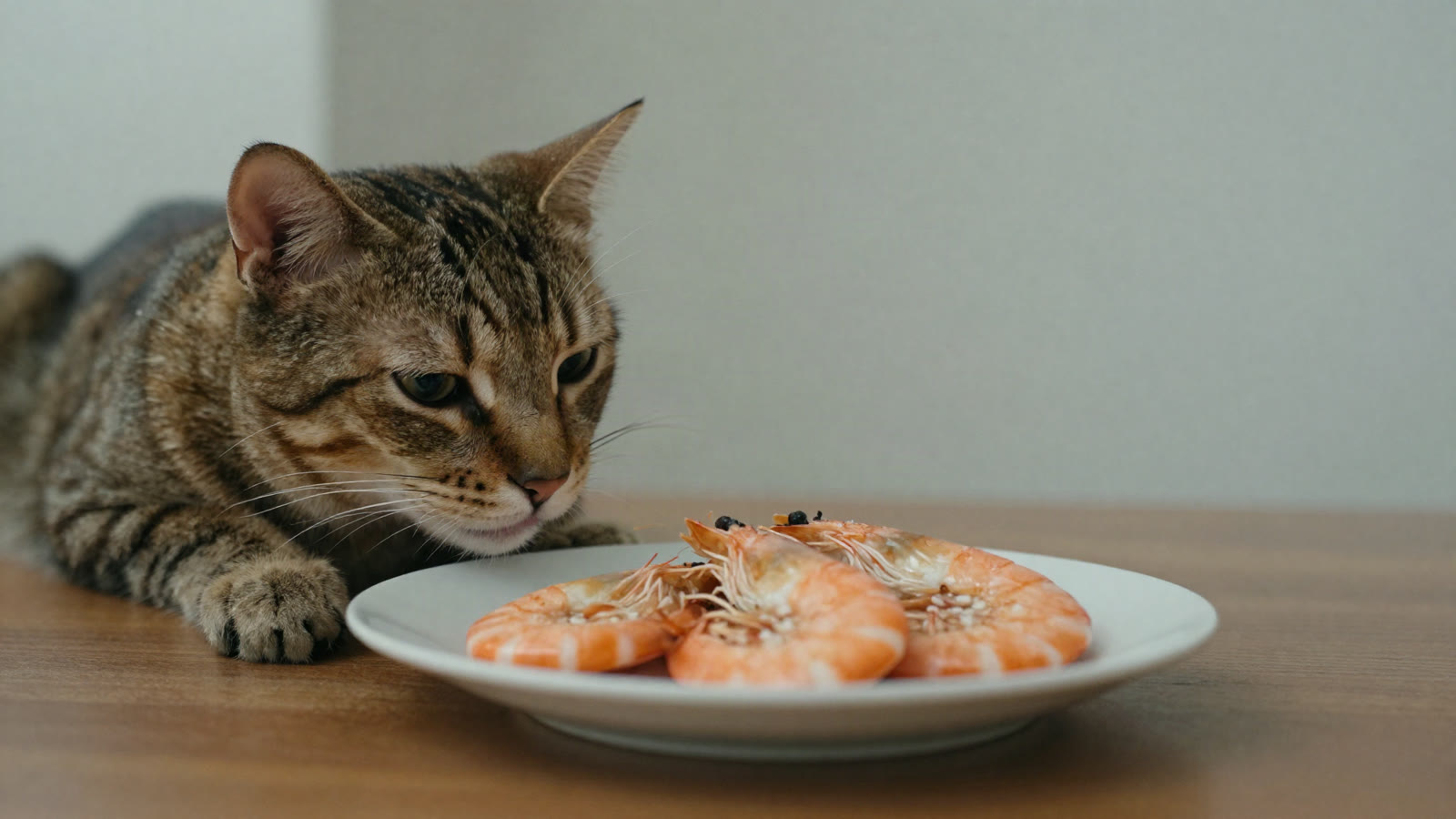
Is shrimp good for cats?
Shrimp is a lean source of protein and provides nutrients like vitamin B12, selenium, and omega-3 fatty acids. As obligate carnivores, cats do well on animal protein, and most find shrimp very appealing.
It's a fine occasional treat, but not a complete food. Shrimp lacks the full balance of nutrients a cat needs, so keep it to about 10% or less of daily calories and let a complete cat food do the heavy lifting.
How should I serve shrimp safely?
Serve shrimp plain and fully cooked — steamed, boiled, or grilled with no oil, butter, salt, or seasoning, and no garlic or onion.
- Remove the shell, tail, legs, and the dark vein along the back.
- Cut it into small, bite-size pieces to prevent choking.
- Offer a small amount: one small shrimp or half a large one is plenty for a treat.
Introduce it in a tiny portion the first time to make sure your cat tolerates it, since shellfish can cause allergies in some cats.
What are the risks?
The main risks come from raw or improperly served shrimp:
- Raw shrimp can carry bacteria like salmonella and listeria and may harbor parasites — cook it thoroughly.
- Shells and tails are choking hazards and can cause digestive blockages.
- Seasonings like garlic, onion, and salt are unsafe.
- Cholesterol and sodium in shrimp mean it should stay an occasional treat, not a staple.
A small number of cats are allergic to shellfish, so watch for itching, swelling, or vomiting.
What if my cat ate too much shrimp?
Too much plain cooked shrimp may cause a mildly upset stomach — some vomiting or loose stool — that resolves on its own. Offer water and go back to their normal food.
Call your vet if your cat ate raw shrimp, swallowed a shell or tail and is gagging or straining, or shows signs of an allergic reaction (facial swelling, hives, persistent vomiting). For shrimp cooked with garlic or onion, contact the ASPCA Animal Poison Control Center at (888) 426-4435. Logging new treats and reactions in Tavi helps you spot whether shrimp agrees with your cat.
Frequently asked questions
Can cats eat raw shrimp?
It's best avoided. Raw shrimp can carry bacteria like salmonella and listeria and may contain parasites that make cats sick. Cooking shrimp plainly and thoroughly removes these risks. Always serve shrimp fully cooked, peeled, and unseasoned rather than raw.
Can cats eat shrimp tails or shells?
No. Shrimp tails, shells, and legs are choking hazards and can cause digestive blockages or mouth injuries. Always remove them and the dark vein before offering shrimp, and cut the cooked flesh into small, bite-size pieces for your cat.
How much shrimp can a cat eat?
Keep it small — one small shrimp, or half a large one, as an occasional treat within 10% of daily calories. Shrimp is high in cholesterol and sodium, so it shouldn't be a regular meal. A complete cat food should remain your cat's main diet.
Can shrimp cause an allergic reaction in cats?
Yes, though it's uncommon. Some cats are allergic to shellfish and may react with itching, swelling, vomiting, or diarrhea. Introduce shrimp in a tiny amount the first time and watch closely. Stop feeding it and contact your vet if you notice any signs of a reaction.
Tavi's guides are informational and not a substitute for professional veterinary advice, diagnosis or treatment. When in doubt, call your veterinarian.