Can Dogs Eat Mac and Cheese?
Start here
It's best avoided. Mac and cheese isn't a poison, but it's a poor choice for dogs: it's high in fat, salt, and dairy, often contains onion or garlic powder, and offers little a dog needs. A stray noodle won't hurt, but it shouldn't be a treat you offer on purpose.
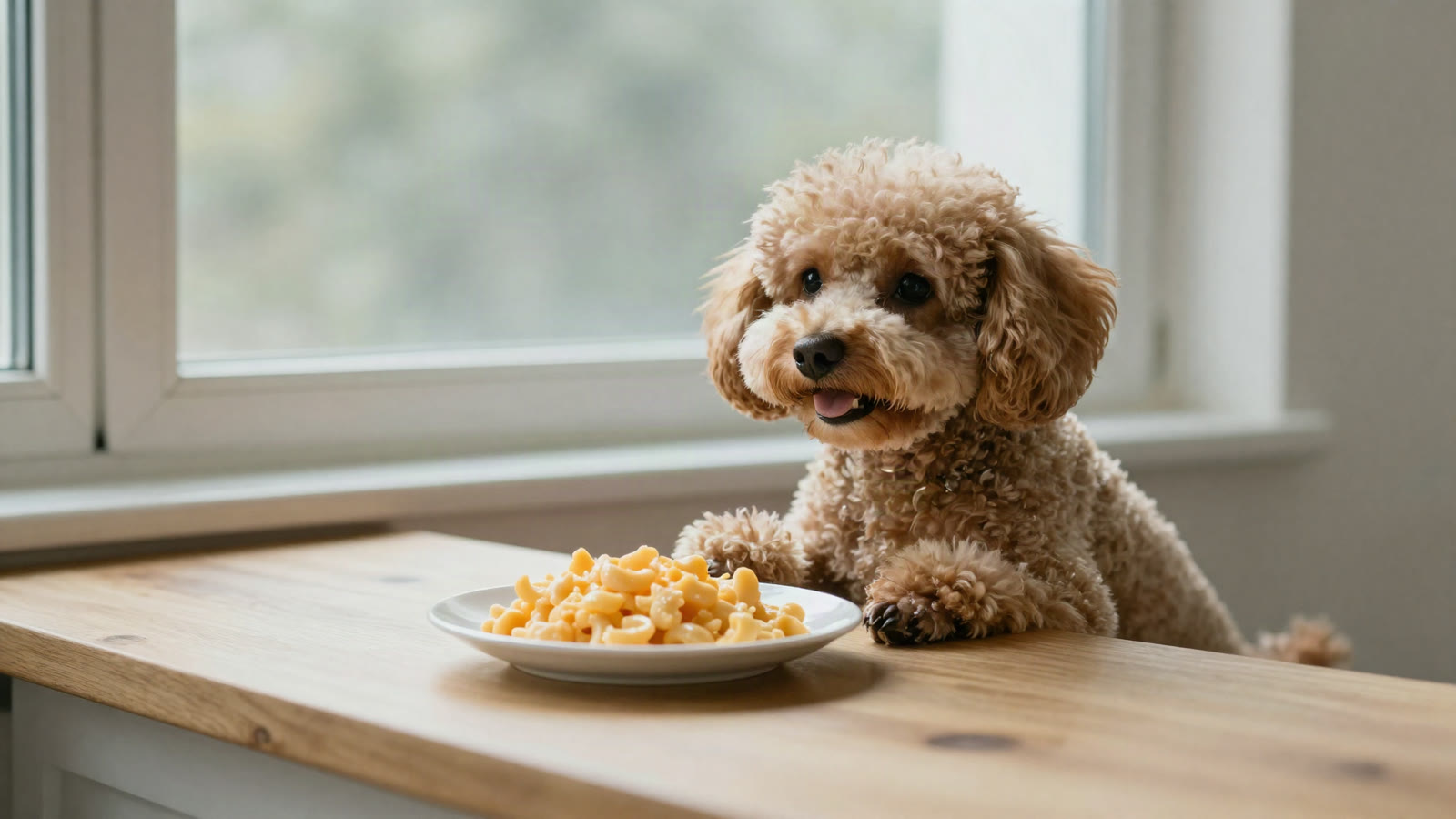
Is mac and cheese safe for dogs?
A small lick of plain mac and cheese won't poison a healthy dog, but it's not a food to share intentionally. It's rich, fatty, salty, and made largely of dairy and refined carbs — none of which suit a dog's digestion.
Many recipes and boxed versions also contain onion and garlic powder, which are toxic to dogs, plus a lot of sodium. That combination makes mac and cheese more risk than reward.
Why isn't it a good treat?
Several things stack up against mac and cheese:
- Dairy: most dogs are somewhat lactose intolerant, so cheese and milk can cause gas, diarrhea, and stomach upset.
- Fat and salt: high levels can lead to upset stomach, excessive thirst, and — with fatty foods — a risk of pancreatitis.
- Onion/garlic seasoning: common in the sauce and toxic to dogs.
- Empty calories: lots of calories with little nutritional value, which adds up to weight gain.
What if my dog ate mac and cheese?
If your dog snagged a small amount of plain mac and cheese, watch for gas, soft stool, or mild vomiting over the next day. Offer water and return to their normal diet. Most dogs are fine after a small, one-time amount.
Be more cautious if your dog ate a large portion, if the dish contained onion or garlic, or if your dog is lactose intolerant or prone to pancreatitis. Watch for repeated vomiting, diarrhea, lethargy, or a painful belly.
When should I call the vet?
Contact your vet if your dog ate a large amount, shows signs of pancreatitis (repeated vomiting, belly pain, lethargy, loss of appetite), or if the recipe contained onion or garlic. For toxic ingredients, call the ASPCA Animal Poison Control Center at (888) 426-4435.
If you'd rather share something, plain cooked plain pasta or a small piece of plain cooked chicken is a safer choice. Logging what your dog ate in Tavi — plus any symptoms — makes it easier to give your vet a clear picture if problems come up.
Frequently asked questions
Will a little mac and cheese hurt my dog?
A small, one-time bite of plain mac and cheese is unlikely to seriously harm a healthy dog, though it may cause mild stomach upset. The bigger concern is onion or garlic seasoning and large amounts. It's fine as an accident, not as an intentional treat.
Why is cheese a problem for dogs?
Most dogs are at least somewhat lactose intolerant, so cheese and other dairy can cause gas, diarrhea, and stomach upset. Cheese is also high in fat and salt. Small amounts of plain cheese are tolerated by some dogs, but mac and cheese adds far more.
Can dogs eat plain pasta instead?
Yes, plain cooked pasta with no sauce, salt, butter, or seasoning is safe for dogs in small amounts. It's a bland carbohydrate, so it's an occasional treat rather than a nutritious one. Skip the cheese sauce, which brings the fat, salt, and dairy problems.
What if the mac and cheese had onion or garlic?
Onion and garlic are toxic to dogs and can damage red blood cells, even in powdered form. If your dog ate mac and cheese seasoned with either, call your vet or the ASPCA Animal Poison Control Center at (888) 426-4435, and watch for weakness, pale gums, or dark urine.
Tavi's guides are informational and not a substitute for professional veterinary advice, diagnosis or treatment. When in doubt, call your veterinarian.