Can Cats Eat Ham? Salt Cautions
Start here
Only a tiny taste, rarely. Ham isn't toxic, and cats love the taste, but it's very high in salt and fat and often cured with additives — none of which suit a cat. A small piece now and then is okay for a healthy cat; it should never be a regular treat.
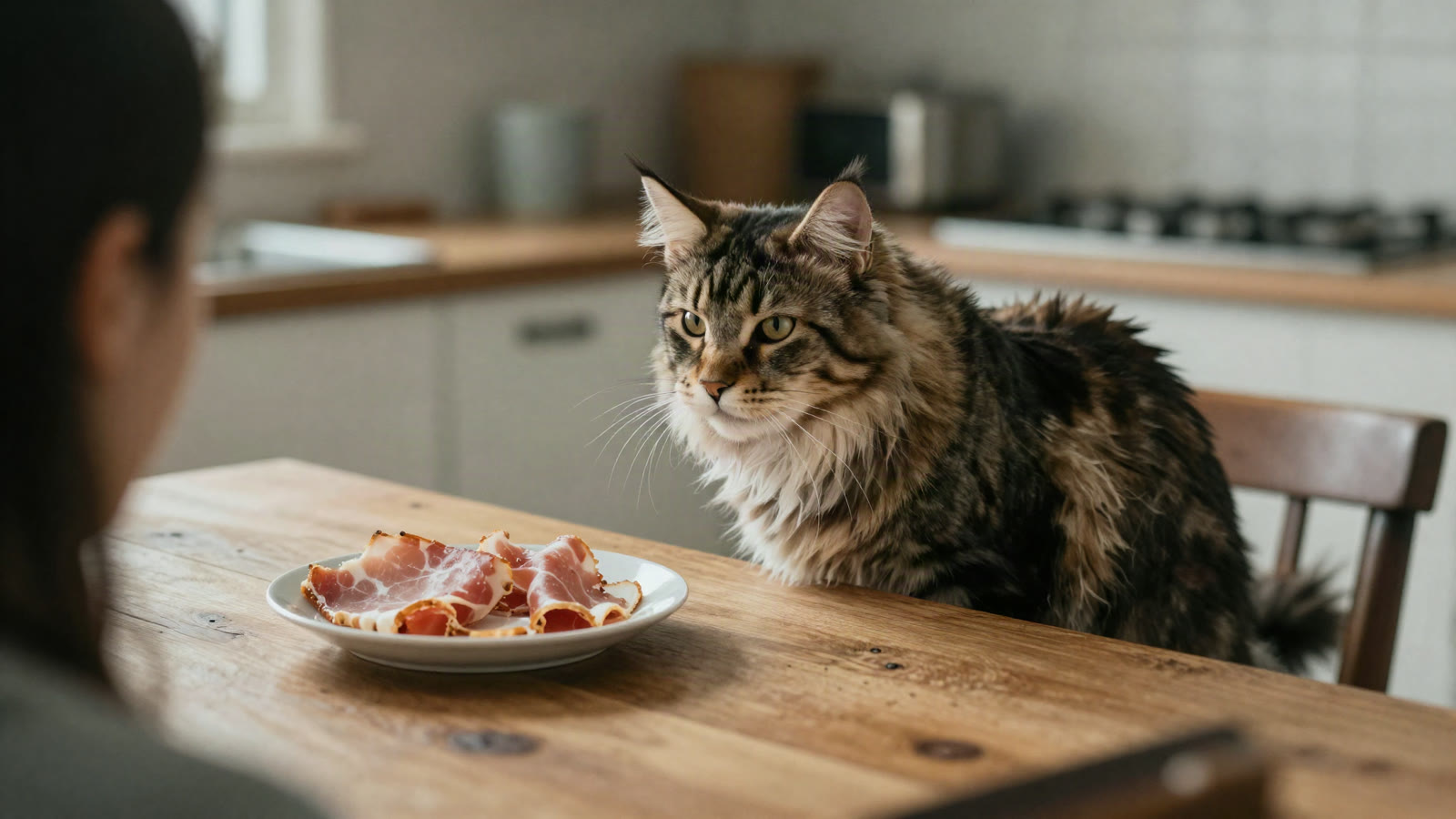
Is ham safe for cats?
Ham is meat, and cats are meat-eaters, so a small piece isn't poisonous. Cats are usually enthusiastic about it. The problem is what's done to ham before it reaches your plate.
Ham is cured and processed, which means it's loaded with salt and often preservatives like nitrates. It's also fatty. That combination makes it a poor everyday choice for cats, even though it's not toxic.
Why is salt such a concern?
Cats are small, so the sodium in ham adds up fast. Too much salt can cause increased thirst and urination, vomiting, and in extreme cases sodium ion poisoning. Cats with heart or kidney disease are especially sensitive and should avoid ham entirely.
The fat in ham is another issue: rich, fatty foods can trigger stomach upset and, in some cats, pancreatitis. Together, the salt and fat outweigh any benefit from the protein.
How much ham can a cat have?
If you want to share, keep it to a very small, plain piece — no bigger than a pea or two — and only occasionally. Choose lean, unseasoned cooked ham, trim the fat, and cut it into tiny pieces.
- Avoid honey-glazed, smoked, or seasoned ham.
- Never give ham cooked with garlic or onion, which are toxic to cats.
- Don't give ham bones, which can splinter.
For a regular meat treat, plain cooked chicken or turkey is a much better option.
What if my cat ate a lot of ham?
A cat that ate a large amount of ham may drink more, urinate more, and have an upset stomach from the salt and fat. Make sure plenty of fresh water is available and watch them closely.
Call your vet if you see repeated vomiting or diarrhea, lethargy, wobbliness, or signs of excessive thirst — and sooner if your cat has heart or kidney disease. For ham cooked with garlic or onion, contact the ASPCA Animal Poison Control Center at (888) 426-4435. Noting what your cat ate in Tavi helps your vet gauge how much salt was involved.
Frequently asked questions
Can cats eat a small piece of ham?
A tiny piece of plain, cooked, unseasoned ham is unlikely to harm a healthy cat as a rare treat. The concern is the high salt and fat, so keep it to a pea-size amount occasionally. Cats with heart or kidney disease should avoid ham altogether.
Why is ham bad for cats?
Ham is cured and processed, making it very high in salt, fat, and often preservatives. Too much sodium can cause excessive thirst, vomiting, and in severe cases salt poisoning, while the fat can upset the stomach. That's why ham should only be an occasional tiny treat, if at all.
Can cats eat ham bones?
No. Ham bones, especially cooked, can splinter and cause choking, mouth injury, or internal damage, and the fatty marrow can upset a cat's stomach. Keep all ham bones away from your cat and offer a small piece of plain lean meat instead.
What meat is better than ham for cats?
Plain cooked chicken or turkey is a much better choice — lean, low in salt, and easy to digest when served unseasoned and boneless. These give cats the animal protein they enjoy without the heavy salt, fat, and additives found in cured ham.
Tavi's guides are informational and not a substitute for professional veterinary advice, diagnosis or treatment. When in doubt, call your veterinarian.