Can Dogs Eat Oatmeal? How to Serve It
Start here
Yes, in moderation. Plain cooked oatmeal is safe and can be a gentle source of fiber for dogs. Serve it cooked with water (not milk), plain and unsweetened, and in small portions. Skip flavored instant oatmeal, added sugar, and toppings, and always avoid the sweetener xylitol.
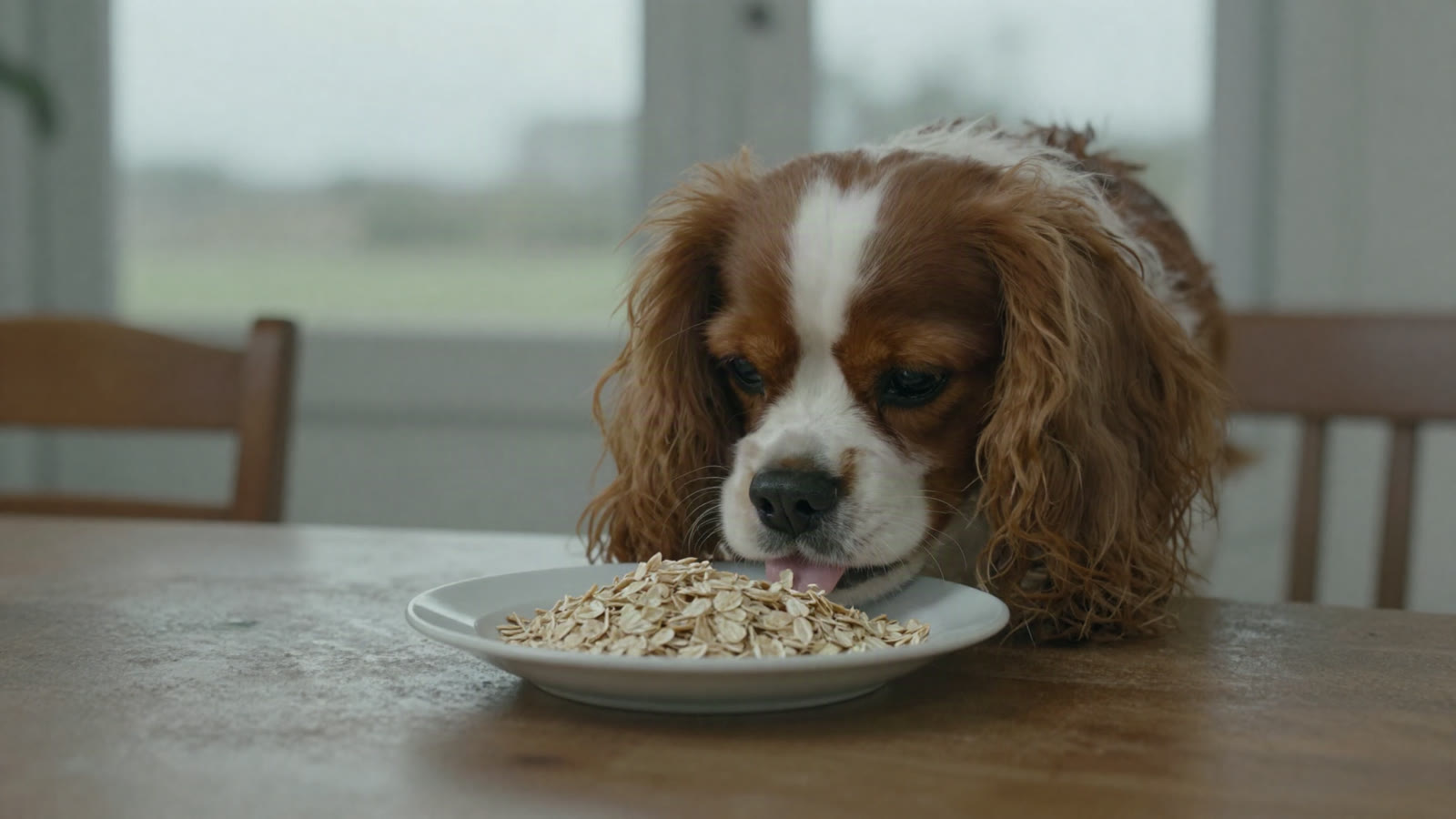
Is oatmeal good for dogs?
Plain cooked oatmeal is safe for dogs and can be a wholesome occasional food. It's a source of soluble fiber, which can support digestion, and it provides some vitamins, minerals, and slow-release carbohydrates. It's often gentle on the stomach, which is why some owners use a little plain oatmeal for dogs with sensitive digestion.
It's especially useful as an alternative carbohydrate for dogs with certain sensitivities, but it's not a necessity. Because it's carb- and calorie-dense, oatmeal should be a small, occasional addition rather than a big serving.
How should I serve oatmeal?
Preparation is key to keeping it healthy:
- Cook it fully with water, never milk, since many dogs are lactose intolerant.
- Serve it plain and unsweetened, at a comfortable temperature.
- No sugar, honey, syrup, salt, butter, or flavorings.
- Avoid flavored instant oatmeal packets, which often contain added sugar and sometimes xylitol.
Start with a small spoonful mixed into your dog's regular food. For a small dog, a tablespoon or two of cooked oatmeal is plenty; larger dogs can have a bit more, occasionally.
What should I watch out for?
Oatmeal is safe, but keep these points in mind:
- Xylitol: never give flavored oatmeal that may contain this sweetener, which is highly toxic to dogs.
- Added sugar and salt: flavored and instant varieties often have too much.
- Portion and calories: oatmeal is carb-rich, so overdoing it can add weight.
- Stomach upset: too much fiber at once can cause gas or loose stool.
- Grain sensitivity: uncommon, but introduce it slowly to be sure.
When is oatmeal helpful, and what if my dog overeats?
A small amount of plain oatmeal can be a gentle carbohydrate for dogs with sensitive stomachs or certain grain sensitivities, but always check with your vet before making dietary changes for a health issue. It's not a cure for diarrhea or other problems on its own.
If your dog eats a large amount of plain oatmeal, expect possible gas or loose stool; offer water and pause other treats. Call your vet if symptoms are severe, or right away if the oatmeal was flavored and might contain xylitol. Tracking your dog's diet and weight in Tavi makes it easy to see how new foods sit over time.
Frequently asked questions
How much oatmeal can a dog eat?
Keep it small and occasional. A tablespoon or two of plain cooked oatmeal suits a small dog, and a larger dog can have a bit more. Oatmeal is carbohydrate-dense, so it should stay within the roughly 10% of daily calories reserved for treats and extras. Start small to check your dog tolerates it well.
Can dogs eat oatmeal every day?
It's better as an occasional food than a daily one. While plain cooked oatmeal is safe, dogs get complete nutrition from a balanced diet, and too much added carbohydrate can contribute to weight gain. If you'd like to include oatmeal regularly for a specific reason, talk to your vet about the right amount for your dog.
Is instant or flavored oatmeal safe for dogs?
No, avoid it. Flavored and instant oatmeal often contain added sugar, salt, artificial flavors, and sometimes xylitol, a sweetener that is highly toxic to dogs. Always choose plain oats cooked with water and served unsweetened. If your dog eats flavored oatmeal that may contain xylitol, contact your vet immediately.
Can oatmeal help a dog with an upset stomach?
A small amount of plain, well-cooked oatmeal can be gentle on some dogs' digestion because of its soluble fiber, but it isn't a guaranteed remedy. If your dog has ongoing diarrhea, vomiting, or a sensitive stomach, see your vet to find the cause rather than relying on oatmeal alone to fix it.
Tavi's guides are informational and not a substitute for professional veterinary advice, diagnosis or treatment. When in doubt, call your veterinarian.