Can Cats Eat Peanut Butter?
Start here
No — peanut butter isn't a good idea for cats. It isn't classically toxic the way onions or chocolate are, but it offers cats no real nutrition and carries real downsides: high fat, added salt and sugar, a choking-and-sticking hazard, and the small but serious risk of xylitol, a sweetener that is deadly to pets. If your cat licks a little plain peanut butter, don't panic — but there's no reason to offer it on purpose.
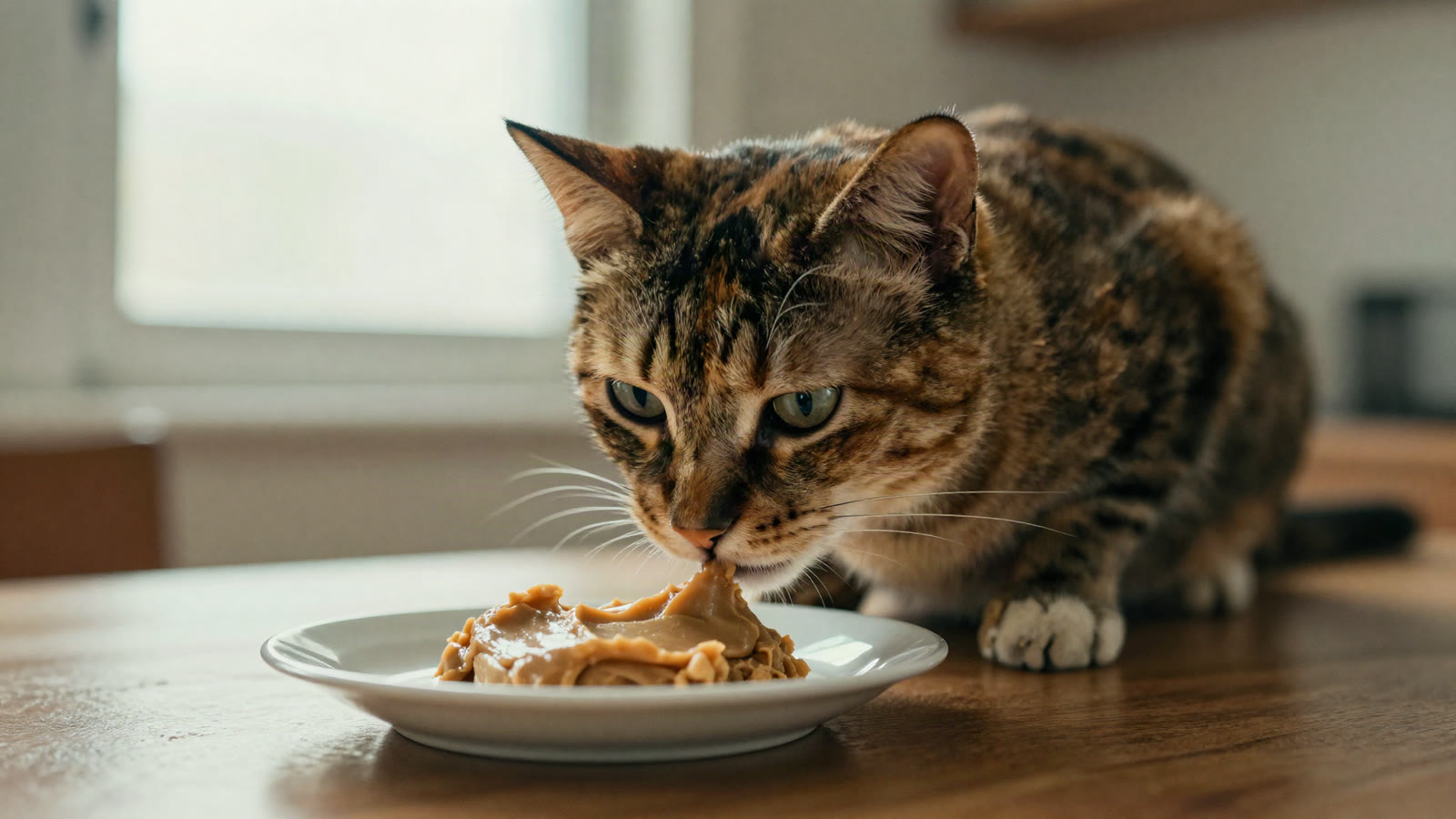
Is peanut butter safe for cats?
Cats are obligate carnivores — their bodies are built to run on animal protein, not plant fats and carbohydrates. Peanut butter is the opposite of what they need: mostly fat and calories, with a protein source cats can't use efficiently.
Plain peanut butter isn't poisonous, so a small lick won't usually cause an emergency. But two things make it risky. First, many commercial peanut butters contain xylitol (sometimes labeled "birch sugar"), an artificial sweetener that is extremely toxic to pets even in tiny amounts. Second, the salt, sugar, and oils add up fast in a small animal.
Why peanut butter isn't worth the risk
- Xylitol poisoning: if the jar contains xylitol, even a small taste can trigger a dangerous drop in blood sugar and, at higher doses, liver damage. Always check the label.
- Choking and sticking: the thick, sticky texture can lodge in the mouth or throat — a genuine hazard for a small cat.
- Fat and calories: it's calorie-dense and can contribute to weight gain, and rich fatty foods can trigger vomiting, diarrhea, or pancreatitis.
- Salt and sugar: added sodium and sugar aren't good for cats and offer no benefit.
- Allergy potential: peanuts can cause allergic reactions in a small number of animals.
My cat ate peanut butter — what should I do?
If your cat licked a small amount of plain, xylitol-free peanut butter, watch for vomiting or diarrhea over the next day and make sure fresh water is available. Most cats will be fine.
If the product contained xylitol, or if you're not sure, treat it as urgent: contact your vet or the ASPCA Animal Poison Control Center at (888) 426-4435 right away. Signs of xylitol poisoning — weakness, wobbliness, vomiting, collapse — can come on within 15–30 minutes. The same goes if your cat ate a large amount and seems unwell.
Better treats and how to give medication instead
People often reach for peanut butter to hide a pill — but for cats there are safer options. Ask your vet about pill pockets made for cats, a dab of a lickable cat treat, or wrapping the pill in a small piece of plain cooked chicken or a bit of the cat's usual wet food.
For treats, stick to things made for feline bodies: small pieces of cooked plain chicken or turkey, a little plain cooked fish, or commercial cat treats. Keep treats to no more than about 10% of daily calories. If you're tracking your cat's weight in Tavi, you can log treats and meals and watch the trend — small extras add up quickly on a cat's frame.
Frequently asked questions
Is a small lick of peanut butter dangerous for cats?
Usually not, as long as it's plain and xylitol-free. A single small lick won't typically harm a healthy cat. Watch for mild stomach upset over the next day. The real danger is xylitol — always check the label — and giving it regularly, which adds unhealthy fat and calories.
What is xylitol and why is it so dangerous?
Xylitol is a sugar-free sweetener found in some peanut butters, gums, and baked goods. It can cause a rapid, dangerous drop in blood sugar and, at higher doses, liver failure in pets. Even small amounts are risky. Check labels for "xylitol" or "birch sugar" and keep those products away from pets.
Can I use peanut butter to give my cat a pill?
It's not recommended. The sticky texture is a choking risk, many jars contain xylitol, and cats often reject it. Use a cat pill pocket, a lickable cat treat, or a small piece of plain cooked chicken instead. Ask your vet for the best method for your cat and medication.
How much peanut butter is toxic to a cat?
Plain peanut butter has no established toxic dose, but there's no safe reason to feed it. If it contains xylitol, even a very small amount can be dangerous. If your cat ate xylitol-containing peanut butter or a large quantity, call your vet or ASPCA Poison Control at (888) 426-4435.
Tavi's guides are informational and not a substitute for professional veterinary advice, diagnosis or treatment. When in doubt, call your veterinarian.