Can Dogs Eat Mushrooms? Store vs Wild
Start here
Store-bought plain mushrooms, yes; wild mushrooms, never. Plain, cooked, unseasoned store-bought mushrooms (like white button or cremini) are safe in small amounts. Wild mushrooms are a different story: some are highly toxic and even deadly, and they're hard to identify, so treat any wild mushroom as an emergency.
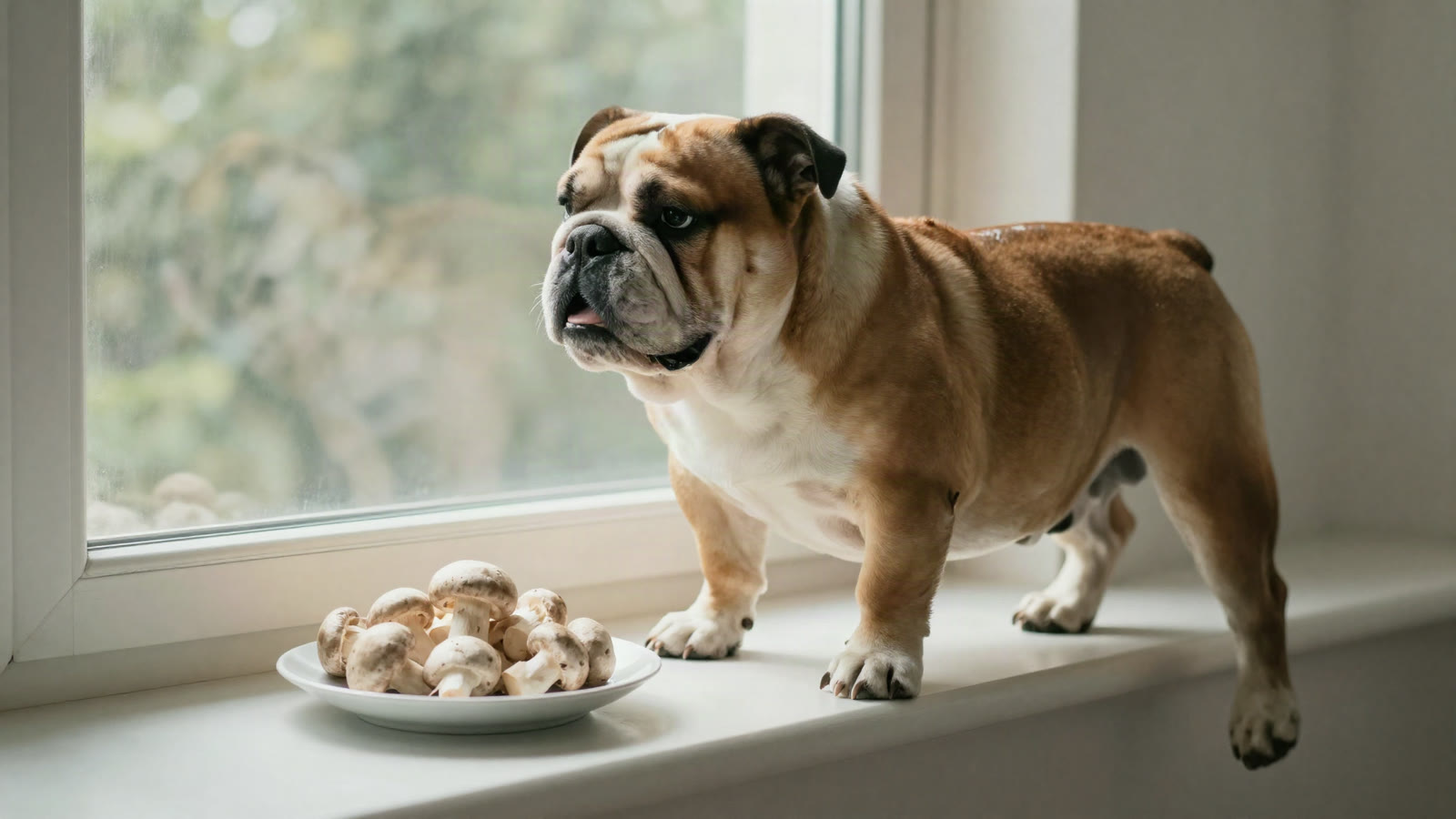
Are mushrooms safe for dogs?
It depends entirely on the type. Store-bought culinary mushrooms, the plain white button, cremini, and portobello varieties sold for people, are safe for dogs in small amounts when cooked plain. They're low in calories and offer some B vitamins and minerals.
Wild mushrooms are the opposite. Many species are toxic to dogs, and some can cause liver failure, neurological damage, or death. Because even experts can struggle to tell safe from deadly mushrooms in the wild, the rule is simple: never let your dog eat any wild mushroom.
How should I serve store-bought mushrooms?
If you want to share safe culinary mushrooms:
- Use plain, cooked mushrooms, lightly sauteed in water or cooked with no oil.
- No butter, salt, garlic, onion, or seasoning; garlic and onion are toxic to dogs.
- Chop them into small pieces.
- Offer only a small amount as an occasional treat.
Skip mushrooms cooked in rich sauces or with other ingredients. Because dishes made for people so often include toxic aromatics, the safest approach is to set aside a little plain mushroom before adding anything else.
Why are wild mushrooms so dangerous?
Some of the most poisonous wild mushrooms, like species of Amanita, contain toxins that cause severe, delayed damage to the liver and other organs. Symptoms can be delayed, which makes them especially dangerous because your dog may seem fine at first.
Signs of wild mushroom poisoning can include vomiting, diarrhea (sometimes bloody), drooling, weakness, tremors, seizures, jaundice (yellowing), and collapse. If you suspect your dog ate a wild mushroom, do not wait for symptoms.
What if my dog ate a wild mushroom?
Treat this as an emergency. Call your vet or an emergency clinic immediately, or contact the ASPCA Animal Poison Control Center at (888) 426-4435. If you can safely do so, take a photo or a sample of the mushroom (in a paper bag) to help identify it. Note the time and, if known, how much was eaten.
Do not induce vomiting unless a professional tells you to. Quick action matters, since some mushroom toxins cause delayed but severe organ damage. Logging the incident timeline in Tavi's symptom checker can help your vet act fast.
Frequently asked questions
Can dogs eat store-bought mushrooms?
Yes, in moderation. Plain, cooked culinary mushrooms like white button, cremini, and portobello are safe for dogs in small amounts. The key is to serve them plain, with no butter, salt, oil, garlic, or onion, since those aromatics are toxic to dogs. Cook them and offer only a small piece as an occasional treat.
What should I do if my dog eats a wild mushroom?
Treat it as an emergency. Contact your vet, an emergency clinic, or the ASPCA Animal Poison Control Center at (888) 426-4435 immediately, even if your dog seems fine, since some toxins act with a delay. If safe, collect a sample or photo to help identify the species. Don't induce vomiting unless a professional instructs you.
How do I tell if a wild mushroom is toxic?
You generally can't tell reliably, and that's the problem. Even mushroom experts can struggle to distinguish safe from deadly species by sight, and some of the most poisonous look ordinary. Never let your dog eat any wild mushroom, and remove mushrooms from your yard promptly, especially after rain when they tend to sprout.
Are mushrooms in dog food or supplements safe?
Mushrooms formulated into commercial dog foods or veterinary supplements are selected safe species and are fine. Some functional mushrooms are marketed for pets, but you should talk to your vet before adding any supplement. The danger is with wild mushrooms and human dishes seasoned with garlic, onion, butter, and salt, not vetted commercial products.
Tavi's guides are informational and not a substitute for professional veterinary advice, diagnosis or treatment. When in doubt, call your veterinarian.