Can Cats Eat Yogurt? Plain Only
Start here
A lick or two of plain, unsweetened yogurt is usually fine as an occasional treat, but it isn't something your cat needs. Cats are obligate carnivores, so dairy adds nothing essential to their diet. Most adult cats are also lactose intolerant, which means even a little yogurt can cause loose stool or gas in sensitive cats.
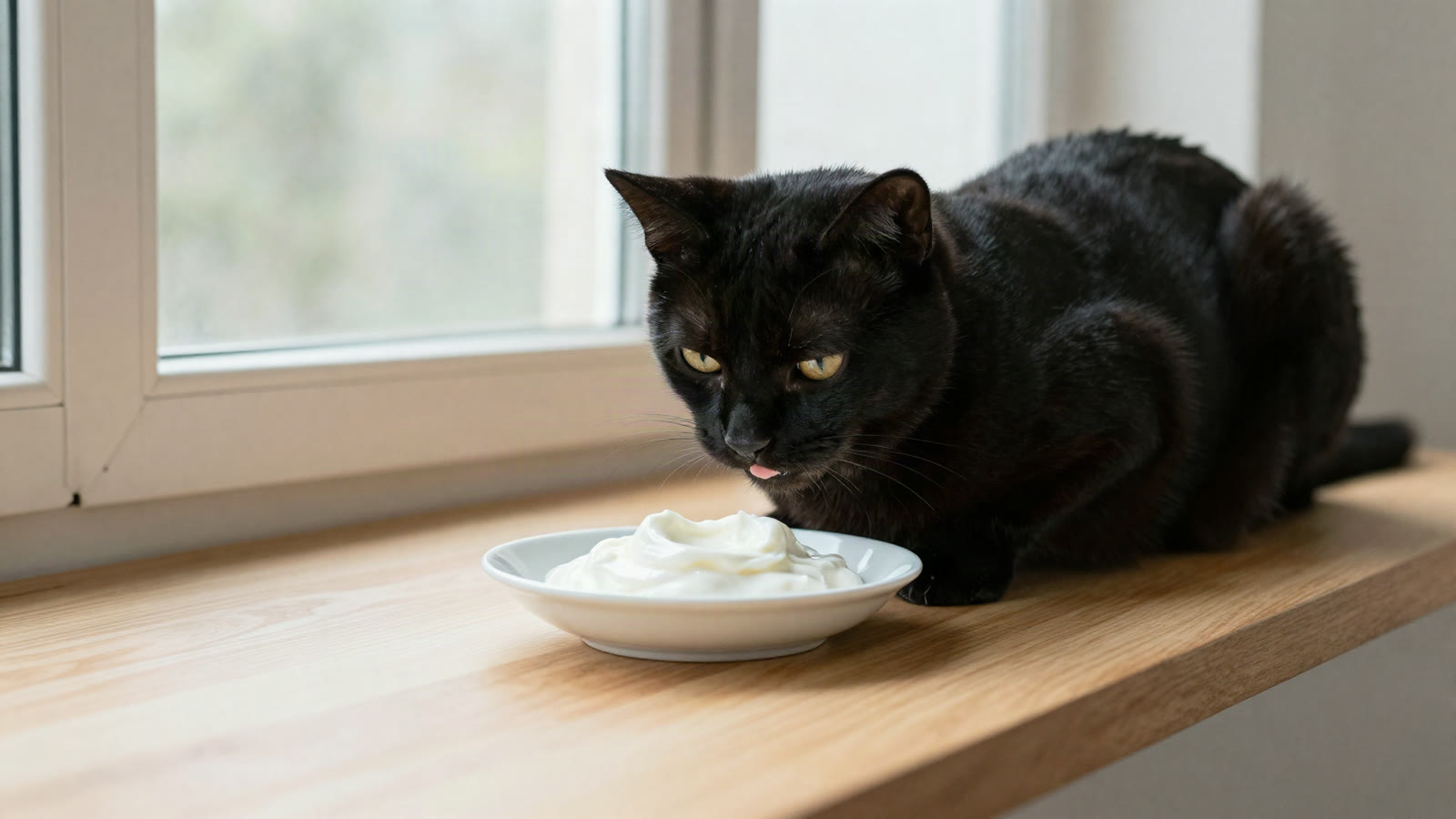
Is plain yogurt safe for cats?
In small amounts, plain and unsweetened yogurt is generally not toxic to cats. Some cats actually tolerate the small amount of lactose in yogurt better than they tolerate milk, because the live cultures in yogurt pre-digest some of the milk sugar during fermentation.
That said, it's a treat, not a food group. A cat gets everything it needs from a complete, meat-based cat food, and yogurt doesn't fill a nutritional gap. Think of it the way you'd think of any human food you share: an occasional novelty, not part of the daily routine.
Skip anything flavored, sweetened, or labeled "light." Fruit yogurts, added sugar, and especially the sweetener xylitol (sometimes listed as "birch sugar") are the real hazards. Xylitol's toxicity is best documented in dogs, but it has no place near any pet, so always read the label before offering a taste.
How much yogurt can I give, and how?
Treats of any kind should make up no more than about 10% of your cat's daily calories. For yogurt, that means a teaspoon or less, once in a while, not a daily bowl. Because cats are small, even what looks like a modest dollop to you is a large serving for them.
- Choose plain, whole-milk, unsweetened yogurt with live active cultures.
- Offer a small lick first and wait a full 24 hours to see how your cat handles it before giving more.
- Never add honey, sugar, fruit, chocolate, or granola.
- Serve it at room temperature so a cold treat doesn't upset a sensitive stomach.
If you want the gut-health benefits people associate with yogurt, a cat-specific probiotic recommended by your vet is a far more reliable option, since it delivers strains suited to feline digestion in a measured dose.
What are the risks of yogurt for cats?
The most common problem is digestive upset: vomiting, diarrhea, gas, or bloating within a day of eating dairy. This happens because most adult cats lose the enzyme lactase they need to digest lactose once they're weaned, so dairy sugars ferment in the gut instead of being absorbed.
Other concerns are the extra calories, which add up fast in a small animal and contribute to weight gain, and any sweeteners or flavorings in the tub. Cats that are overweight or diabetic don't need the added sugar and fat that many yogurts carry.
If your cat has a known dairy sensitivity, diabetes, or a weight problem, it's safest to skip yogurt entirely and reach for a small piece of cooked meat instead, which is something a carnivore is actually built to enjoy.
It's also worth remembering that a cat's reaction to dairy is very individual. Some cats can handle a small lick of yogurt with no issue at all, while others get an upset stomach from the tiniest amount. There's no way to know in advance which type of cat you have, so the only safe way to find out is to start with a very small taste and pay close attention over the next day.
Can yogurt help my cat's digestion?
Yogurt is often described as a natural probiotic, and it's tempting to reach for it when a cat has a mild tummy upset. The reality is more modest. The live cultures in yogurt aren't formulated for cats, and for a lactose-intolerant cat the milk sugar can make loose stool worse rather than better.
If your cat has ongoing digestive issues, the right move is a vet visit rather than a home dairy remedy. Your vet can rule out underlying causes and recommend a feline probiotic with the correct strains and dose. That approach helps far more than hoping a spoonful of yogurt settles things.
What if my cat ate too much yogurt?
A large serving of plain yogurt usually causes nothing worse than a day of loose stool. Offer fresh water, hold off on more treats, and let their stomach settle on their regular food.
Call your vet if diarrhea or vomiting lasts more than 24 hours, if your cat seems lethargic or won't eat, or if the yogurt contained xylitol, chocolate, or a lot of sugar. When you log the incident in Tavi, note the amount and time so you can give your vet an accurate picture, and use the symptom checker if you're unsure whether it's worth a call. Keeping a simple record also helps you learn which treats your cat handles well over time.
Frequently asked questions
Can kittens have yogurt?
A tiny taste of plain yogurt won't usually harm a kitten, but it isn't recommended. Kittens have delicate digestion and specific nutritional needs met by kitten food or mother's milk. Kitten-formula milk replacers are designed for them; cow's-milk yogurt is not. When in doubt, skip it and ask your vet.
Is Greek yogurt better for cats?
Plain Greek yogurt is lower in lactose and sugar than many regular yogurts, so it may be slightly easier on the stomach. It's still just an occasional treat, not a dietary need. Make sure it's plain and unsweetened, with no added flavors, fruit, or sugar substitutes.
Can yogurt help a cat's upset stomach?
There's no strong evidence that yogurt settles a cat's stomach, and for a lactose-intolerant cat it can make things worse. If you want gut support, ask your vet about a probiotic made specifically for cats, which delivers strains suited to feline digestion in a controlled dose.
How often can I give my cat yogurt?
At most once or twice a week, in tiny amounts, and only if your cat tolerates it well. Treats should stay under 10% of daily calories. If you notice gas, loose stool, or vomiting after yogurt, stop offering it and stick to their regular complete diet.
Tavi's guides are informational and not a substitute for professional veterinary advice, diagnosis or treatment. When in doubt, call your veterinarian.