Can Cats Eat Potato? Cooked vs Raw
Start here
Cooked, plain potato is safe for cats in small amounts, but raw potato is not, and no potato is nutritionally necessary. Raw potato and any green parts or sprouts contain solanine, which is toxic to cats, so only ever offer plain, fully cooked potato.
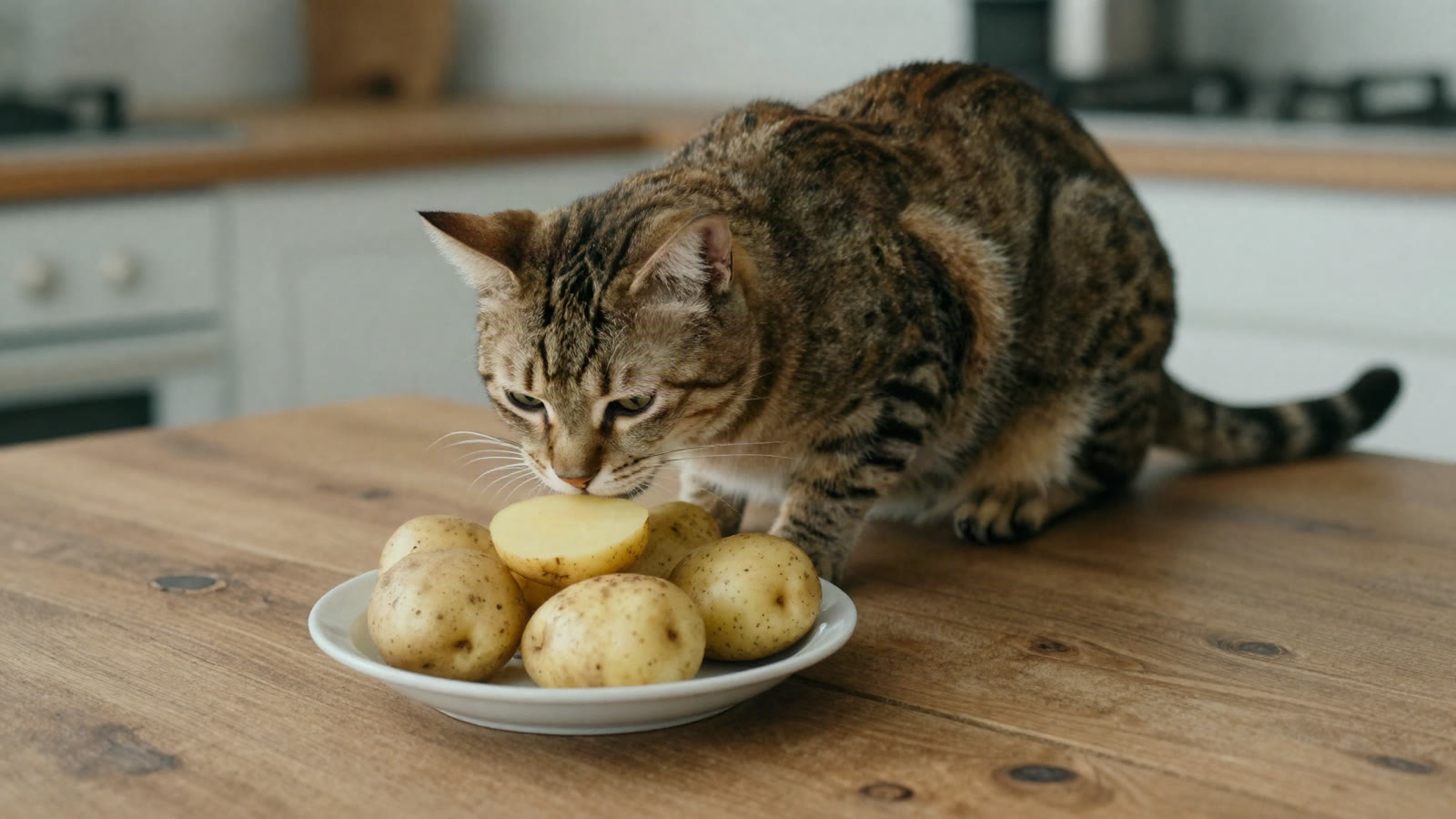
Is potato safe for cats?
Plain, thoroughly cooked potato flesh, whether boiled or baked, is non-toxic to cats in small amounts. It's a starchy food, so it offers little for an obligate carnivore beyond calories, but a small bite won't harm a healthy cat.
The safety depends entirely on preparation. Raw potato, green potato skin, sprouts, and potato plant leaves contain solanine, a natural compound that is toxic to cats and can cause serious symptoms. Cooking breaks down the solanine in the flesh, which is why only cooked potato is considered safe to offer.
Cooked vs raw potato
Cooked and plain is the only safe way to offer potato to a cat.
- Boil or bake it fully, with no butter, salt, oil, garlic, or onion.
- Serve a small, mashed or diced piece, cooled to room temperature.
- Never give raw potato, green-tinged potato, or sprouted potato.
Avoid seasoned dishes entirely. Fries, chips, and mashed potato made with garlic, onion, cream, or lots of salt are unhealthy or outright toxic for cats. If you want to share, set aside a plain, unseasoned piece before you add anything to your own portion.
Why is raw and green potato dangerous?
The concern with raw potato is solanine, a glycoalkaloid that potatoes produce naturally, concentrated in the skin, in any green areas, and in sprouts. Solanine is toxic to cats and can affect the digestive and nervous systems.
Green tinting on a potato is a visible sign of higher solanine levels, and sprouted potatoes are a red flag too. Cooking reduces solanine in the flesh, but it doesn't make green or sprouted potato safe, so those should always be discarded rather than cooked and shared. When in doubt, keep raw and questionable potatoes well out of your cat's reach.
What are the risks?
The most serious risk is solanine poisoning from raw or green potato, which can cause vomiting, diarrhea, lethargy, weakness, and in severe cases more dangerous symptoms. Fried and heavily seasoned potato dishes add unhealthy fat, salt, and toxic seasonings on top of that.
Even plain cooked potato, if fed too often, adds empty carbohydrates and can contribute to weight gain in a small carnivore that doesn't need them. Potato should always be an occasional nibble, never a staple or a substitute for meat-based nutrition.
Storage habits matter for prevention. Keeping potatoes in a cool, dark place slows sprouting and greening, and storing them where your cat can't reach a stray raw one reduces the chance of an accidental toxic snack. If you notice a potato has sprouted or turned green, throw it out rather than trimming and cooking it for anyone in the household, and never leave raw potato peelings where a curious cat could find them.
Sweet potato is a common point of confusion here, since it's often used interchangeably with regular potato in the kitchen. Sweet potato is a different plant and doesn't contain solanine, and plain cooked sweet potato is generally considered a safer occasional treat for cats than white potato. Even so, the same principles apply: it should be cooked, plain, unseasoned, and offered only in small amounts, since it's still a starchy food an obligate carnivore doesn't need. When in doubt about any potato dish, the safest default is to leave it off your cat's plate. A quick check of the ingredient before you share is always easier than dealing with a stomach upset afterward. And because potato in any form offers a cat so little, there's rarely a good reason to make it a habit rather than a rare, plain taste your cat happens to enjoy.
What if my cat ate raw or green potato?
If your cat eats raw potato, green skin, sprouts, or potato leaves, contact your vet or the ASPCA Animal Poison Control Center at 888-426-4435 promptly. Watch for vomiting, diarrhea, lethargy, weakness, or drooling, which can signal solanine toxicity.
A small bite of plain cooked potato usually causes nothing worse than mild stomach upset. Logging what your cat ate, how much, and when in Tavi gives your vet the details they need, and the symptom checker can help you decide how urgently to act.
Frequently asked questions
Is raw potato toxic to cats?
Yes. Raw potato, along with green skin, sprouts, and potato plant leaves, contains solanine, which is toxic to cats and can cause vomiting, diarrhea, lethargy, and weakness. Cooking breaks down the solanine in the flesh, so only plain, fully cooked potato is safe. If your cat eats raw or green potato, call your vet or poison control.
Can cats eat French fries or potato chips?
No. Fries and chips are loaded with oil, salt, and often onion or garlic powder, all of which are bad or toxic for cats. The high fat and salt can cause stomach upset and worse. Keep these away from your cat, and if a piece is stolen, monitor for symptoms and call your vet if it was heavily seasoned.
Can cats eat mashed potato?
Only if it's plain, made without butter, cream, milk, salt, garlic, or onion, and given in a tiny amount. Most mashed potato is made with ingredients that upset cats or, in the case of garlic and onion, are toxic. Plain cooked potato is safer, but it's still just an occasional nibble, not a staple.
Do cats need potato in their diet?
No. Cats are obligate carnivores and gain no real benefit from starchy foods like potato, which mainly add carbohydrates and calories. Some cat foods include cooked potato as a binder or carbohydrate source in controlled amounts, but there's no need to feed potato at home beyond an occasional small taste.
Tavi's guides are informational and not a substitute for professional veterinary advice, diagnosis or treatment. When in doubt, call your veterinarian.