Why Do Cats Eat Grass? Is It Safe?
Start here
Eating grass is normal cat behavior and is usually harmless, as long as the grass is free of pesticides and other chemicals. Cats don't need grass nutritionally, but many nibble it anyway, and in moderation it's generally nothing to worry about.
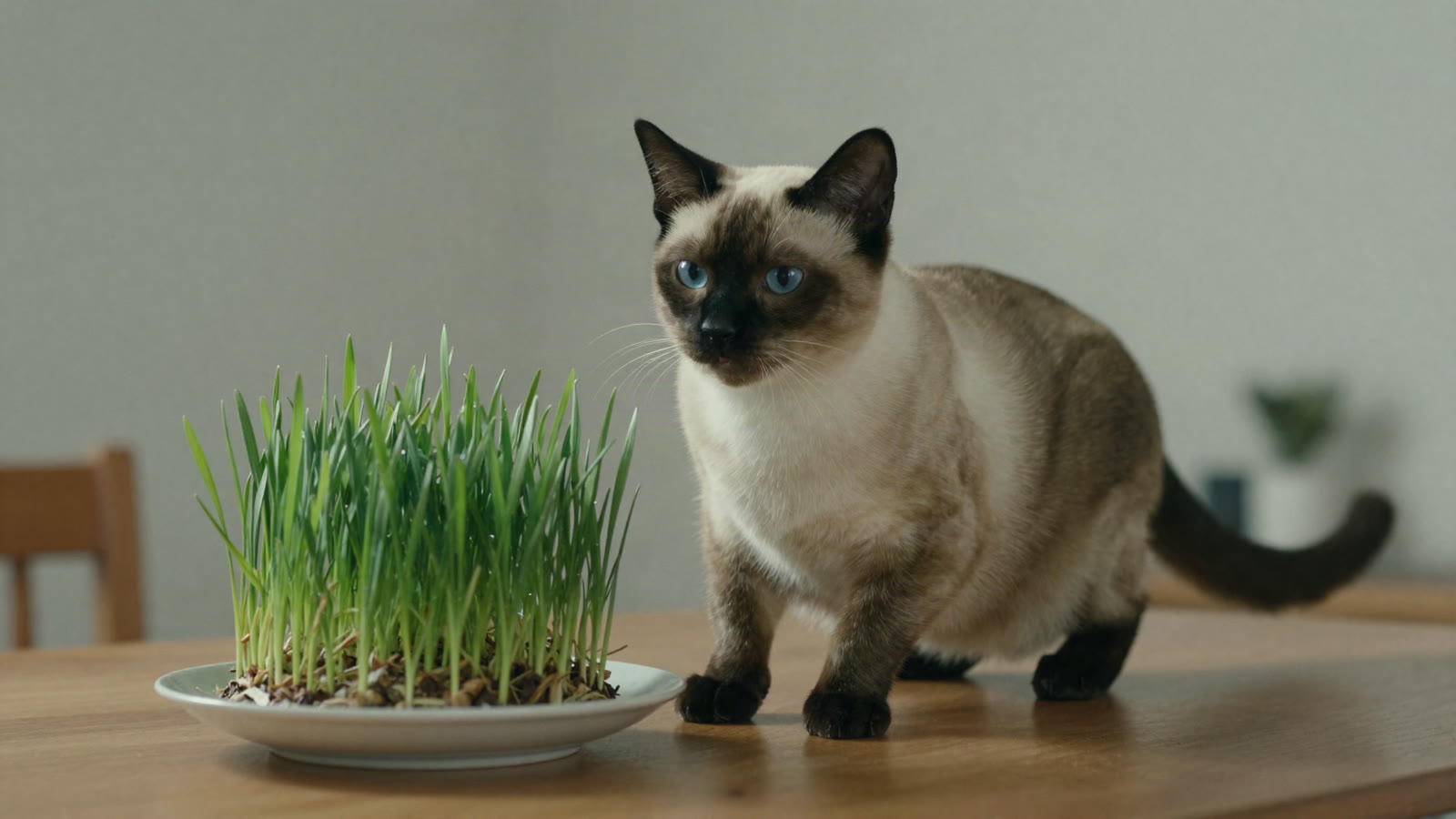
Why do cats eat grass?
There's no single proven reason, but researchers and vets point to a few likely explanations. Grass-eating is very common even in well-fed indoor cats, which suggests it's an instinct rather than a sign of hunger or a nutritional gap.
- Instinct: wild cats eat grass and plant matter too, so it may be a leftover natural behavior.
- Digestive help: grass may help move along indigestible material such as fur, sometimes by triggering vomiting.
- Fiber or trace nutrients: grass adds a little fiber and folic acid, though cats don't rely on it.
Often it may simply be that a cat enjoys the texture or the act of chewing. Whatever the reason, an occasional grass habit in a healthy cat is generally considered normal.
Is eating grass safe for cats?
Nibbling clean, untreated grass is generally safe. It's normal for a cat to eat some grass and occasionally bring it back up, and that alone usually isn't a cause for alarm.
The real dangers aren't the grass itself but what's on or near it. Pesticides, herbicides, and fertilizers on lawns can be harmful if a cat eats treated grass. Even more serious are toxic houseplants a cat may chew instead of grass. Lilies, for example, are extremely toxic to cats and can cause kidney failure even in tiny amounts, so they should never be in a cat household.
How to let cats eat grass safely
If your cat likes grass, give them a safe supply rather than access to a treated lawn or unknown plants.
- Grow cat grass (usually wheat, oat, or barley grass) indoors from a pet-safe kit.
- Keep them away from lawns treated with chemicals and from toxic houseplants.
- Place other houseplants out of reach and identify anything new before bringing it home.
- Provide plenty of fresh water and a complete diet so grass stays an extra, not a substitute.
Offering cat grass gives a curious cat a healthy outlet and steers them away from hazards, which is easier than trying to stop the behavior altogether.
Is grass-eating a sign of a problem?
For most cats, no. A healthy cat that occasionally munches grass and gets on with its day is behaving normally. The behavior becomes worth a closer look when it changes suddenly or comes with other symptoms.
If your cat starts eating grass far more than usual, or eats grass and then vomits frequently rather than just now and then, it's worth paying attention. Frequent vomiting can point to hairballs, nausea, or gastrointestinal disease, none of which grass will fix. In those cases the grass is a clue, not the cause.
It's also worth noting that indoor-only cats sometimes take a sudden interest in grass or plants simply out of boredom. A cat with plenty of enrichment, such as play sessions, climbing spaces, and window views, is less likely to fixate on chewing greenery. If your cat seems to chew plants for lack of anything better to do, adding stimulation and a pot of cat grass often satisfies the urge safely.
For outdoor and indoor-outdoor cats, the calculation shifts a little, because you can't fully control what they graze on. You can still reduce the risk by not treating your own lawn or garden with chemicals your cat might ingest, and by learning which common garden plants are toxic to cats so you can remove or fence them off. Lilies deserve special mention again here: they're so dangerous to cats that even pollen or vase water can cause harm, so they have no place in a home or garden shared with a cat.
When should grass-eating worry me?
See your vet if grass-eating suddenly increases, if your cat vomits frequently (not just the occasional grass regurgitation), or if it comes with weight loss, appetite changes, or lethargy. Excessive vomiting can signal an underlying issue such as a hairball problem, gastrointestinal disease, or nausea that deserves attention.
Tracking how often your cat eats grass or vomits in Tavi makes it easier to spot a change from their normal pattern, and the symptom checker can help you decide when it's time to call the vet.
Frequently asked questions
Does eating grass mean my cat is sick?
Usually not. Most cats that eat grass are perfectly healthy, and it's considered normal behavior. It becomes a concern only if it's paired with frequent vomiting, weight loss, appetite changes, or lethargy. If grass-eating suddenly ramps up or your cat seems unwell, it's worth a vet visit to rule out an underlying problem.
Why does my cat throw up after eating grass?
Cats lack the enzymes to fully digest grass, so it can trigger vomiting, which may help them clear hairballs or indigestible material. Occasional grass-related vomiting is generally normal. Frequent or forceful vomiting, or vomiting with other symptoms, is not, and should be checked by your vet.
Is cat grass different from lawn grass?
Cat grass is a pet-safe blend, often wheat, oat, or barley grass, grown indoors specifically for cats. It's the same idea as lawn grass but free of pesticides, fertilizers, and unknown chemicals. Growing cat grass gives your cat a safe way to indulge the habit without the risks of a treated outdoor lawn.
How do I stop my cat from eating houseplants?
Offer safe cat grass as an alternative, and keep toxic plants like lilies completely out of the home, as they can be deadly to cats. Place other houseplants out of reach, and use deterrents if needed. If you suspect your cat ate a toxic plant, call your vet or the ASPCA Animal Poison Control Center at 888-426-4435 right away.
Tavi's guides are informational and not a substitute for professional veterinary advice, diagnosis or treatment. When in doubt, call your veterinarian.