Can Cats Eat Pumpkin? For Digestion
Start here
Yes, plain cooked or canned pumpkin is safe for cats and is one of the few plant foods vets sometimes recommend, usually for mild digestive issues. Use 100% pure pumpkin, never pie filling, and only in small amounts alongside a complete diet.
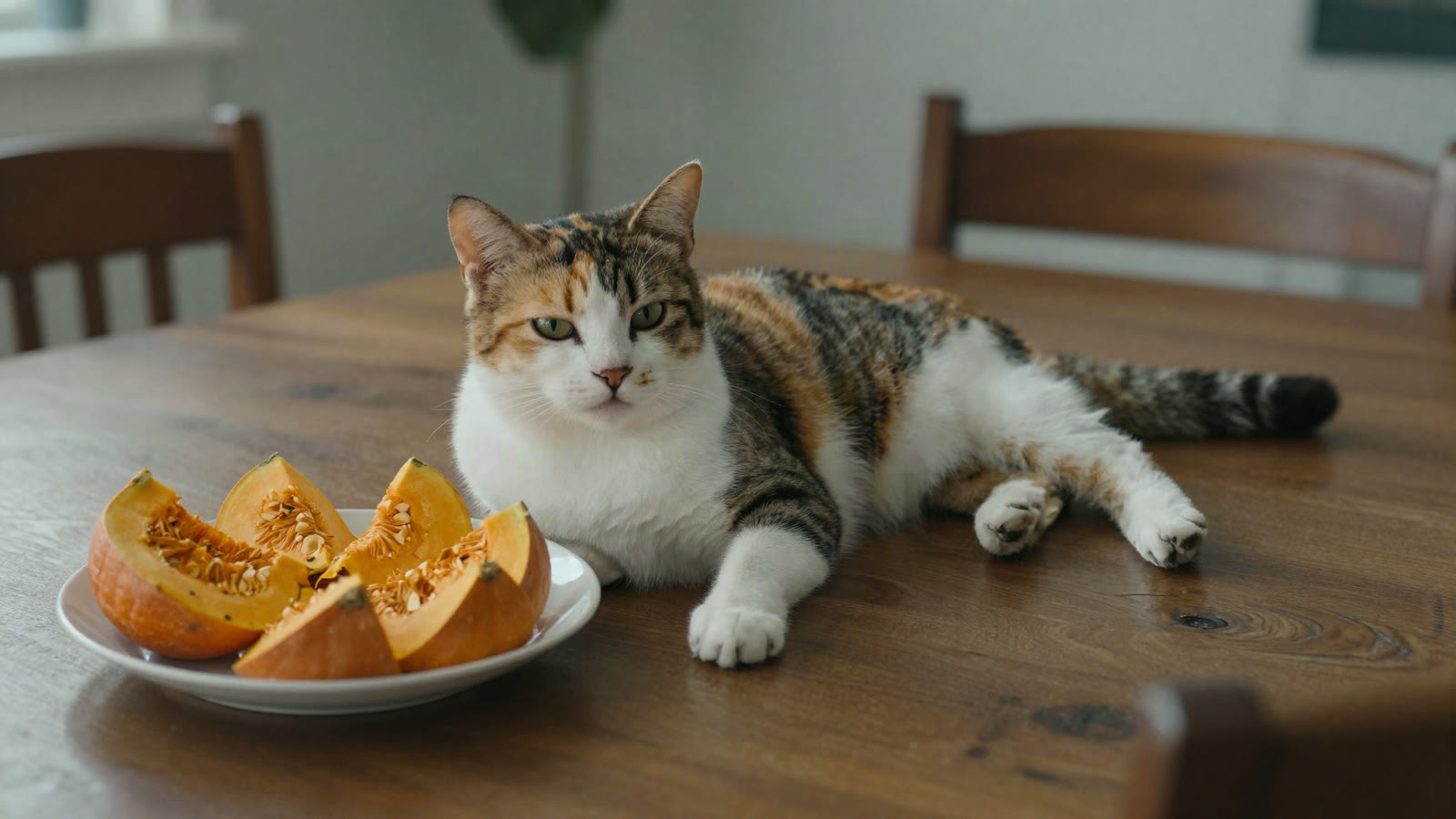
Is pumpkin safe and helpful for cats?
Plain pumpkin is safe for cats and is a good source of soluble fiber. Vets sometimes suggest a small amount to help with mild constipation or diarrhea, because the fiber can add bulk and either help firm up loose stool or gently keep things moving. It's also low in calories, which makes it a reasonable addition even for chubbier cats.
The key is using 100% pure pumpkin, either fresh cooked and mashed or plain canned. Pumpkin pie filling is off-limits, since it contains sugar, spices, and sometimes xylitol, all of which are bad for cats. Always check the can to be sure you're buying plain pumpkin and not a sweetened, spiced pie mix.
How much pumpkin should I give?
A little goes a long way. Most cats do well with about a teaspoon of plain pumpkin, once or twice a day, mixed into their food. Starting small lets you see how your cat responds before you offer more.
- Use plain cooked or canned 100% pumpkin, unseasoned and unsweetened.
- Mix it into their regular food rather than serving it alone.
- Refrigerate leftover canned pumpkin and use it within a few days, or freeze it in small portions.
If you're using pumpkin to manage a digestive problem, check the amount and approach with your vet first, since the right dose can depend on your cat's size and the issue you're trying to address.
Can pumpkin help with hairballs and weight?
The fiber in pumpkin may help move swallowed fur through the digestive tract, so some owners use a small spoonful as a gentle aid for cats prone to hairballs. It's not a cure, but it's a low-risk thing to try alongside regular grooming.
Because it's filling and low in calories, a little pumpkin can also help a cat on a weight-management plan feel satisfied. Again, it's a small supporting role, not a diet by itself. If your cat is coughing up hairballs frequently or struggling with weight, loop in your vet so you can address the underlying cause rather than just the symptom.
What are the risks?
Too much fiber can backfire and cause loose stool, gas, or bloating. Seasoned or sweetened pumpkin products are the bigger danger, especially anything containing xylitol, nutmeg, or lots of sugar, so pie filling and spiced lattes are never appropriate.
Pumpkin also shouldn't be used to mask an ongoing problem. Persistent constipation or diarrhea needs a vet's attention, since it can signal something more serious than a quick fiber fix can address. Relying on pumpkin while a real issue goes unchecked can delay important care.
Be careful about the source of your pumpkin, too. Only plain pumpkin belongs in a cat's bowl, and decorative or carved pumpkins that have sat out can grow mold, which is unsafe. Fresh cooked pumpkin or a can of 100% pumpkin from the baking aisle is the way to go, and any leftovers should be stored properly and discarded once they're past their best.
Pumpkin can also be a handy way to add moisture to the diet of a cat that doesn't drink much, since canned pumpkin is mostly water. Stirring a small spoonful into wet food gives a little extra hydration along with the fiber, which some cats appreciate. As with everything, moderation is the rule: pumpkin is a helpful supplement in small amounts, not a food group, and it works best as one small part of a diet that's otherwise built around good-quality, meat-based cat food. If a spoonful of pumpkin seems to help your cat, that's a nice bonus, but it doesn't replace regular veterinary care for any ongoing digestive concern.
When should I call the vet?
If your cat's constipation or diarrhea lasts more than a day or two, keeps coming back, or comes with vomiting, lethargy, or no appetite, see your vet rather than relying on pumpkin. Straining in the litter box can be an emergency in cats, particularly males, so don't wait it out.
Because digestive changes often show up as patterns, logging litter-box habits, appetite, and any pumpkin doses in Tavi helps you and your vet see whether the problem is improving or getting worse over time.
Frequently asked questions
Can pumpkin help my cat's constipation?
It can help mild, occasional constipation thanks to its soluble fiber, and vets sometimes recommend a small daily spoonful. It's not a cure for chronic constipation, which needs veterinary care. Always start small, use plain pumpkin only, and check with your vet before relying on it, especially if straining is severe.
Is canned pumpkin okay, or does it need to be fresh?
Plain canned 100% pumpkin is fine and convenient, as long as it's not pie filling. Pie filling has added sugar and spices that can harm cats. Fresh pumpkin works too if it's cooked plain and mashed with no seasoning. Either way, keep the portion small and unseasoned.
Can cats eat pumpkin seeds?
Plain, unsalted, ground pumpkin seeds are sometimes given in tiny amounts, but whole seeds can be a choking hazard and are hard to digest. There's no strong need to feed them. If you want to try, grind a small amount and check with your vet, and never use salted or seasoned seeds.
How much pumpkin is too much?
More than a teaspoon or two a day for an average cat can cause gas, bloating, or loose stool from excess fiber. Every cat is different, so start with a small amount and adjust. If pumpkin causes digestive upset rather than helping, cut back or stop and talk with your vet.
Tavi's guides are informational and not a substitute for professional veterinary advice, diagnosis or treatment. When in doubt, call your veterinarian.