Can Cats Eat Rice? When It Helps
Start here
Yes, cats can eat a small amount of plain cooked rice safely, and vets sometimes suggest it as part of a bland diet for an upset stomach. Rice is non-toxic but nutritionally unnecessary for an obligate carnivore, so it should never make up much of a cat's meal.
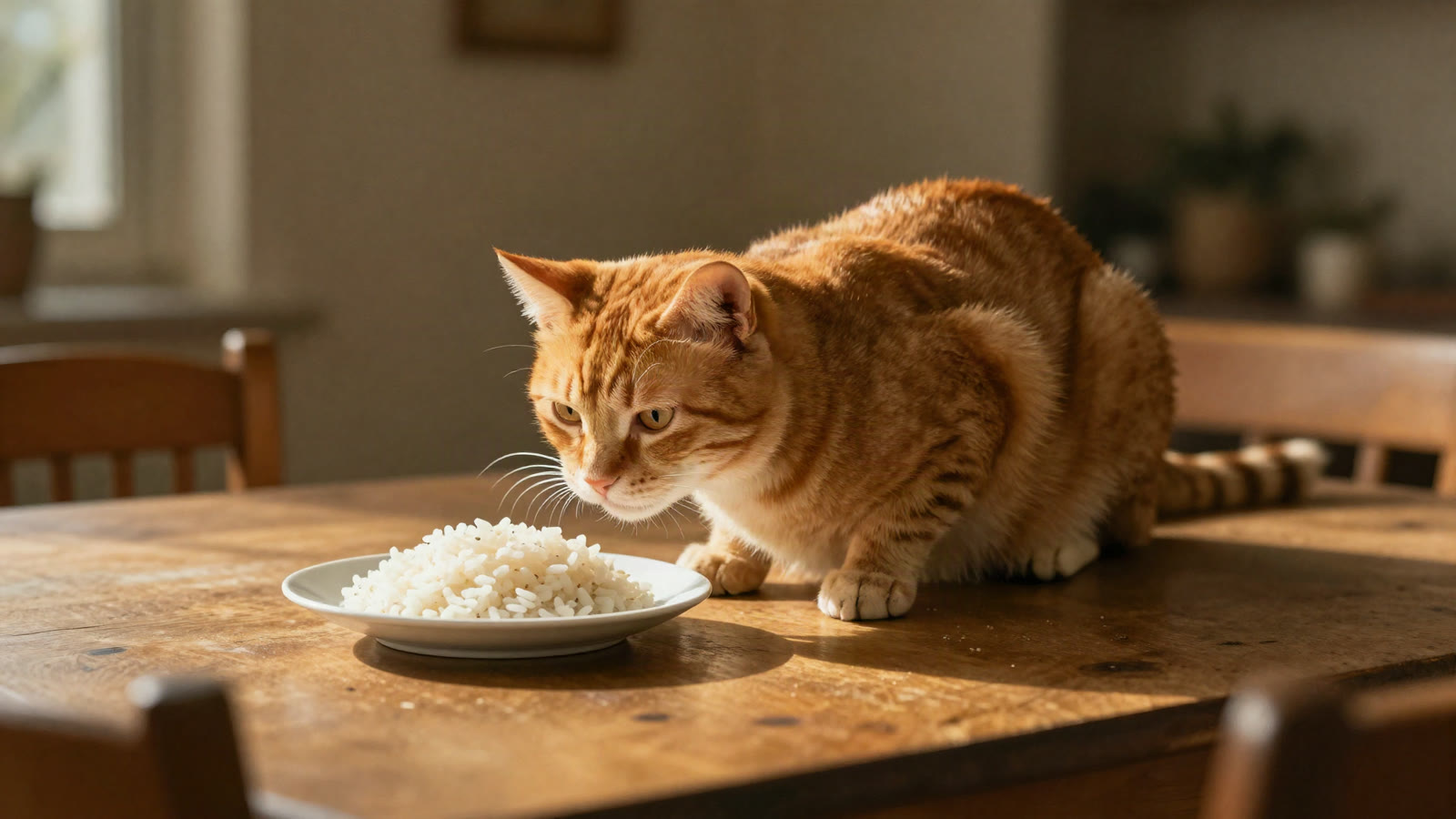
Is rice safe for cats?
Plain, fully cooked white rice is safe for cats in small amounts. It's easy to digest, which is why a spoonful is sometimes mixed with a lean protein like boiled chicken as a temporary bland diet during a bout of diarrhea, usually on a vet's advice.
Rice offers little nutritionally for a cat, though. As obligate carnivores, cats need meat-based protein and can't thrive on carbohydrates. Rice is a filler or a short-term digestive aid, not a food group, and it shouldn't take the place of the protein a cat depends on.
You may notice rice listed as an ingredient in some commercial cat foods, where it's used in balanced, controlled amounts as a carbohydrate source. That's different from feeding plain rice at home as a meal.
When does rice actually help?
The most common reason to reach for rice is a short-term bland diet. When a cat has mild diarrhea, a vet may suggest small servings of plain boiled chicken with a little rice for a day or two to give the gut a gentle, easily digested option while it recovers.
- Cook the rice plain and pair it with a bland lean protein.
- Feed small amounts more frequently rather than one large meal.
- Transition back to the regular diet once stools are normal.
This is a temporary measure, not a long-term feeding plan, and it works best under veterinary guidance so you don't overlook a problem that needs treatment.
How much rice can a cat have?
Keep it to a small spoonful mixed into their regular food, occasionally. Rice should stay a minor add-in, well under the 10% treat allowance, so it doesn't crowd out the protein your cat actually needs.
- Cook it plain, with no salt, butter, oil, garlic, or onion.
- Let it cool and serve it soft and fully cooked, never raw or undercooked.
- If using it as a bland diet, follow your vet's guidance on amounts.
Never feed rice daily as a staple. A cat that fills up on carbohydrates has less appetite for the meat-based nutrition it truly requires.
If your cat seems to genuinely enjoy rice, that's fine in small doses, but it's worth checking that they're not turning to it because their main diet isn't appealing or isn't sitting well. A cat that suddenly prefers bland carbs over its usual food may be telling you something about its appetite or digestion, which is a good thing to mention at your next vet visit.
Rice also shows up in a lot of home-cooked pet meals people find online, but building a balanced diet for an obligate carnivore is genuinely difficult, and rice-heavy homemade meals can leave a cat short on the animal protein, taurine, and other nutrients it needs. If you want to cook for your cat rather than feed commercial food, do it with a vet or a veterinary nutritionist so the recipe is complete. A spoonful of rice as a bland-diet aid is one thing; rice as a dietary cornerstone is a recipe for deficiency.
What are the risks?
The main risk is feeding too much, which fills a cat up with carbs it doesn't need and can contribute to weight gain or nutritional imbalance over time. Raw or undercooked rice is hard to digest and can cause stomach upset.
Flavored rice dishes are the real hazard. Seasonings like onion and garlic are toxic to cats, and many prepared rice dishes contain them along with salt and oil. Only ever offer plain, unseasoned rice, and keep restaurant or takeout rice well away from your cat.
What if my cat's stomach doesn't settle?
If you're feeding a bland rice-and-chicken diet for diarrhea and things don't improve within a day or two, or if your cat also vomits, stops eating, or seems lethargic, contact your vet. Ongoing digestive trouble can point to a problem that a bland diet alone won't fix, and cats can dehydrate quickly.
Logging appetite, stool changes, and what you fed in Tavi helps you track whether the bland diet is working, and gives your vet a clear timeline if you need to bring your cat in.
Frequently asked questions
Can rice cure my cat's diarrhea?
A little plain rice with boiled chicken can gently support a cat through mild diarrhea, but it isn't a cure. If diarrhea lasts more than a day or two, or comes with vomiting, lethargy, or blood, see your vet. Cats can dehydrate quickly, so don't rely on home remedies for long.
Is brown rice or white rice better for cats?
Plain white rice is easier for cats to digest and is the usual choice for a bland diet. Brown rice has more fiber, which can be harder on a sensitive stomach. Since rice is only ever a small supplement for a cat, plain white rice, fully cooked and unseasoned, is the safer pick.
Can cats eat rice every day?
They shouldn't. Cats are obligate carnivores and get no real benefit from daily carbohydrates, which can displace needed protein and add empty calories. An occasional spoonful mixed into food is fine, but rice should never be a daily staple or a substitute for balanced, meat-based cat food.
Is fried rice or seasoned rice safe?
No. Fried and seasoned rice often contains onion, garlic, salt, and oil, all of which are harmful to cats, with onion and garlic being toxic. Only plain, unseasoned, fully cooked rice is safe. If your cat sneaks a seasoned rice dish, watch for stomach upset and call your vet if it contained onion or garlic.
Tavi's guides are informational and not a substitute for professional veterinary advice, diagnosis or treatment. When in doubt, call your veterinarian.