Can Dogs Eat Bacon? Why Vets Say Go Easy
Start here
Best kept to a rare, tiny taste, or skipped entirely. Bacon isn't toxic, but it's extremely high in fat and salt, which makes it one of the least dog-friendly treats. A small nibble won't poison a healthy dog, but it's easy to cause harm.
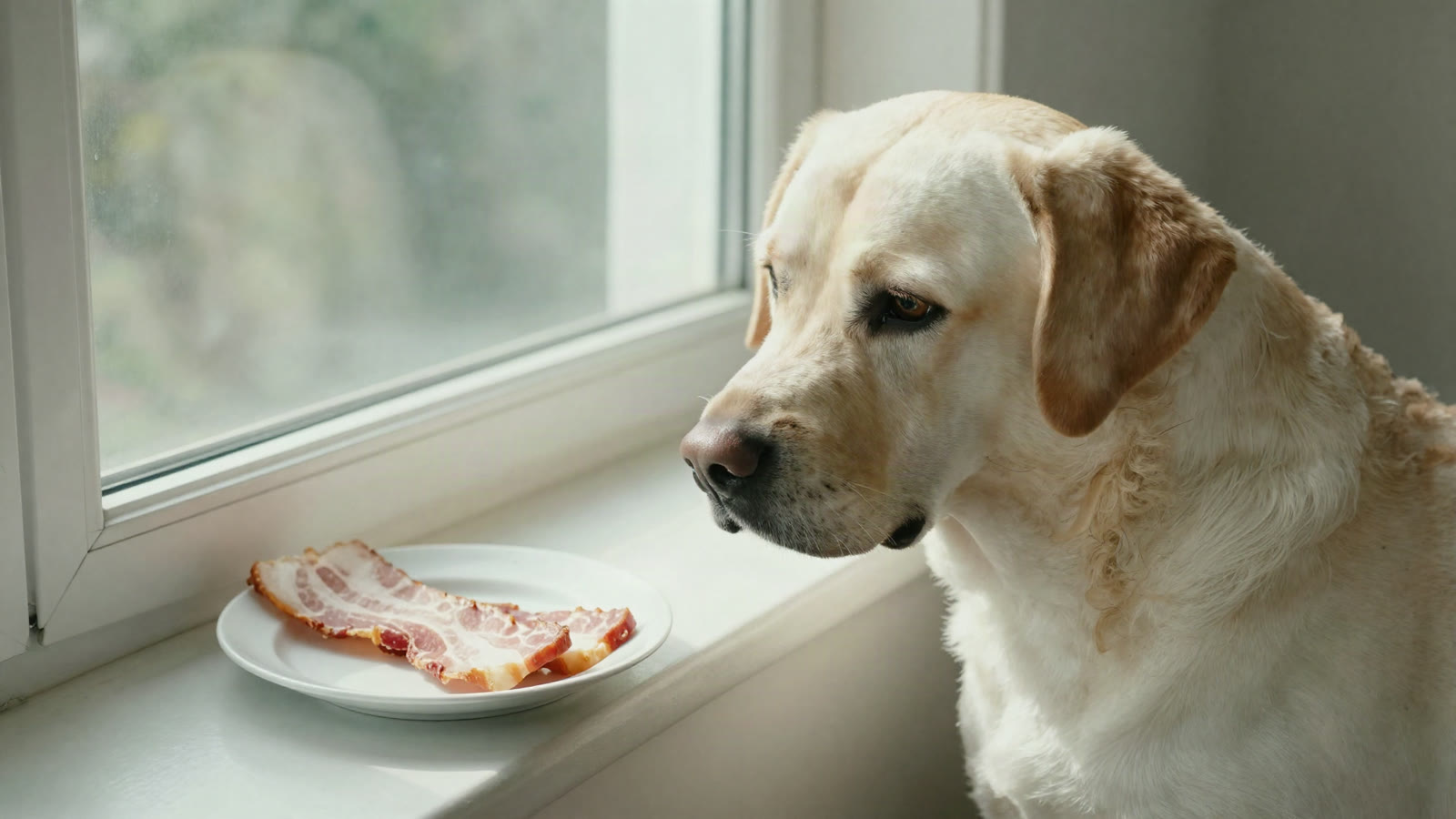
Why vets caution against bacon
Bacon is cured, salty, and very fatty, essentially a concentrated dose of the two things dogs' diets should be low in. It's also often cooked in grease and may carry seasonings. There's no nutritional benefit that makes the risk worthwhile.
A single small piece of cooked bacon is unlikely to harm a healthy adult dog, but bacon should never be a regular treat, and even small amounts add up for little dogs.
The main risks: fat and salt
- Pancreatitis: Bacon's high fat content can trigger this painful, potentially serious inflammation of the pancreas, especially with a fatty binge.
- Salt: The high sodium can cause excessive thirst and, in large amounts, salt poisoning. It's risky for dogs with heart or kidney conditions.
- Weight gain: Bacon is calorie-dense; regular bits contribute to obesity.
- Grease and seasonings: Bacon grease and any garlic or onion flavoring add further risk.
Raw bacon and bacon grease
Don't give raw bacon, it's even fattier and saltier and can carry bacteria and parasites like Trichinella. Avoid pouring bacon grease over food, too; it's pure fat and a fast route to stomach upset or pancreatitis. If you want to share a taste, a tiny piece of fully cooked, plain, drained bacon is the least-bad option.
What if my dog ate a lot of bacon?
Provide plenty of fresh water and watch closely. Signs of trouble include vomiting, diarrhea, belly pain, restlessness, loss of appetite, or lethargy, these can indicate pancreatitis. Excessive thirst, staggering, or tremors can signal salt toxicity.
If your dog ate a large amount of bacon, raw bacon, or a lot of grease, call your vet or the ASPCA Animal Poison Control Center at 888-426-4435. Because fatty-food problems can develop over hours, logging the amount and time in Tavi helps you track symptoms and inform the clinic.
Frequently asked questions
Can one piece of bacon hurt a dog?
A single small piece of cooked, plain bacon is unlikely to harm a healthy adult dog, but it's very salty and fatty, so it shouldn't be routine. For small dogs, or those with heart, kidney, or pancreatitis issues, even a little is risky, better to skip it.
Can bacon cause pancreatitis in dogs?
Yes. Bacon's high fat content can trigger pancreatitis, especially a sudden fatty treat or a bacon binge. Signs include vomiting, diarrhea, belly pain, and lethargy. If your dog shows these after eating bacon, contact your vet promptly.
Can dogs eat raw bacon?
No. Raw bacon is even higher in fat and salt and can carry bacteria and parasites such as Trichinella. If your dog eats raw bacon, watch for vomiting or diarrhea and call your vet if you're concerned, especially if a large amount was eaten.
Is bacon grease bad for dogs?
Yes. Bacon grease is pure fat and can quickly cause stomach upset or trigger pancreatitis. Don't pour it over your dog's food, and wipe up spills so your dog can't lick them. If your dog laps up a lot of grease, watch for vomiting and call your vet.
Tavi's guides are informational and not a substitute for professional veterinary advice, diagnosis or treatment. When in doubt, call your veterinarian.