Scottish Fold Cat Health Issues & Lifespan
Start here
Scottish Folds are sweet, distinctive cats known for their folded ears, but that very fold comes from a cartilage-affecting gene — one dominant TRPV4 variant causes both the folded ear and a skeletal disease, osteochondrodysplasia — so breeding for the fold is breeding for the cartilage defect. Every folded-ear cat carries the variant, though how much joint disease an individual shows varies widely: in one small study only 1 of 12 carriers had clinical signs. They typically live 11-15 years, and prospective owners should understand this welfare concern before choosing the breed.
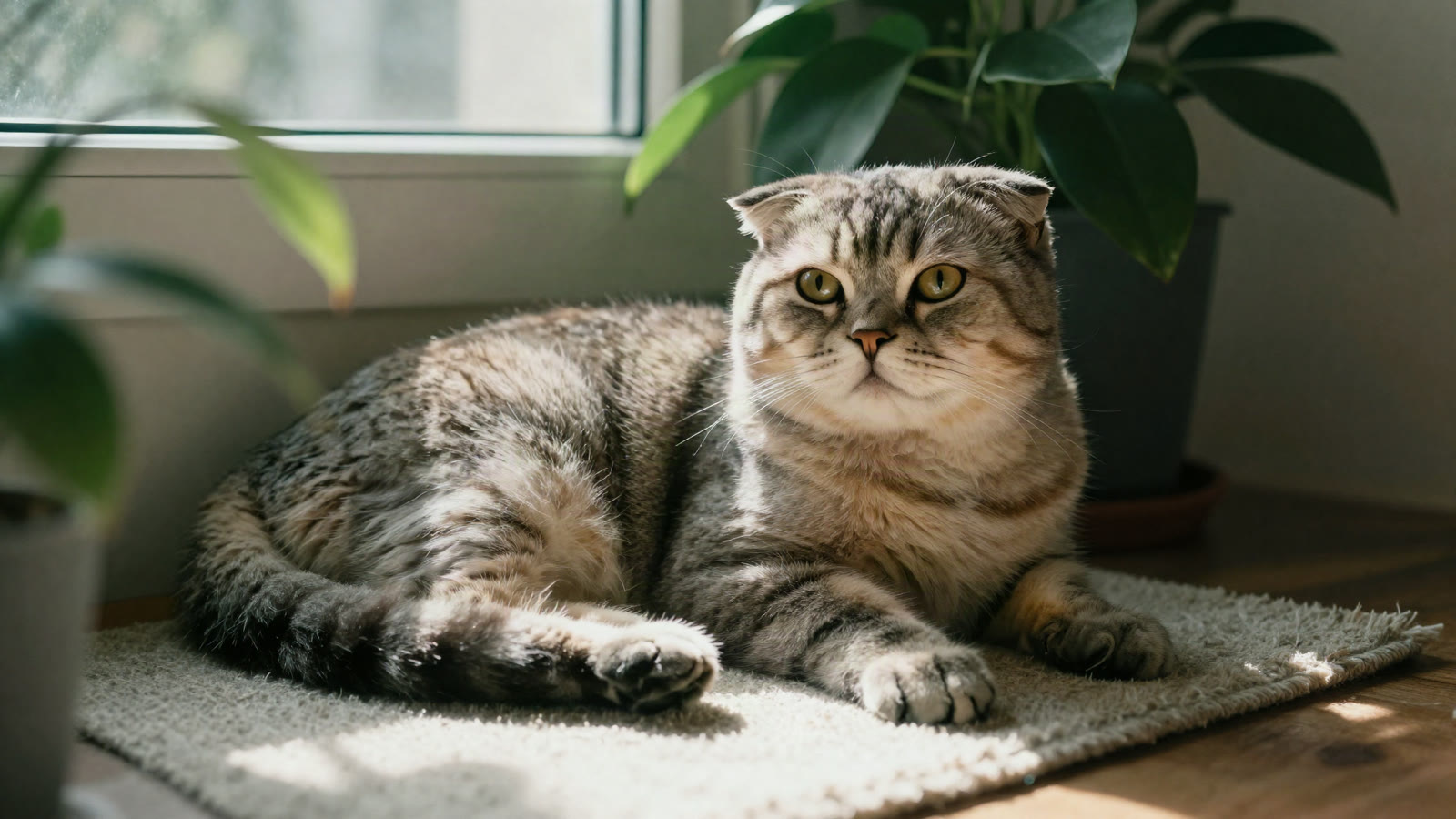
What health problems are Scottish Folds prone to?
The Scottish Fold's signature ears and its most serious health problem come from the same gene:
- Osteochondrodysplasia (OCD): the same dominant gene variant that folds the ears alters cartilage throughout the body, affecting bone and joint development — most visibly in the tail, ankles, and knees. Every folded-ear cat carries the variant, but how much joint disease results varies widely: one series of 12 Folds found clinical signs in only 1, and Australian veterinary records recorded a clinical diagnosis in about 1% of 1,131 Folds (with 64 more suspected, so probably an undercount). Where it does cause arthritis it can be painful, and there is no cure.
- Arthritis and stiffness: where OCD causes joint changes they can appear early and be painful, though how often that happens across the breed is not well established.
- Hypertrophic cardiomyopathy (HCM): a thickening heart-muscle disease seen in the breed.
- Polycystic kidney disease (PKD): inherited kidney cysts in some lines.
- Ear problems: the folded ears can be slightly more prone to wax buildup, though infection risk is not dramatically higher.
Because the fold and the cartilage defect are the same mutation — you cannot have one without the other — many veterinary and welfare organizations discourage breeding cats with the fold gene.
What early signs should Scottish Fold owners watch for?
Because every Fold carries the cartilage variant, it is worth watching for signs of pain and stiffness even in a cat that seems fine:
- Reluctance to jump or climb, stiffness, or a stiff, awkward tail that resists handling (joint disease)
- An abnormal or 'wooden' gait, or lameness (osteochondrodysplasia)
- Reduced activity, hiding, or irritability when touched (pain)
- Rapid or labored breathing, lethargy, or sudden hind-leg weakness (possible heart disease, an emergency)
- Increased thirst and urination or weight loss (possible kidney disease)
A stiff tail that a cat dislikes having touched is a classic early sign of OCD and warrants a vet visit.
How do you keep a Scottish Fold healthy?
You cannot cure OCD, but you can keep a Fold as comfortable as possible:
- Manage joint pain with your vet: pain relief, joint supplements, and, in some cases, other therapies can improve comfort. Discuss a long-term plan.
- Keep them very lean: excess weight badly worsens already-compromised joints. This is one of the most important things you can do.
- Make the home joint-friendly: low-sided litter boxes, ramps or steps, soft bedding, and easy access to food and water reduce strain.
- Monitor the heart and kidneys with regular exams, heart auscultation, and periodic screening.
- Handle the tail and limbs gently, as they may be painful.
Tracking weight and vet visits over time helps you manage this breed's chronic issues. Logging weigh-ins, mobility changes, and pain notes in Tavi gives your vet a clear picture to guide arthritis care as it progresses.
How long do Scottish Folds live, and when should you see the vet?
Scottish Folds typically live 11 to 15 years. Lifespan can be reasonable, but quality of life depends heavily on spotting and managing joint disease, which some Folds develop and others do not.
See your vet if you notice stiffness, reluctance to jump, a painful or stiff tail, or any change in mobility, since early pain management improves comfort. Seek emergency care for breathing difficulty or sudden hind-leg weakness (possible heart problem). Regular checkups with joint, heart, and kidney monitoring are especially important for this breed.
Frequently asked questions
Why are Scottish Folds' ears folded, and is it harmful?
The folded ears come from a single dominant variant in TRPV4, a cartilage gene, and the same variant causes a skeletal disease called osteochondrodysplasia. Every folded-ear cat carries it, so breeding for the fold is breeding for the cartilage defect: the two cannot be separated. How much joint disease follows varies a great deal. In one series of 12 Scottish Folds all carried the variant but only 1 showed clinical signs, and Australian veterinary records logged a clinical diagnosis in about 1% of 1,131 Folds, with 64 more flagged as suspected. That is likely an undercount, since those are primary-care notes rather than systematic X-rays. The trait is still directly tied to a welfare problem, which is why many veterinary and welfare bodies discourage breeding cats with the fold gene.
Do all Scottish Folds get arthritis?
Not all of them, though every one of them carries the gene that can cause it. The fold and the skeletal disease come from the same dominant TRPV4 variant, so the defect is universal in the breed, but the clinical picture is not. In one series of 12 Scottish Folds all carried the variant, only 1 showed clinical signs, and none of the cats re-examined showed X-ray progression over 1.5 years. In Australian veterinary records a clinical diagnosis was recorded in about 1% of 1,131 Folds, with 64 more suspected, which probably undercounts it. When joint disease does develop it typically affects the tail, ankles and knees, can be painful, and has no cure. Keeping the cat lean and working with your vet on pain management helps maintain comfort and quality of life.
How can I keep my Scottish Fold comfortable?
Keep your Fold very lean, since extra weight worsens joint pain, and work with your vet on a long-term plan that may include pain relief and joint supplements. Make the home easy to navigate with ramps or steps, low-sided litter boxes, soft bedding, and accessible food and water. Handle the tail and limbs gently, and see your vet promptly if mobility or comfort declines.
Are Scottish Folds prone to heart disease?
Yes, Scottish Folds can develop hypertrophic cardiomyopathy (HCM), a disease where the heart muscle thickens, reducing efficiency and raising clot and heart-failure risk. It can be silent until advanced, so watch for rapid or labored breathing, lethargy, and sudden hind-leg weakness, and treat those as emergencies. Ask your vet about periodic heart screening, since early detection helps with management.
Tavi's guides are informational and not a substitute for professional veterinary advice, diagnosis or treatment. When in doubt, call your veterinarian.