Can Cats Eat Watermelon? Seedless Only
Start here
Yes, cats can have a small piece of seedless watermelon flesh as an occasional treat, but it isn't a dietary need. The flesh is non-toxic and mostly water, but the rind and seeds should always be removed, and the natural sugar means it stays a rare snack for an obligate carnivore.
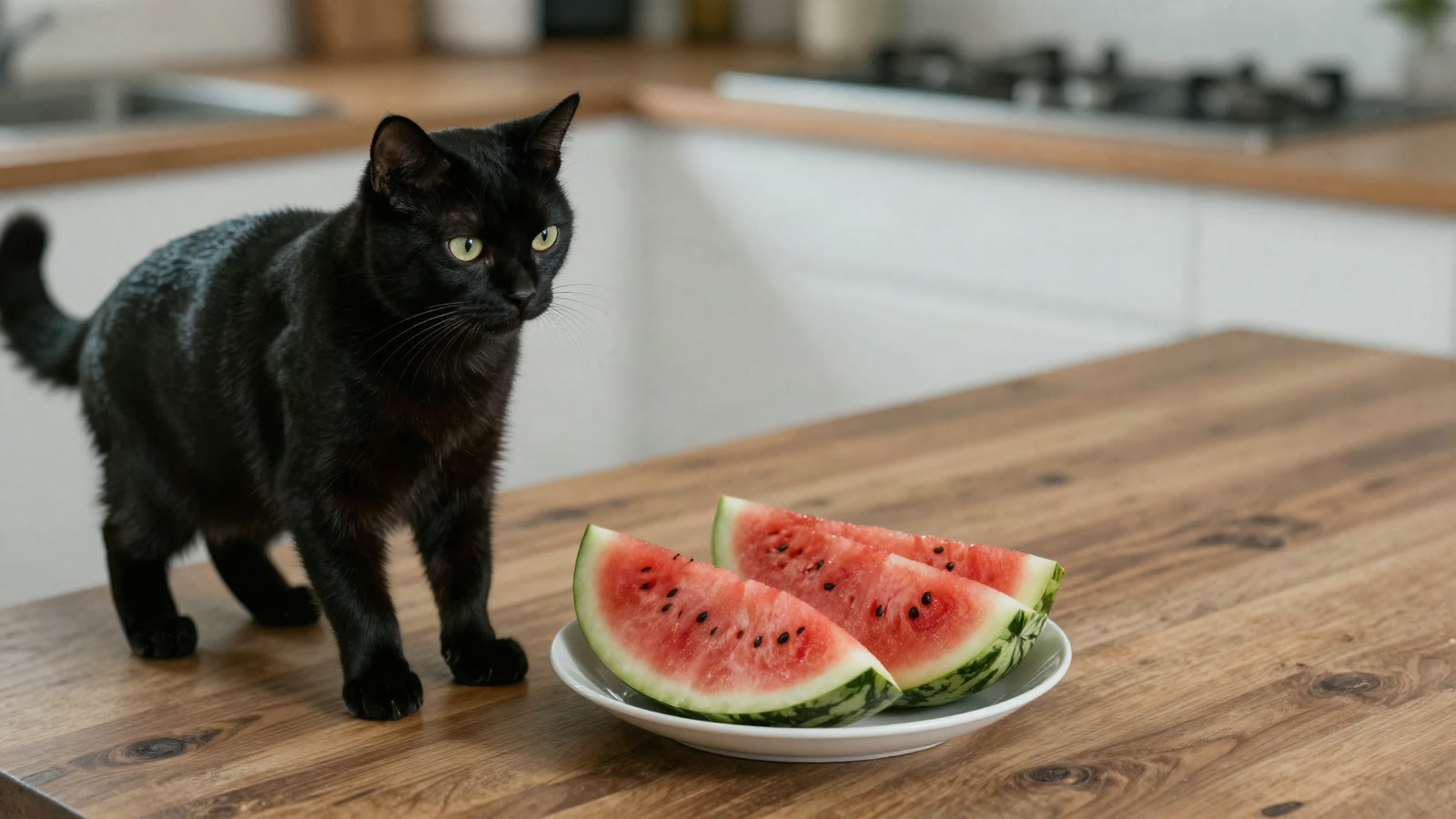
Is watermelon safe for cats?
The pink flesh of watermelon is non-toxic to cats and is about 90% water, so a small piece can be a hydrating treat on a hot day. It offers a little vitamin A and vitamin C, but cats make their own vitamin C and get everything else they need from their regular food.
Two parts are not safe. The rind is tough and hard to digest, and the seeds are a problem too. The black seeds contain trace compounds and, more importantly, pose a choking and intestinal-blockage risk in a small animal. Always use seedless watermelon or carefully remove every seed before offering any.
How much watermelon can I offer?
A small cube or two of flesh, occasionally, is the right amount. Watermelon should never become a regular part of the diet, no matter how much your cat seems to like the texture.
- Remove all rind and seeds first.
- Cut it into small, bite-sized pieces to prevent choking.
- Serve it plain and fresh, never with salt, syrup, or as part of a fruit salad.
- Introduce a small bite and watch for 24 hours before offering it again.
Keep all treats under about 10% of daily calories. Because of the natural sugar, watermelon is a once-in-a-while snack, not a daily one, even though it's mostly water.
Does watermelon help hydrate a cat?
Because it's so watery, watermelon does add a little moisture, and some owners like offering it on hot days. But it's not a reliable way to keep a cat hydrated, and it shouldn't be used to make up for poor water intake.
Cats that don't drink enough do much better with wet food, water fountains, and several water bowls around the home. If your cat seems dehydrated, or is suddenly drinking far more or less than usual, that's a reason to see your vet rather than something to solve with fruit. Changes in thirst can signal underlying health issues worth checking.
What are the risks?
The biggest concerns are the seeds and rind, which can cause choking or a gut blockage, and the sugar content. Even though watermelon is mostly water, its natural sugars can cause digestive upset and aren't ideal for diabetic or overweight cats.
Signs to watch for include vomiting, diarrhea, or a cat that seems to be straining or acting uncomfortable, which could point to a blockage from swallowed rind or seeds. Kittens and small cats are at higher risk of blockages, so be especially careful with them.
If your cat has a chronic condition like diabetes, check with your vet before offering any fruit at all.
One more practical note: watermelon can be messy, and a cat that mouths a large wet piece may drag it around or gulp it too fast. Serving small, manageable cubes on a plate or in the food bowl, rather than handing over a big slice, keeps things tidy and reduces the chance of a rushed, choking-prone bite.
It's also easy to confuse watermelon with other melons and assume they're all the same for cats. In general, the plain flesh of cantaloupe and honeydew is treated similarly, as an occasional non-toxic treat with seeds and rind removed, but each still carries sugar and the same portion cautions. Whatever the melon, the rules don't change: a small amount of seedless, rind-free flesh, offered rarely, for a cat that tolerates it, and never as a stand-in for proper hydration or a balanced meal. And as with any melon, avoid the seeds and rind every time, since those hazards are the same across the whole family of fruit.
What if my cat ate rind or seeds?
A stray seed or small nibble of rind often passes without trouble, but a larger amount can cause a blockage, especially in kittens and small cats. Watch closely for vomiting, loss of appetite, straining, or a tender belly over the next day or two.
Call your vet promptly if you see those signs or if your cat ate a lot of rind. Tavi's symptom checker can help you gauge urgency, and logging the time and amount gives your vet the details they need to decide whether your cat should be seen.
Frequently asked questions
Can cats drink watermelon juice?
It's best to skip juice. Store-bought watermelon juice often has added sugar, and even fresh juice concentrates the natural sugars without the small benefit of the whole fruit. If you want to help your cat stay hydrated, fresh water and wet food are far better choices than any fruit juice.
Are watermelon seeds toxic to cats?
The seeds aren't strongly poisonous, but they're a real choking and intestinal-blockage risk for a small animal, and they contain trace compounds best avoided. Always remove every seed or use seedless watermelon. If your cat swallows a seed or two, watch for signs of blockage and call your vet if concerned.
Can watermelon help hydrate my cat?
A small piece adds a little water, but it's not a reliable hydration strategy. Cats that don't drink enough do better with wet food, water fountains, and multiple water bowls. If your cat seems dehydrated or is drinking a lot more or less than usual, that's worth a vet visit rather than a fruit fix.
How often can cats eat watermelon?
Occasionally, at most a small piece once a week, and only the seedless flesh. It should never replace a meal or become a daily habit. If your cat gets loose stool afterward, or is diabetic or overweight, leave watermelon off the menu and choose a protein-based treat instead.
Tavi's guides are informational and not a substitute for professional veterinary advice, diagnosis or treatment. When in doubt, call your veterinarian.