Can Dogs Drink Milk? Lactose & Dogs
Start here
A few licks are usually fine, but milk isn't a good idea. Many dogs are lactose intolerant, and milk is high in fat and sugar. A small amount rarely causes harm, but it often leads to an upset stomach.
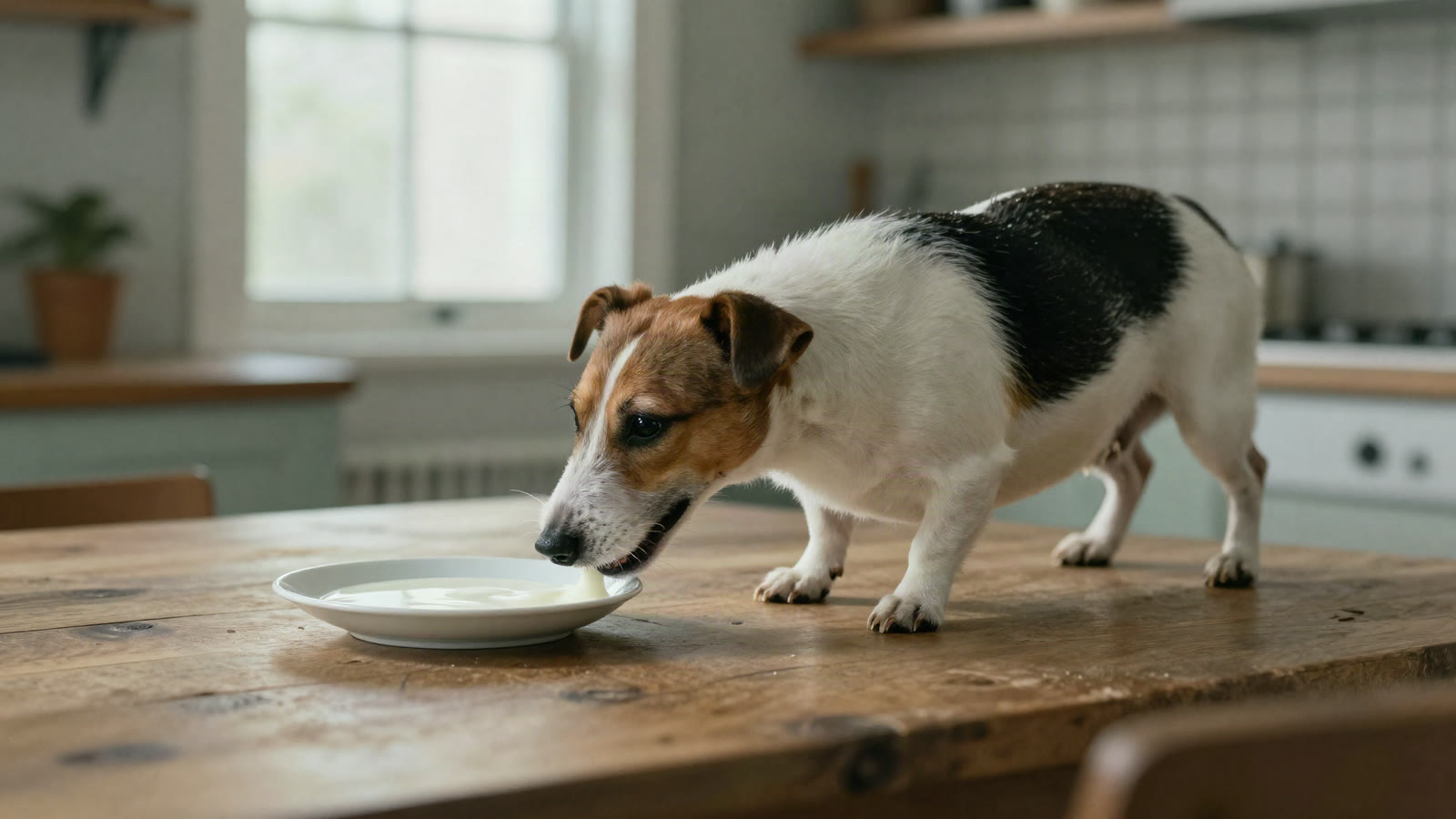
Can dogs digest milk?
After puppyhood, most dogs produce less lactase, the enzyme needed to break down the lactose (milk sugar) in dairy. That means many adult dogs are lactose intolerant to some degree. When they drink milk, the undigested lactose ferments in the gut and causes digestive upset.
Some dogs tolerate small amounts better than others, but there's a lot of variation, and milk offers nothing your dog can't get from a balanced diet and fresh water.
What are the risks?
- Digestive upset: Diarrhea, gas, bloating, vomiting, and stomach discomfort are common, often within hours.
- Fat content: Whole milk is high in fat, which can contribute to weight gain and, in large amounts, pancreatitis.
- Flavored or sweetened milk: Chocolate milk is dangerous (chocolate is toxic), and some products contain xylitol or lots of sugar.
How much milk is okay?
If you want to share, a few tablespoons of plain milk as a rare treat is the most a dog should have, and even that can upset sensitive dogs. Never make milk a routine drink or a substitute for water. Watch how your dog reacts the first time.
Small amounts of plain, unsweetened yogurt or cheese are often tolerated better than milk because they contain less lactose, but keep those small too.
What if my dog drank a lot of milk?
Most cases are mild: expect possible diarrhea, gas, or vomiting for a day or so. Provide fresh water and a bland diet, and it usually resolves. Call your vet if diarrhea or vomiting is severe or persistent, or your dog seems painful or lethargic.
If the milk was chocolate-flavored or sweetened with xylitol, treat it as urgent and contact your vet or the ASPCA Animal Poison Control Center at 888-426-4435 right away. Logging the episode in Tavi helps you notice if dairy consistently disagrees with your dog.
Frequently asked questions
Are dogs lactose intolerant?
Many are, to varying degrees. After weaning, most dogs make less lactase, the enzyme that digests milk sugar, so dairy can cause gas, diarrhea, and stomach upset. Some dogs handle small amounts fine, but milk isn't necessary and often causes trouble, so keep any dairy minimal.
Can dogs have cheese or yogurt instead?
In small amounts, often yes. Plain, unsweetened yogurt and low-fat cheeses contain less lactose than milk and are usually better tolerated. Keep portions small because of the fat, and avoid anything with added sugar, flavorings, or xylitol. Watch for digestive upset the first time.
Can puppies drink cow's milk?
It's not ideal. Cow's milk differs from a mother dog's milk and can cause diarrhea in puppies. Orphaned puppies should get a proper puppy milk replacer, not cow's milk. For weaned puppies, focus on complete puppy food and check with your vet.
Is a little milk dangerous for dogs?
Plain milk in small amounts isn't toxic and usually causes at most mild stomach upset. The real danger is flavored milk: chocolate milk is toxic, and some products contain xylitol. If your dog drinks either, contact your vet or ASPCA Animal Poison Control (888-426-4435) immediately.
Tavi's guides are informational and not a substitute for professional veterinary advice, diagnosis or treatment. When in doubt, call your veterinarian.