Can Cats Eat Spinach? Cautions
Start here
Cats can eat a tiny amount of cooked spinach safely, but many cats should avoid it, and it isn't necessary. Spinach contains calcium oxalates, so it's off-limits for any cat with a history of kidney or bladder crystals or stones. When in doubt, skip it.
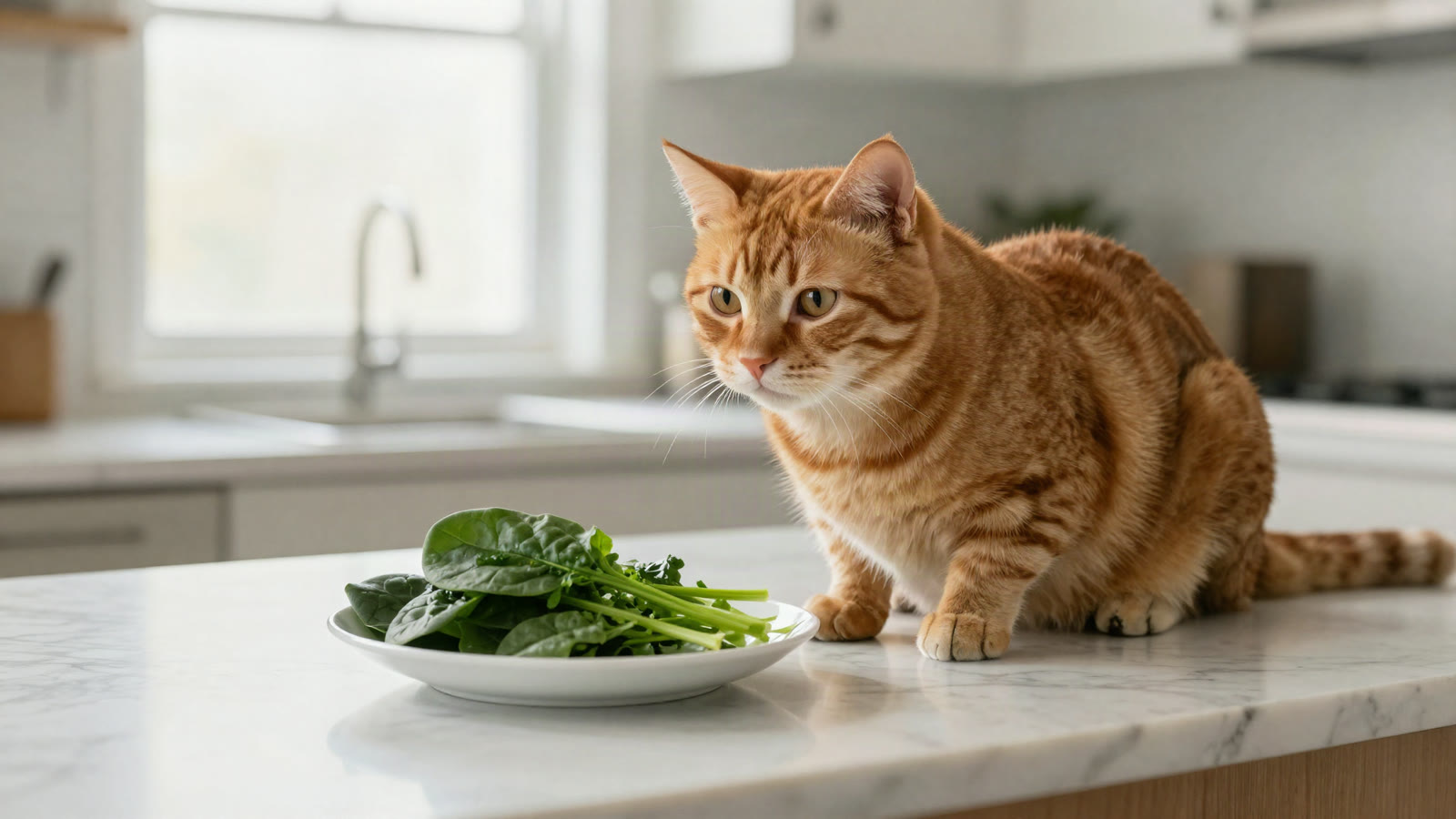
Is spinach safe for cats?
For a healthy cat, a small amount of plain, cooked spinach is generally non-toxic, and you'll even find it in some commercial cat foods in controlled amounts. It contains vitamins A, C, and K, along with iron and fiber.
But spinach carries an important caution: it's high in calcium oxalates. In cats prone to urinary or kidney crystals and stones, oxalates can contribute to those problems. Because urinary issues are common in cats, many vets say spinach simply isn't worth the risk unless you're certain of your cat's history and your vet has given the go-ahead.
How much spinach, and how to serve it?
If your cat is healthy and you want to offer spinach, keep it minimal and occasional. There's no nutritional need for it, so err on the side of caution.
- Serve a tiny amount of plain, cooked, chopped spinach, cooled to room temperature.
- Use no butter, oil, salt, garlic, or onion, since garlic and onion are toxic to cats.
- Introduce a small bite and watch for 24 hours before offering it again.
Spinach should stay well under the 10% treat allowance and never replace part of a balanced, meat-based meal. If your cat isn't interested, there's no reason to persuade them.
Who should avoid spinach entirely?
Skip spinach completely if your cat has ever had kidney disease, bladder or kidney stones, or urinary crystals, or if you don't know their history. The oxalate content makes it a poor choice for these cats, and the potential downside far outweighs any minor benefit.
Older cats and those with chronic conditions also deserve extra caution, since kidney issues become more common with age. When in doubt, treat spinach as a food to avoid and choose a protein-based treat instead. If you're unsure whether your cat has ever had urinary trouble, ask your vet before offering greens.
Because urinary and kidney problems can develop silently, it helps to know the general warning signs: frequent trips to the litter box, straining, urinating outside the box, blood in the urine, or drinking noticeably more water. A cat showing any of these needs a vet, not a change in treats. Knowing your cat's baseline makes it far easier to judge whether a food like spinach is even worth considering.
It's a common misconception that cats need leafy greens for fiber or vitamins the way people do. In reality, a well-formulated cat food already contains balanced fiber and the vitamins a cat requires, drawn from sources suited to feline digestion. Adding spinach doesn't fill a gap; at best it's a neutral nibble and at worst it's a risk for cats with urinary tendencies. If you feel your cat needs more fiber or a nutritional boost, the safer route is to discuss a diet change or supplement with your vet rather than adding greens on your own. Your vet can recommend options that address the specific concern without introducing the oxalate risk that comes with spinach, and can tailor the choice to your cat's age, weight, and medical history.
What are the risks?
The headline concern is oxalates and their link to urinary and kidney stones in susceptible cats. Beyond that, even in healthy cats, too much spinach can cause digestive upset like vomiting or diarrhea.
Seasoned or cooked-in-fat spinach adds its own problems, since dishes like creamed spinach or spinach sauteed with garlic contain ingredients that are unhealthy or outright toxic for cats. Only plain, lightly cooked spinach in a tiny amount should ever be considered, and only for cats with no urinary history.
What if my cat ate spinach?
A small nibble of plain spinach is unlikely to harm a healthy cat and usually causes nothing worse than mild stomach upset. Offer water and skip further treats.
Call your vet if your cat has a urinary or kidney history, ate a large amount, or shows signs like straining to urinate, vomiting, or lethargy. Straining in the litter box can be an emergency, so don't wait. Logging what your cat ate and any symptoms in Tavi gives your vet a clear picture and helps you catch urinary patterns early.
Frequently asked questions
Why is spinach in some cat foods if it's risky?
Commercial foods use small, controlled amounts of spinach as a source of vitamins and fiber, formulated to be balanced and safe for healthy cats. That's different from feeding spinach at home, where portions and your cat's urinary history aren't controlled. If your cat's food contains spinach and agrees with them, there's no need to worry.
Can spinach cause bladder stones in cats?
Spinach is high in calcium oxalates, which can contribute to oxalate crystals and stones in susceptible cats. It won't cause stones in every cat, but it's a real risk for those with a urinary history. Because feline urinary disease is common, many vets recommend avoiding spinach unless your vet says it's fine for your cat.
Is raw or cooked spinach better for cats?
If you offer spinach at all, lightly cooked and plain is easier to digest than raw, and cooking softens it. Never add seasoning, oil, garlic, or onion. Cooking doesn't remove the oxalate concern, though, so cats with urinary or kidney issues should avoid spinach in any form.
Does my cat need vegetables like spinach?
No. Cats are obligate carnivores and get complete nutrition from meat-based food. They don't need vegetables, and greens like spinach offer little benefit while carrying some risk. If you want to add variety or address a health concern, talk to your vet rather than adding vegetables on your own.
Tavi's guides are informational and not a substitute for professional veterinary advice, diagnosis or treatment. When in doubt, call your veterinarian.