Can Cats Eat Turkey? Safe Portions
Start here
Yes — plain cooked turkey is a great treat for cats. As obligate carnivores, cats do well on lean animal protein, and plain, boneless, skinless turkey is safe and appealing. Avoid seasoned, processed, or deli turkey, and skip the bones and skin.
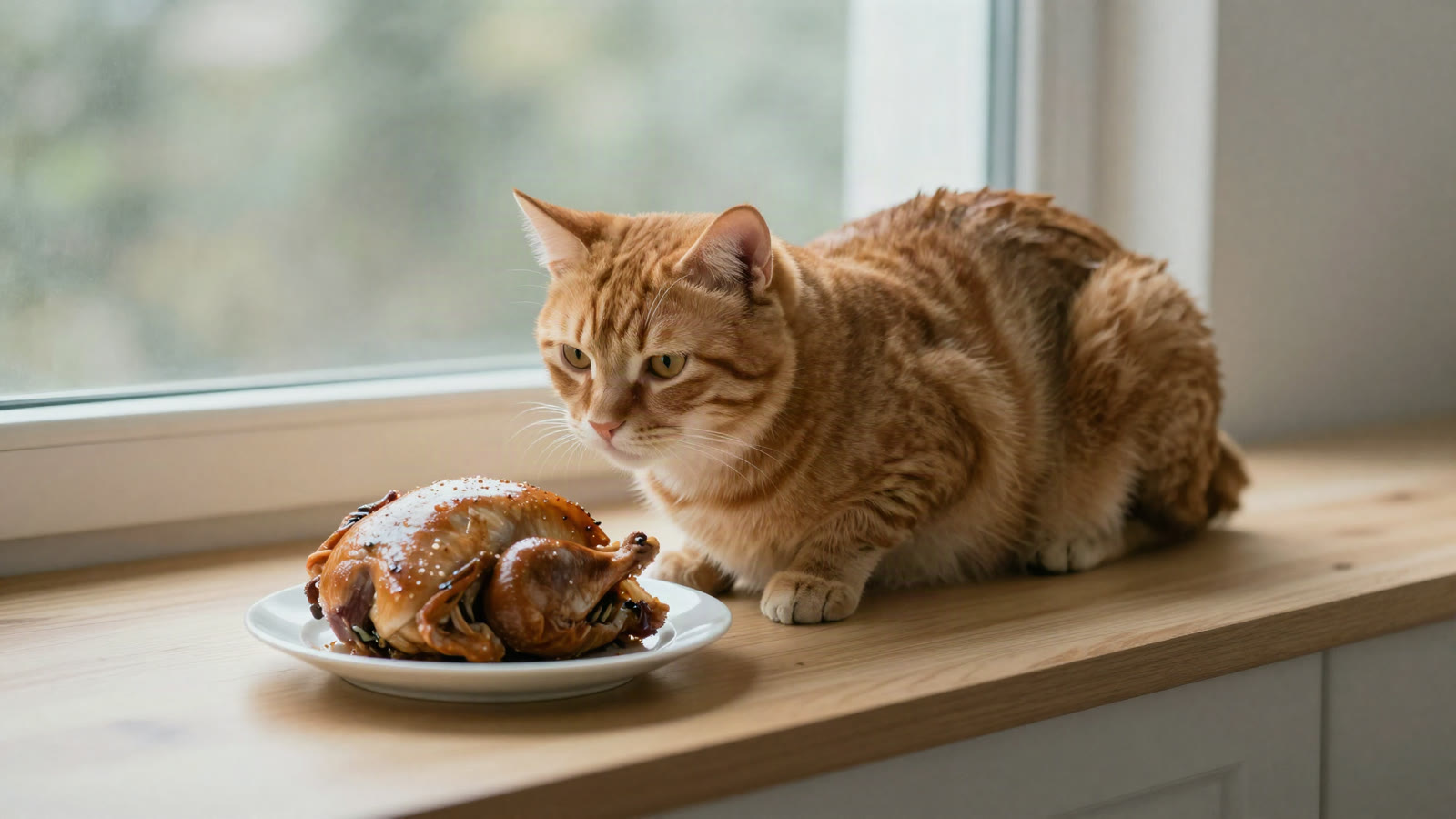
Is turkey good for cats?
Turkey is an excellent protein source for cats and a common ingredient in cat food. Cats are obligate carnivores, meaning they need meat, and lean turkey provides high-quality protein with less fat than many other options.
Plain cooked turkey makes a healthy, well-tolerated treat. It still shouldn't replace a complete, balanced cat food — treats should stay around 10% of daily calories — but of the human foods you might share, turkey is one of the best.
How should I serve turkey, and how much?
Serve turkey plain, cooked, boneless, and skinless. Roast, boil, or bake it with no butter, oil, salt, or seasoning — and absolutely no garlic or onion, which are toxic to cats.
- Choose lean white meat and remove all skin and fat.
- Cut it into small, bite-size pieces to prevent choking.
- Offer a small amount — a couple of teaspoon-size pieces is plenty.
Skip deli turkey and processed turkey products, which are high in salt and preservatives.
What should I avoid?
The turkey itself is fine; the extras are the problem:
- Bones: cooked turkey bones can splinter and cause choking or internal injury — never give them.
- Skin and fat: greasy, hard to digest, and a pancreatitis risk.
- Seasonings: garlic, onion, and gravy are unsafe; salt and spices upset the stomach.
- Deli/smoked turkey: too much sodium and additives.
What if my cat ate too much turkey (or the wrong kind)?
A cat that ate a lot of plain turkey may just have a mildly upset stomach. Offer water and return to normal meals; it usually settles quickly.
Be more cautious if your cat ate turkey skin, seasoned or deli turkey, or bones. Watch for gagging, drooling, repeated vomiting, diarrhea, or lethargy, and call your vet — especially with bones or garlic/onion seasoning (the ASPCA Animal Poison Control Center is at (888) 426-4435). Logging treats and any reactions in Tavi makes it easy to see which foods agree with your cat.
Frequently asked questions
Can cats eat turkey deli meat?
It's best avoided. Deli and processed turkey are high in salt, preservatives, and sometimes garlic or onion powder, none of which suit cats. A tiny nibble won't poison a healthy cat, but choose plain, home-cooked turkey instead for a regular treat.
Can cats eat turkey bones?
No. Cooked turkey bones can splinter and cause choking, mouth injuries, or internal damage. Always remove every bone before offering turkey to your cat. If your cat swallows a bone and starts gagging, drooling, or vomiting, contact your vet right away.
Is turkey skin safe for cats?
It's best to skip it. Turkey skin is fatty and often salted or seasoned, which can cause stomach upset and, in some cats, contribute to pancreatitis. Offer lean, skinless white meat cut into small pieces instead for a safer, healthier treat.
Can cats eat raw turkey?
Raw turkey carries a risk of bacteria like salmonella and can make cats (and people in the home) sick. Cooking it plain removes that risk. It's safest to serve turkey fully cooked, unseasoned, boneless, and skinless rather than raw.
Tavi's guides are informational and not a substitute for professional veterinary advice, diagnosis or treatment. When in doubt, call your veterinarian.