Can Cats Eat Carrots? Cooked vs Raw
Start here
Yes, cats can eat small amounts of plain cooked carrot safely, but raw carrot is a choking risk and should be avoided. Carrots are non-toxic but nutritionally unnecessary for an obligate carnivore, so they're an occasional treat at most.
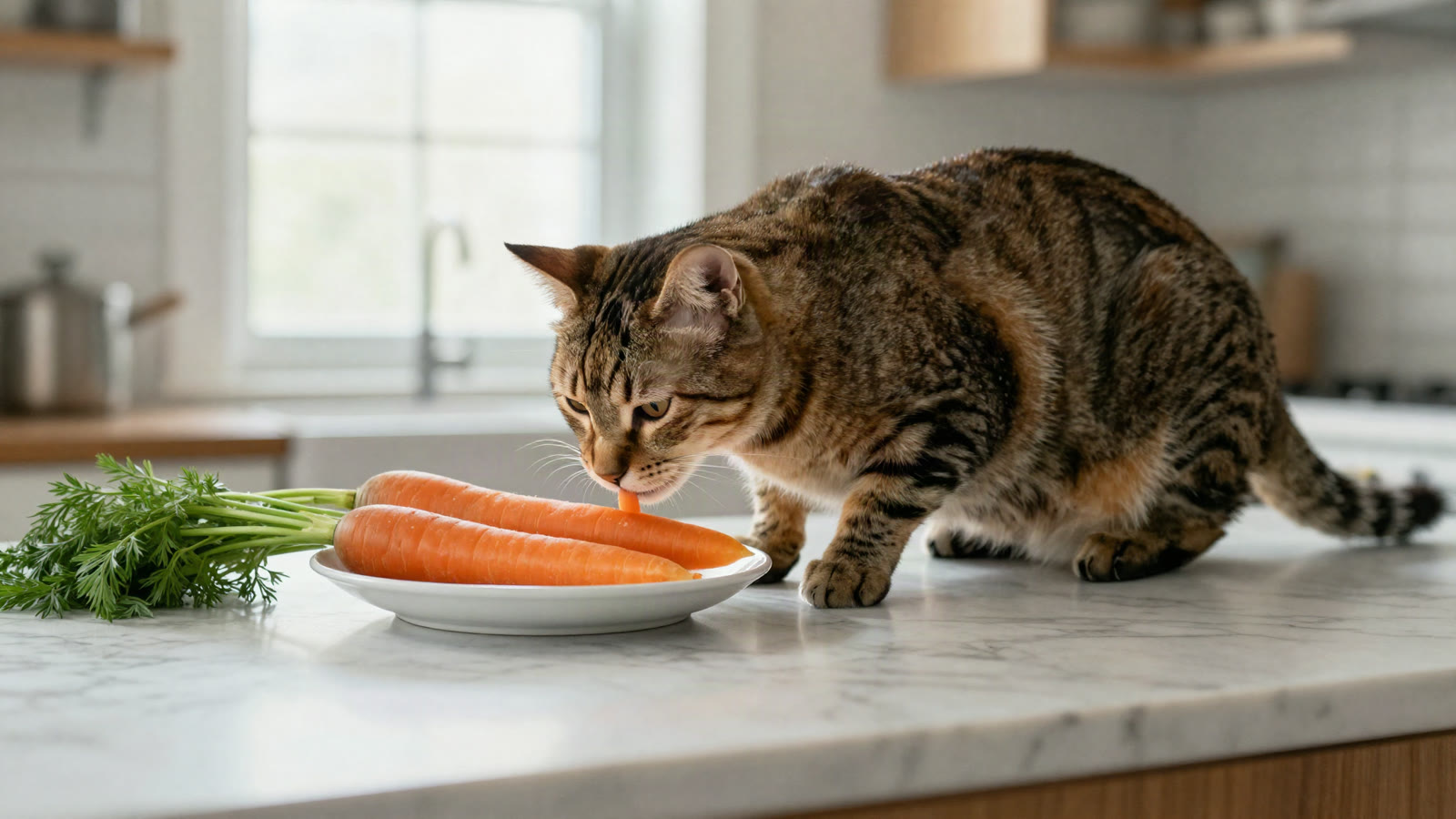
Are carrots safe for cats?
Plain carrots are non-toxic to cats and contain beta-carotene, fiber, and vitamins. Cooked carrot is the safer form because it's soft and easy to chew and digest, which lowers the risk of choking.
Cats don't need carrots, though. They can't efficiently convert the beta-carotene in carrots into vitamin A the way some animals can, so they rely on the pre-formed vitamin A found in meat. Carrots are a harmless treat, not a nutritional necessity, and a cat's complete food already supplies the vitamin A it needs.
Some cats enjoy the texture of a soft cooked carrot, while others ignore it entirely. Because cats can't taste sweetness, the natural sugar in carrots doesn't appeal to them the way it does to us.
Cooked vs raw carrots
Cooked, plain carrot is best. Steam or boil it until soft, let it cool, and cut it into small pieces before offering a little to your cat.
Raw carrot is hard and crunchy, which makes it a real choking hazard for cats, especially if offered in coins or sticks. If you ever give raw carrot, it must be grated or cut very small, but cooked is the safer choice overall.
- Use no butter, oil, salt, or seasoning of any kind.
- Cut it into small, bite-sized pieces to prevent choking.
- Introduce a little at a time and watch how your cat reacts.
How much carrot can a cat have?
A small piece or two of cooked carrot, occasionally, is plenty. Carrots should stay well under about 10% of daily calories and should never replace a meal or a protein-based treat.
Because carrots contain natural sugars and fiber, larger amounts can cause gas or loose stool, and overweight or diabetic cats should have them only sparingly, if at all. As with any new food, start with a tiny portion and see how your individual cat handles it before offering more. If your cat isn't interested, there's no need to push it.
What are the risks?
The two main risks are choking, mostly from raw or large pieces, and digestive upset from too much fiber, which can cause gas or loose stool. Neither is common with a small serving of soft cooked carrot, but both are easy to trigger with raw chunks or an overly generous portion.
Carrots also carry natural sugar, so they're not ideal for diabetic cats. And as always, avoid any carrot dish cooked with butter, salt, onion, or garlic, since onion and garlic are toxic to cats. Plain is the only safe way to serve them.
Some owners are drawn to carrots as a crunchy snack in the hope it helps clean a cat's teeth, but this doesn't really work the way it does in the popular imagination. Cooked carrot is too soft to scrape teeth, and raw carrot is a choking risk, so neither is a substitute for proper dental care. If dental health is your goal, talk to your vet about dental diets, treats designed for the purpose, and toothbrushing.
Carrots are one of the more popular vegetables to offer cats, probably because they're always on hand and seem wholesome. If your cat enjoys a little cooked carrot, there's no harm in the occasional bite, but it's worth being honest about why you're offering it. If it's for your cat's enjoyment, a tiny piece is fine; if it's because you think your cat needs vegetables, that's a misconception worth letting go of. Cats are carnivores, and their health rests on quality animal protein, not on produce. Treating carrot as a fun extra, rather than a nutritional need, keeps everyone's expectations in the right place.
What if my cat ate too much carrot?
A large serving of plain carrot isn't toxic but may cause a bout of gas or loose stool. Offer water and hold off on more treats while their stomach settles.
Watch for choking after any raw carrot, and call your vet if your cat is gagging, drooling, or struggling to breathe, or if diarrhea persists more than a day. Logging treats and any reactions in Tavi helps you learn which snacks agree with your cat and keeps a record for your vet.
Frequently asked questions
Can cats eat raw carrots?
It's best to avoid raw carrot because its hardness makes it a choking hazard for cats. If you do offer it, grate it or cut it into very small pieces. Cooked, plain carrot is softer, easier to digest, and the safer option overall. Either way, keep the portion small and unseasoned.
Do carrots give cats vitamin A?
Not effectively. Carrots contain beta-carotene, but cats can't convert it into usable vitamin A the way some animals can, so they depend on the pre-formed vitamin A in meat. Feeding carrots for vitamin A doesn't work well. A complete, meat-based cat food already provides the vitamin A your cat needs.
Will my cat like carrots?
Some cats enjoy the texture of a soft cooked carrot, while others ignore it entirely. Cats can't taste sweetness, so the natural sugar in carrots doesn't appeal to them. There's no need to encourage a taste, and it's perfectly normal for a cat to sniff a carrot and walk away.
How often can cats eat carrots?
Occasionally, in small amounts, is fine for cats that tolerate them. Carrots should stay well under 10% of daily calories and never replace a meal. If your cat gets gas or loose stool afterward, or is diabetic or overweight, it's best to skip carrots and choose a protein-based treat instead.
Tavi's guides are informational and not a substitute for professional veterinary advice, diagnosis or treatment. When in doubt, call your veterinarian.