Norwegian Forest Cat Health Issues & Lifespan
Start here
Norwegian Forest Cats are large, hardy, thick-coated cats that typically live 13-16 years and are generally a healthy, robust breed. Their main inherited concerns are hypertrophic cardiomyopathy (HCM), hip dysplasia, and a rare metabolic condition called glycogen storage disease type IV (GSD IV).
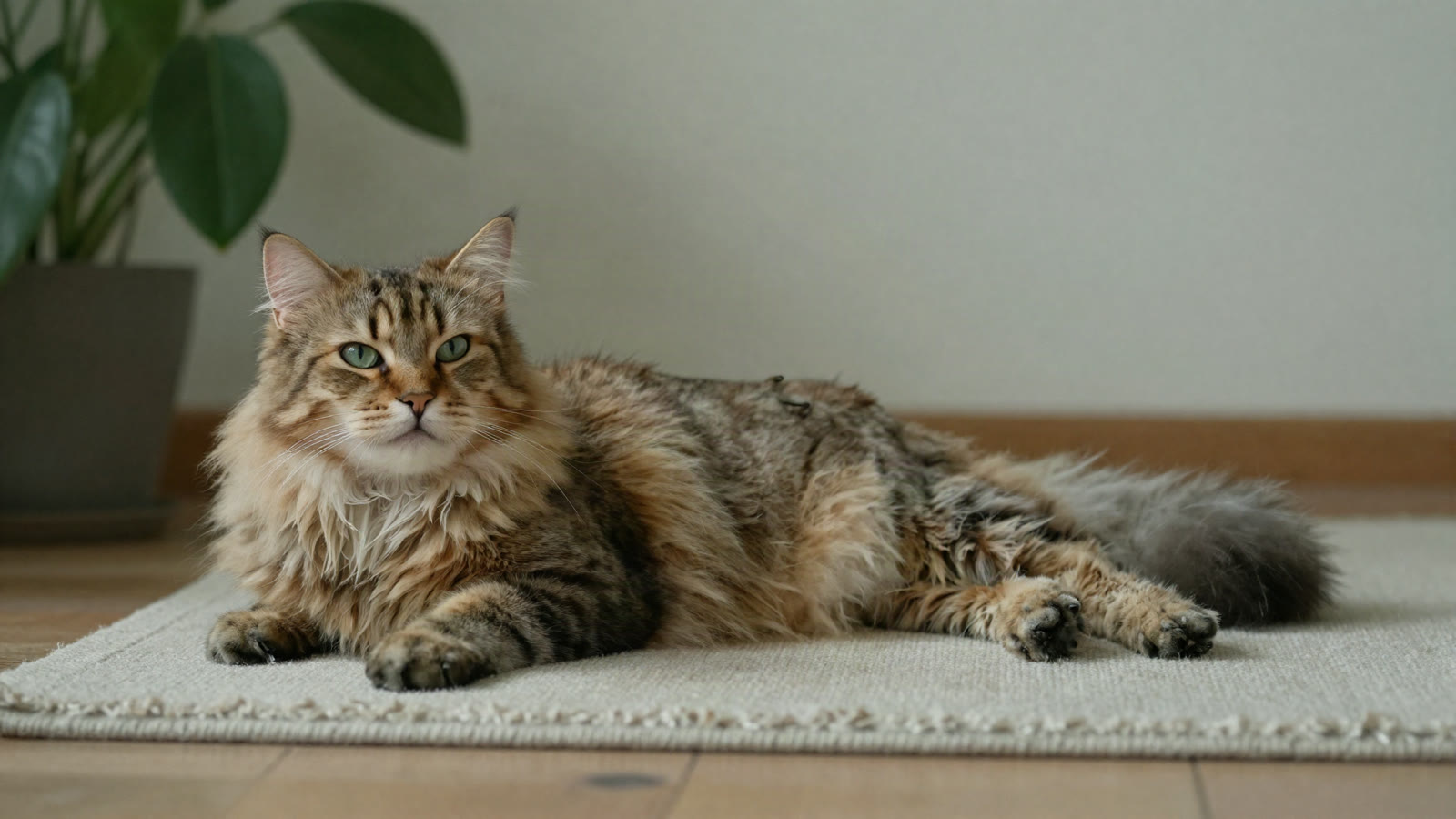
What health problems are Norwegian Forest Cats prone to?
This sturdy natural breed is generally healthy, but a few conditions run in the lines:
- Hypertrophic cardiomyopathy (HCM): the most common feline heart disease, where the heart muscle thickens, raising the risk of clots and heart failure.
- Hip dysplasia: unusual among cats, but this large breed can develop a malformed hip joint leading to arthritis.
- Glycogen storage disease type IV (GSD IV): a rare but serious inherited metabolic disorder specific to the breed; a DNA test exists and responsible breeders screen for it.
- Polycystic kidney disease (PKD): inherited kidney cysts in some lines.
- Obesity: their large frame and heavy coat can mask weight gain.
- Dental disease: common in cats generally.
What early signs should Norwegian Forest Cat owners watch for?
Because this breed is large and stoic, watch carefully for:
- Rapid or labored breathing, open-mouth breathing, lethargy, or sudden hind-leg weakness (possible heart disease, an emergency)
- Stiffness, reluctance to jump, or lameness (possible hip dysplasia)
- Weakness, poor growth, or tremors in a kitten (possible GSD IV, though usually detected by breeder screening)
- Increased thirst and urination or weight loss (possible kidney disease)
- Weight gain hidden under the thick coat (feel the body, don't just look)
Their dense coat can hide both weight gain and lumps, so regular hands-on checks matter more than a visual once-over.
How do you keep a Norwegian Forest Cat healthy?
This robust breed does well with attentive coat care, weight control, and heart monitoring:
- Groom the coat regularly: their thick double coat needs brushing to prevent mats, especially during seasonal shedding.
- Keep them lean: feel for the ribs and waist through the coat, measure food, and encourage play, since obesity strains the joints and heart.
- Monitor the heart: ask your vet to listen at every visit and consider periodic screening given the HCM risk.
- Choose health-tested lines: reputable breeders DNA-test for GSD IV and PKD and screen for HCM.
- Keep up dental care and provide climbing and enrichment for this active breed.
Tracking weight and vet visits over time helps breed issues show as trends. Logging weigh-ins (a hands-on check under that coat) and any breathing or mobility changes in Tavi makes it easier to catch heart, joint, or weight problems early.
How long do Norwegian Forest Cats live, and when should you see the vet?
Norwegian Forest Cats typically live 13 to 16 years, and many reach their late teens. They are one of the hardier, longer-lived cat breeds thanks to their natural, robust origins.
Seek emergency care for any breathing difficulty or sudden hind-leg weakness (possible heart problem). See your vet for stiffness or reluctance to jump, increased thirst or urination, dental trouble, or any lump you feel under the coat. Annual checkups (twice yearly for seniors) with heart auscultation and periodic bloodwork help keep this sturdy breed healthy.
Frequently asked questions
Are Norwegian Forest Cats healthy?
Yes, Norwegian Forest Cats are generally a hardy, healthy breed that often lives 13-16 years. Their main inherited concerns are hypertrophic cardiomyopathy (HCM), hip dysplasia (unusual among cats), a rare metabolic disorder called GSD IV, and polycystic kidney disease in some lines. Choosing a breeder who DNA-tests and heart-screens the parents, plus keeping your cat lean and groomed, supports a long, healthy life.
What is GSD IV in Norwegian Forest Cats?
Glycogen storage disease type IV (GSD IV) is a rare but serious inherited metabolic disorder specific to the breed, in which the body cannot properly store and use glycogen. Affected kittens are usually weak or fail to thrive and often do not survive. A DNA test is available, and responsible breeders screen their cats to avoid producing affected kittens, so it is now uncommon in well-bred lines.
Do Norwegian Forest Cats get heart disease?
Yes. Hypertrophic cardiomyopathy (HCM), a thickening of the heart muscle, occurs in the breed and is the most common feline heart disease. It can be silent until advanced, so watch for rapid or labored breathing, lethargy, and sudden hind-leg weakness, which are emergencies. Ask your vet about periodic heart screening, since early detection allows treatment that can slow progression and improve quality of life.
How often should I groom a Norwegian Forest Cat?
Their thick, water-resistant double coat needs brushing several times a week, and daily during heavy seasonal shedding in spring and fall, to prevent mats and reduce hairballs. Regular grooming also gives you a chance to feel for lumps and check body condition, which the dense coat can otherwise hide. Most Norwegian Forest Cats tolerate grooming well when it is introduced gently and consistently.
Tavi's guides are informational and not a substitute for professional veterinary advice, diagnosis or treatment. When in doubt, call your veterinarian.