Great Dane Health Issues & Lifespan
Start here
Great Danes are gentle giants with a short lifespan of about 7-10 years, and the two conditions worth knowing best are gastric dilatation-volvulus (bloat) and heart disease (dilated cardiomyopathy). Their enormous size drives most of their health risks, so knowing the warning signs of bloat can be the difference between life and death.
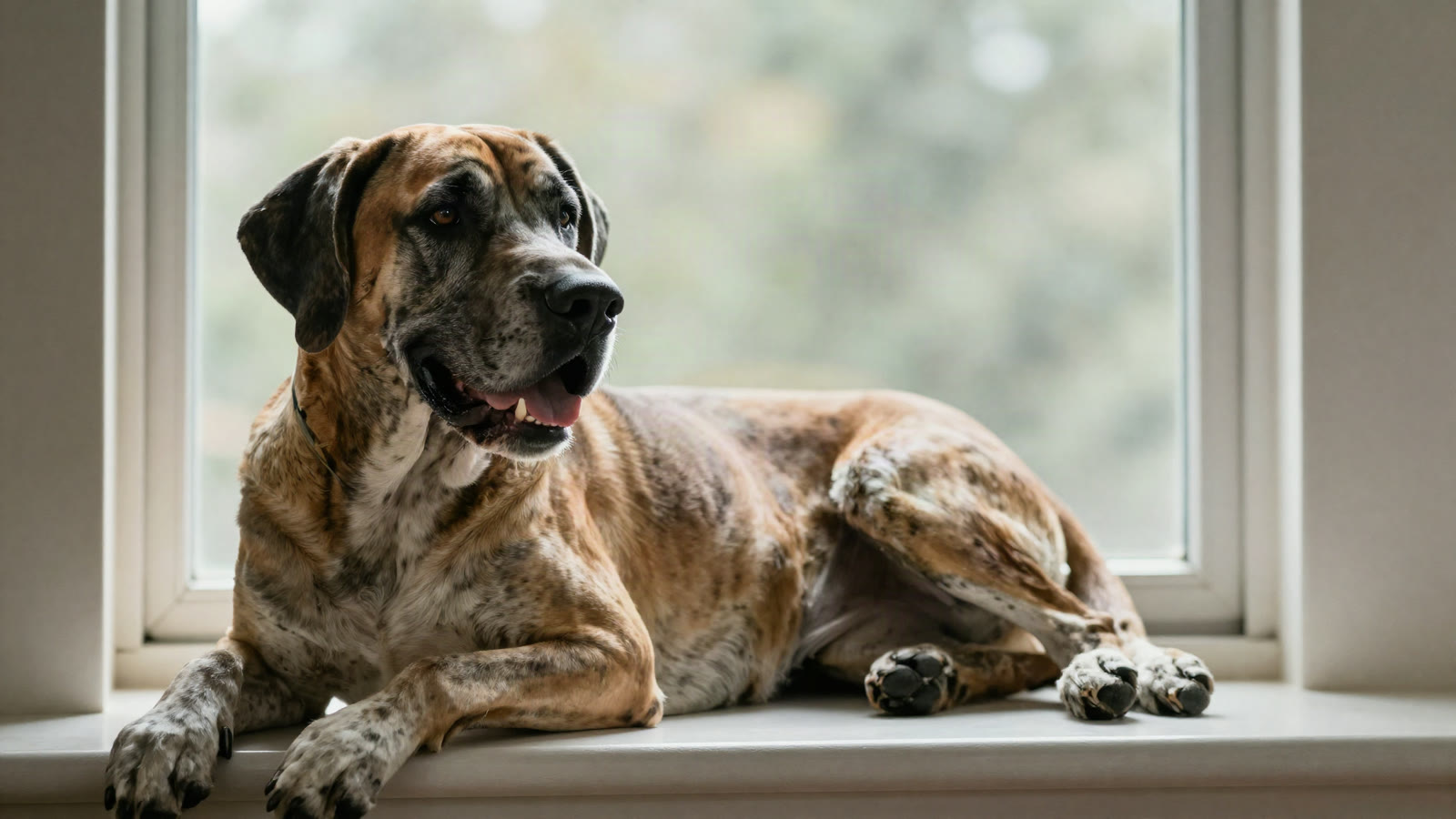
What health problems are Great Danes prone to?
As one of the largest dog breeds, the Great Dane carries a set of size-related risks that owners should understand from day one:
- Bloat (GDV): gastric dilatation-volvulus. The stomach fills with gas and can twist, cutting off blood flow. It is a true emergency, and it clusters in large, deep-chested dogs: a prospective study of about 1,900 large and giant-breed dogs measured chest shape directly and found a deeper, narrower chest independently predicted risk, as did having a first-degree relative that had bloated.
- Dilated cardiomyopathy (DCM): The heart muscle weakens and enlarges, leading to poor pumping and, eventually, heart failure. Danes are among the breeds most affected.
- Hip and elbow dysplasia: Malformed joints cause pain and arthritis, common in giant breeds.
- Wobbler syndrome (cervical spondylomyelopathy): Spinal compression in the neck causes a wobbly, unsteady gait.
- Osteosarcoma: Aggressive bone cancer is more common in giant breeds.
- Hypothyroidism: An underactive thyroid can cause weight gain, lethargy, and coat changes.
What are the early warning signs of bloat?
Because bloat can kill within hours, every Great Dane owner should memorize the signs. Call an emergency vet immediately if you see:
- A swollen, tight, or distended belly
- Unproductive retching or trying to vomit with nothing coming up
- Restlessness, pacing, or an inability to get comfortable
- Drooling, panting, and obvious distress
- Pale gums and collapse in later stages
Do not wait to see if it passes. GDV requires surgery, and minutes matter. Many owners of giant breeds choose a preventive gastropexy (stomach-tacking) surgery, often done at the same time as spay or neuter.
How do you keep a Great Dane healthy?
Managing a giant breed is largely about protecting the joints, heart, and gut:
- Slow the eating down: the same prospective study of large and giant breeds found fast eaters, and dogs fed from a raised bowl, were at higher risk — so a floor-level bowl and a slow-feeder are worth using. Splitting the day's food into two or three meals and keeping things calm around mealtimes are widely recommended but were not tested, so treat them as sensible habits rather than proven protection.
- Watch the growth rate: puppies should grow slowly on a large-breed formula to protect developing joints. Ask your vet before switching foods.
- Keep weight lean: extra pounds punish the joints and heart. You should be able to feel the ribs easily.
- Screen the heart: ask about periodic cardiac checks or echocardiograms, especially in middle age.
- Gentle, consistent exercise: daily walks over sprinting or jumping, which stress joints.
Tracking weight and vet visits over time makes breed issues easier to spot. In an app like Tavi you can log each weigh-in and appointment, so a slow weight change or a pattern of symptoms shows up as a trend rather than a surprise.
How long do Great Danes live, and when should you see the vet?
Great Danes typically live 7 to 10 years, shorter than smaller dogs because giant breeds age faster and carry higher cancer and heart risk. Some individuals reach 11 or 12, but that is less common.
See your vet promptly for any belly swelling, retching, sudden weakness, coughing, exercise intolerance, or lameness. Twice-yearly checkups are wise once a Dane hits middle age (around 5), since problems like DCM and osteosarcoma progress quickly and early detection genuinely helps.
Frequently asked questions
Why do Great Danes have such short lifespans?
Giant breeds age faster than small dogs and carry higher rates of bloat, dilated cardiomyopathy, and bone cancer. Their large bodies put more strain on the heart and joints, which shortens the average lifespan to roughly 7-10 years. Good weight management, cardiac screening, and bloat prevention can help a Dane reach the upper end of that range.
Should my Great Dane have a gastropexy?
Many vets recommend a preventive gastropexy for Great Danes because their bloat risk is so high. The surgery tacks the stomach to the body wall so it cannot twist. It does not prevent gas buildup, but it prevents the dangerous, often fatal twisting. It is commonly done during spay or neuter. Ask your vet whether it is right for your dog.
How much should I feed a Great Dane to prevent bloat?
Feeding practice has been measured directly in large and giant breeds: eating fast and eating from a raised bowl both went with higher bloat risk, so use a floor-level bowl and a slow-feeder to stop gulping. Splitting the daily amount into two or three smaller meals, and keeping things calm around mealtimes, are widely recommended but were not tested in that study, so treat them as sensible habits rather than proven protection. Confirm portion sizes with your vet.
Are Great Danes prone to heart disease?
Yes. Dilated cardiomyopathy, in which the heart muscle weakens and enlarges, is common in Great Danes. Early signs include coughing, tiring easily, rapid breathing, and fainting. Periodic cardiac checks or echocardiograms help catch it before heart failure sets in, especially from middle age onward. Treatment can slow progression and improve quality of life when started early.
Tavi's guides are informational and not a substitute for professional veterinary advice, diagnosis or treatment. When in doubt, call your veterinarian.