Can Dogs Eat Pears? Safe Amounts
Start here
Yes, in moderation. Ripe pear flesh is a safe, low-calorie treat for most dogs. Remove the seeds and core first, cut it into small pieces, and keep servings small.
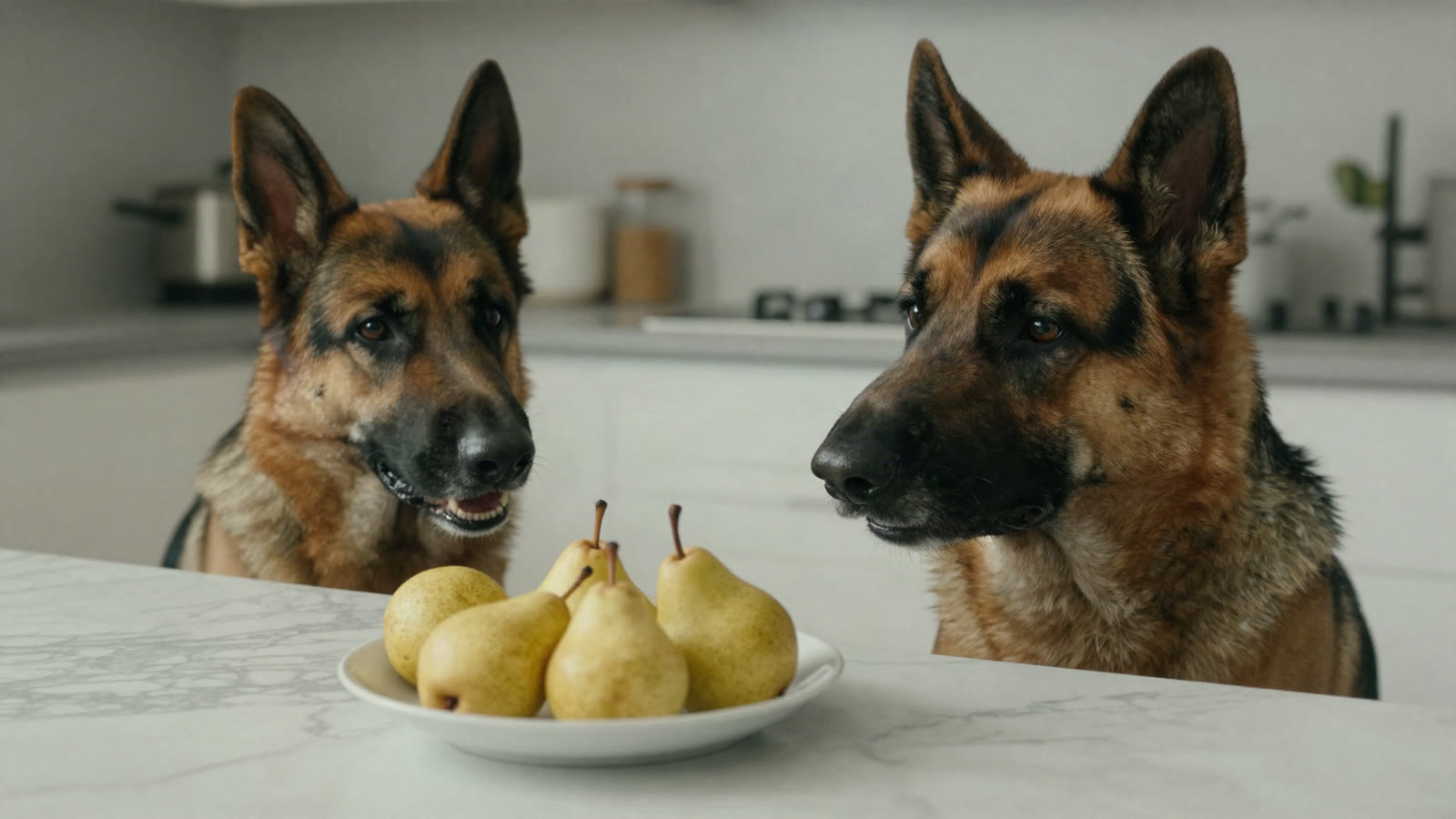
Are pears good for dogs?
Pears are a healthy occasional treat. The flesh is high in water and fiber and provides vitamin C, vitamin K, and copper. That fiber can support digestion, and the low calorie count makes pears a good choice for a light snack.
The key is preparation. Feed only the ripe flesh, plain, and always remove the core and seeds before sharing.
How much pear can a dog eat, and how to serve it?
Follow the 10% rule: treats, including fruit, should make up no more than about 10% of your dog's daily calories. A couple of small bite-sized pieces is plenty for a small dog; a few more for a large dog.
- Wash the pear and cut it into small, bite-sized chunks.
- Remove the core, stem, and all seeds.
- Serve fresh and plain, no canned pears in syrup, which are loaded with sugar.
What are the risks?
Pear seeds contain small amounts of cyanide compounds (amygdalin). A dog would have to eat a lot of seeds to be poisoned, but there's no reason to risk it, so remove them. Whole pears or large chunks can also be a choking or obstruction hazard, especially for small dogs.
Too much pear can cause an upset stomach or diarrhea because of the sugar and fiber. Canned or dried pears concentrate sugar and should be avoided.
What if my dog ate too much pear or some seeds?
A few extra pieces of flesh will usually just cause temporary loose stools, offer water and watch them. If your dog ate a large amount, or swallowed the whole core and a handful of seeds, watch for choking, vomiting, or signs of a blockage (repeated vomiting, no appetite, straining).
When in doubt, call your vet or the ASPCA Animal Poison Control Center at 888-426-4435. If you're introducing new fruits, Tavi's symptom checker and log make it easy to note what your dog ate and spot any pattern of tummy upset.
Frequently asked questions
Can dogs eat pear skin?
Yes, the skin of a washed ripe pear is safe and adds fiber. Just wash it well to remove pesticide residue, and cut the pear into small pieces. Always remove the core and seeds regardless of whether you leave the skin on.
Are canned pears safe for dogs?
It's best to avoid them. Canned pears are usually packed in syrup or juice with a lot of added sugar, which can upset a dog's stomach and adds empty calories. Stick to small pieces of fresh, ripe pear instead.
How many pear seeds are dangerous?
Pear seeds contain tiny amounts of cyanide compounds, and a dog would need to chew a large number to be at real risk. A single accidentally swallowed seed is very unlikely to cause harm, but remove seeds as a habit and watch for any unusual symptoms.
Can puppies eat pears?
A small piece of ripe, seedless pear is generally fine for a puppy as an occasional treat, but their stomachs are sensitive. Introduce it in a tiny amount and check with your vet. Most of a puppy's diet should be complete puppy food.
Tavi's guides are informational and not a substitute for professional veterinary advice, diagnosis or treatment. When in doubt, call your veterinarian.