Can Dogs Eat Garlic Bread? (No — Here's Why)
Start here
No — dogs should not eat garlic bread. Garlic is toxic to dogs and can damage their red blood cells, and garlic bread piles that onto butter, oil, and salt. If your dog ate garlic bread, contact your vet or the ASPCA Animal Poison Control Center at (888) 426-4435.
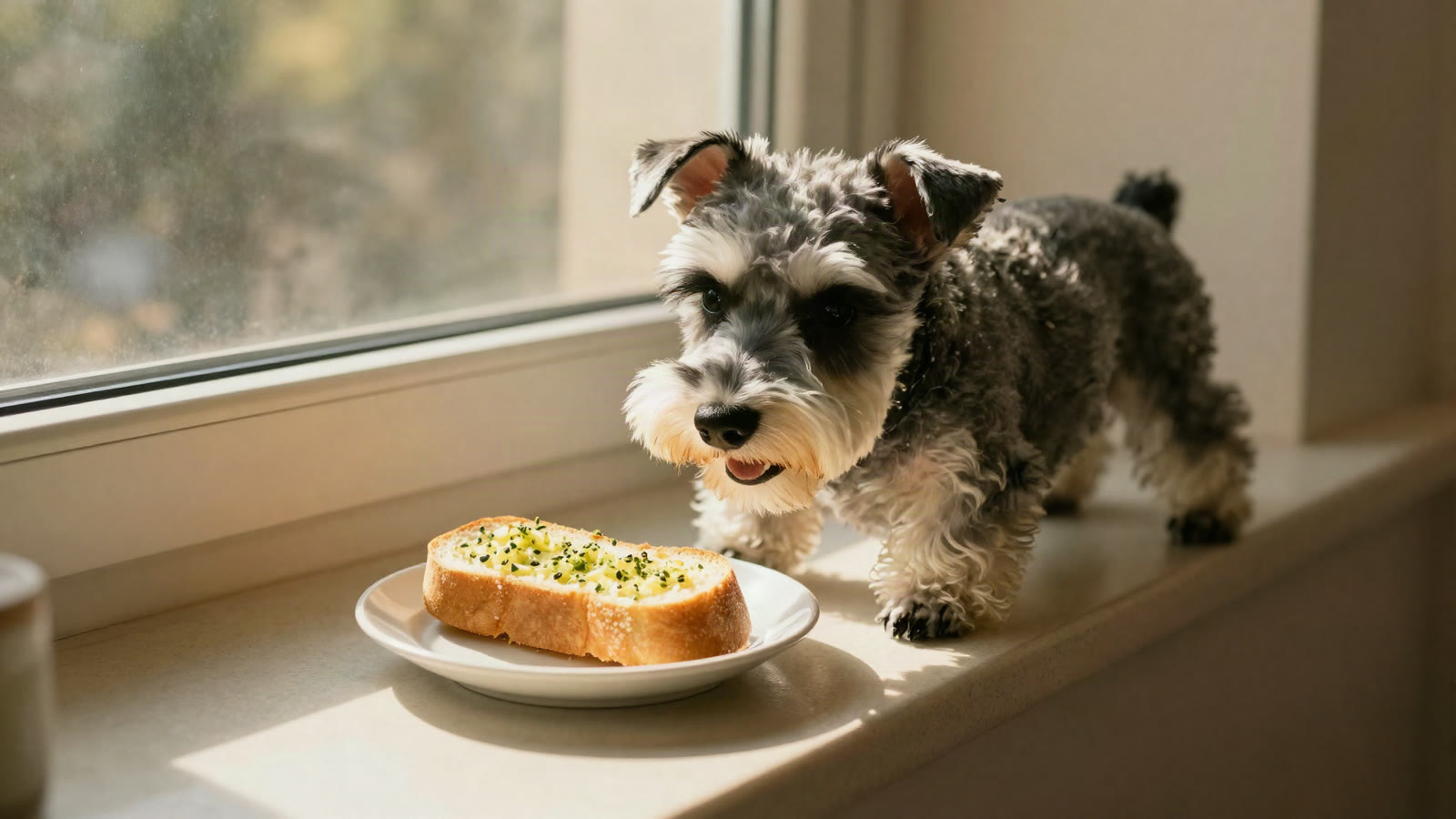
Why is garlic bread dangerous for dogs?
Garlic belongs to the allium family (along with onions, leeks, and chives), all of which are toxic to dogs. Garlic contains compounds that damage red blood cells and can cause a condition called hemolytic anemia.
Garlic bread compounds the problem: on top of the garlic, it's loaded with butter or oil, salt, and sometimes cheese and herbs. That means digestive upset and a risk of pancreatitis from the fat, in addition to the garlic toxicity itself.
How much garlic is dangerous?
Garlic is considered significantly more potent than onion. Toxic effects have been associated with roughly 15–30 grams of garlic per kilogram of body weight, but sensitivity varies a lot between dogs, and smaller amounts eaten repeatedly can also cause harm.
In practical terms, a slice of garlic bread may contain enough garlic to matter, especially for a small dog, and there's no safe amount to feed on purpose. Some breeds (such as Japanese breeds like the Akita and Shiba Inu) are extra sensitive. Treat any garlic ingestion as worth a call to your vet.
What symptoms should I watch for?
Signs of garlic toxicity can be delayed by a few days, since red blood cell damage builds over time. Watch for:
- Vomiting, diarrhea, and drooling
- Lethargy, weakness, and reluctance to exercise
- Pale or yellowish gums
- Rapid breathing or elevated heart rate
- Reddish or dark brown urine
Digestive upset from the fat and salt may appear first, with anemia signs following over the next several days.
What should I do if my dog ate garlic bread?
Don't wait for symptoms. Call your veterinarian or the ASPCA Animal Poison Control Center at (888) 426-4435 right away, and have details ready: your dog's weight, how much garlic bread they ate, and when. Your vet may recommend inducing vomiting if it was very recent, or monitoring blood counts over the following days.
Don't try home remedies without guidance. Keeping a quick record in Tavi — what was eaten, how much, and when — gives your vet the timeline they need and makes it easy to track symptoms if any appear.
Frequently asked questions
Is a small amount of garlic bread okay for dogs?
No. There's no amount of garlic bread you should feed a dog on purpose. Garlic is toxic and the effects can build up, so even a small piece is a reason to contact your vet — especially for small dogs and sensitive breeds. Fat and salt add further risk.
How long after eating garlic bread will symptoms appear?
Stomach upset can show within hours, but the more serious sign — anemia from red blood cell damage — often takes a few days to develop. That delay is why you should call your vet right away rather than waiting to see if your dog seems fine.
Is garlic worse than onion for dogs?
Yes, garlic is considered more concentrated and potent than onion, so it takes less to cause harm. Both are toxic allium-family plants, and any form — raw, cooked, or powdered, as in garlic bread — can damage a dog's red blood cells.
My dog ate garlic bread and seems fine — should I worry?
Yes, still call your vet or the ASPCA Animal Poison Control Center at (888) 426-4435. Garlic toxicity can be delayed several days as red blood cell damage builds, so a dog that looks normal now may develop anemia later. Early veterinary guidance is safest.
Tavi's guides are informational and not a substitute for professional veterinary advice, diagnosis or treatment. When in doubt, call your veterinarian.