Can Cats Eat Grapes? Why to Avoid
Start here
No. Do not give cats grapes or raisins. Grapes and raisins are known to cause sudden kidney failure in dogs, and because the toxic mechanism is still not understood and cats are also considered at risk, vets advise treating them as toxic to cats too. There is no safe amount. If your cat eats grapes or raisins, call your vet or the ASPCA Animal Poison Control Center at 888-426-4435 immediately.
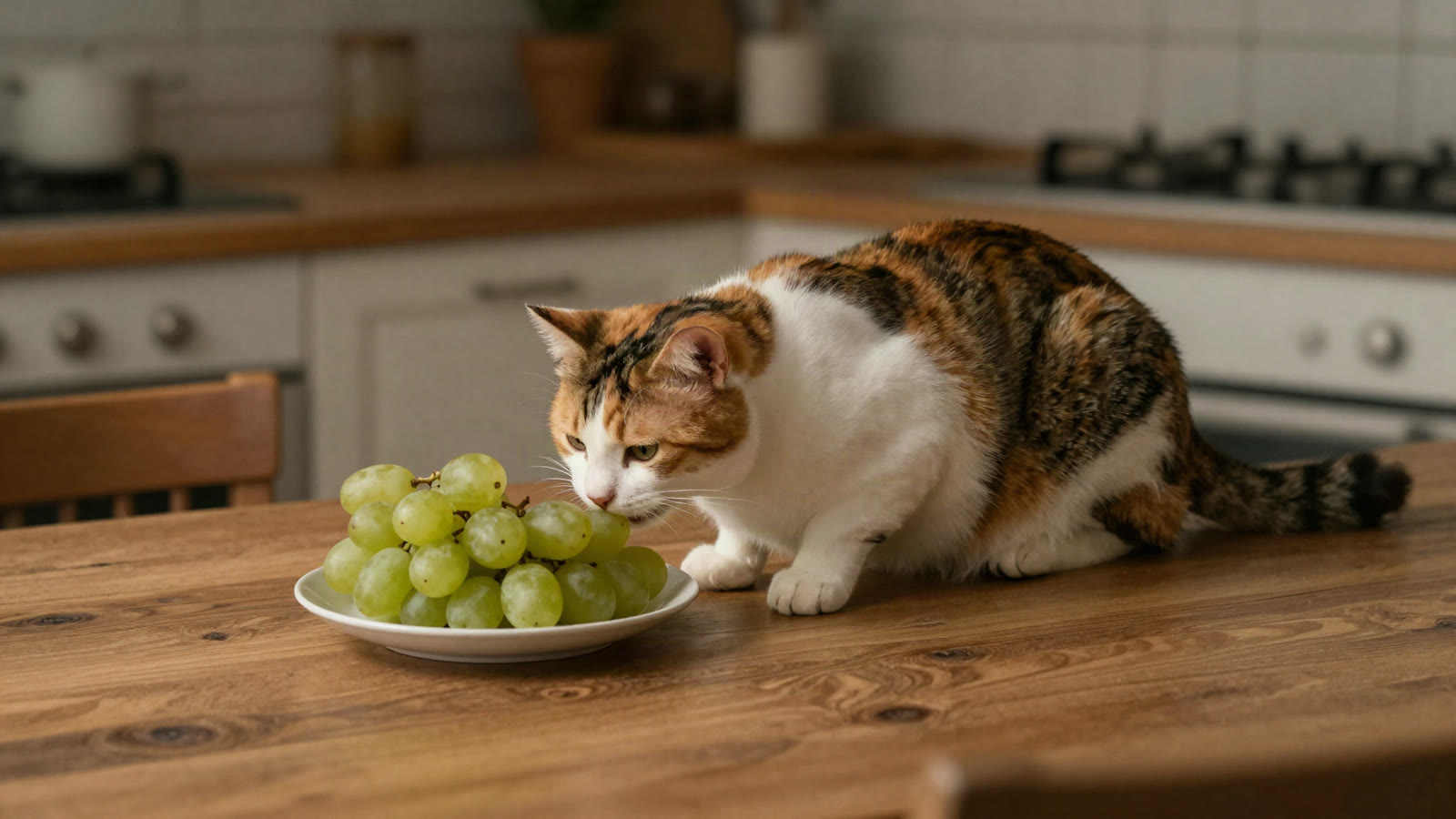
Why are grapes dangerous for cats?
Grapes and raisins are well documented to cause acute kidney failure in dogs, sometimes after eating only a small amount. The exact toxic substance and mechanism are still not fully understood, and there's no known dose that's reliably safe for any pet.
Reports in cats are fewer, largely because cats are less likely than dogs to eat grapes in the first place. But the potential for serious harm means vets and poison-control experts recommend keeping grapes and raisins away from cats entirely. With something this unpredictable, it simply isn't worth the gamble, and the responsible approach is to treat grapes as toxic.
How much is dangerous?
There is no established safe amount. In dogs, even a few grapes or raisins have triggered kidney failure in some cases, while other animals appeared unaffected, which is part of what makes this toxicity so dangerous and hard to predict.
Because sensitivity appears to vary from animal to animal and the mechanism is unknown, the only responsible approach for cats is zero. Don't try to judge whether the amount your cat ate was "small enough." Treat any grape or raisin ingestion as a potential emergency and get professional advice right away rather than waiting to see what happens.
What foods hide grapes and raisins?
Grapes are easy to spot, but raisins turn up in many everyday foods, which makes accidental exposure more likely than owners expect. Because raisins are dried grapes, the toxic component is concentrated, so even a small amount matters.
- Cookies, cakes, and muffins
- Granola bars, cereal bars, and trail mix
- Some breads and holiday baked goods like fruitcake
- Grape juice and grape jelly
Keep all of these out of your cat's reach, and check ingredient lists on any human food before letting your cat near it. A dropped cookie can be more dangerous than it looks.
What symptoms should I watch for?
Signs of grape or raisin toxicity can appear within hours and include:
- Vomiting and diarrhea, often the earliest signs
- Lethargy, weakness, or loss of appetite
- Increased or decreased thirst and urination
- Later, reduced or no urination, a sign of kidney failure
Kidney damage can progress quickly and quietly, so don't wait for symptoms to worsen before acting. By the time severe signs appear, significant damage may already have occurred, which is why early intervention matters so much.
This delayed, hard-to-read pattern is a big part of why grapes and raisins are treated so seriously. With many mild toxins you can watch and wait, but with grapes the safe assumption is that harm could be developing even while your cat looks and acts completely normal. Acting immediately, rather than monitoring at home, is what protects the kidneys.
Because the danger is so serious and so unpredictable, the smartest strategy is prevention. Store grapes and raisins where your cat can't reach them, be mindful of dropped snacks during baking or gatherings, and let everyone in the household, including children and visitors, know these foods are never to be shared with pets. If you also have a dog, the same strict no-grapes rule applies to them, so treating your whole home as a grape-free zone for pets removes the guesswork entirely. It's a small habit that eliminates one of the more serious food dangers a curious pet can stumble into at home.
What to do if your cat ate grapes or raisins
Treat it as an emergency. Contact your vet or the ASPCA Animal Poison Control Center at 888-426-4435 immediately, even if your cat seems completely fine. Early treatment, which may include decontamination and IV fluids to protect the kidneys, gives the best chance of a good outcome.
Tell them how much your cat ate and when. Logging the incident in Tavi and using the symptom checker can help you act fast, and a clear record supports your vet, but for grapes and raisins the priority is to call right away rather than watch and wait.
Frequently asked questions
Are raisins as dangerous as grapes for cats?
Yes, if not more so. Raisins are dried grapes, so the toxic component is concentrated, and they turn up in foods like cookies, cereal, and trail mix. Treat raisins as toxic to cats just like fresh grapes. If your cat eats any raisins or raisin-containing food, contact your vet or the ASPCA Animal Poison Control Center at 888-426-4435 immediately.
My cat ate one grape and seems fine. Should I worry?
Yes, call for advice anyway. Because the toxic mechanism is unknown and sensitivity varies, even one grape can be risky, and symptoms may not appear until kidney damage is underway. Contact your vet or the ASPCA Animal Poison Control Center at 888-426-4435 right away rather than waiting to see if your cat becomes ill.
Why don't we know exactly why grapes are toxic?
Despite many documented cases, researchers have not conclusively identified the toxic substance or why some animals are affected far more than others. Tartaric acid has been proposed as a likely culprit, but the picture is still incomplete. This uncertainty is exactly why there's no safe amount and why grapes and raisins should be kept away from pets.
What foods hide grapes or raisins?
Raisins commonly appear in cookies, cakes, granola and cereal bars, trail mix, some breads, and holiday baked goods like fruitcake. Grape juice and grape jelly are also concerns. Keep all of these out of your cat's reach, and check ingredient lists on any human food before letting your cat near it.
Tavi's guides are informational and not a substitute for professional veterinary advice, diagnosis or treatment. When in doubt, call your veterinarian.