Can Cats Eat Avocado? Risks Explained
Start here
It's safest to keep avocado away from cats. Avocado contains persin, and while cats are less sensitive to it than birds or livestock, the high fat content and the serious choking and obstruction risk from the pit make avocado a food to avoid. If your cat eats a large amount or the pit, contact your vet or the ASPCA Animal Poison Control Center at 888-426-4435.
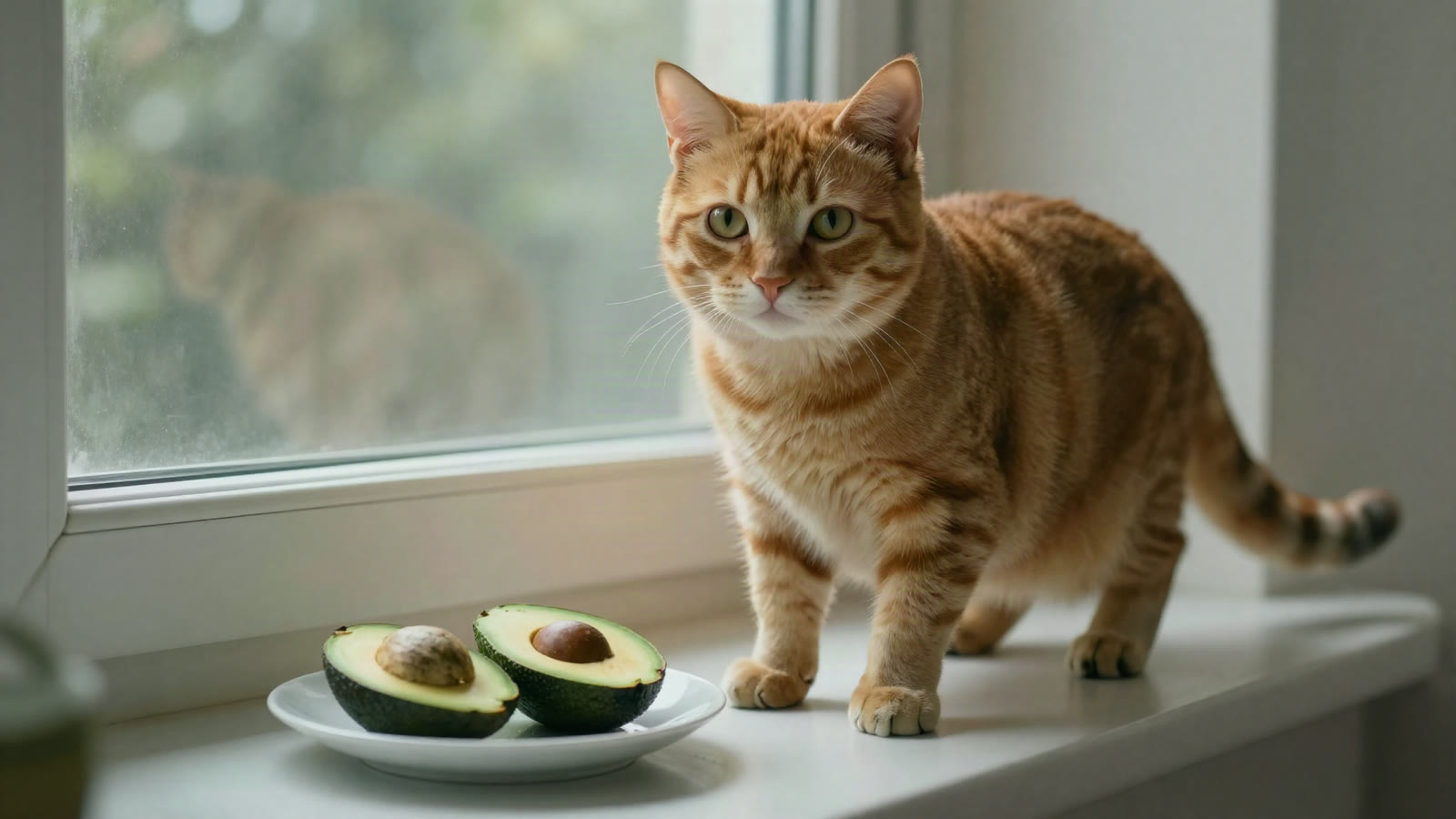
Why is avocado a concern for cats?
Avocado contains persin, a natural toxin found in the fruit, pit, leaves, and bark of the avocado plant. Persin is highly dangerous to birds and some livestock. Cats and dogs are more resistant, and a small amount of ripe avocado flesh may not poison a cat, but the risk isn't worth taking given the other hazards involved.
The two bigger, practical dangers for cats are the very high fat content and the large pit. Because of these combined risks, avocado is generally listed among the foods you shouldn't feed cats, even though it isn't as acutely toxic to them as some other foods.
The fat and choking hazards
Avocado is rich in fat. For a small obligate carnivore, a fatty food like this can trigger vomiting, diarrhea, and pancreatitis, a painful and potentially serious inflammation of the pancreas that sometimes requires hospitalization.
The pit is a major hazard. If swallowed, it can cause choking or a life-threatening intestinal blockage, and it also contains concentrated persin. The tough skin is best kept away from cats as well. Between the fat, the pit, and the skin, there's very little about an avocado that's suited to a cat.
These risks are easy to underestimate because avocado is marketed to people as a healthy food. What's good for a human isn't automatically good for a cat, whose much smaller body and carnivore digestion handle fat and plant compounds very differently. The healthy-halo around avocado is exactly why it's worth being deliberate about keeping it away from your cat.
In practice, prevention is straightforward. Keep avocados, pits, and peels off counters and out of open fruit bowls where a cat can reach them, and dispose of pits and skins securely rather than leaving them in an open bin. Be especially watchful during meals like taco or toast breakfasts, when guacamole and sliced avocado are out on the table. A cat that never gets the chance to sample avocado is a cat you never have to worry about, which is far easier than managing a scare after the fact. If you enjoy avocado often, simply building the habit of clearing it away promptly turns prevention into something automatic rather than something you have to remember each time.
What about guacamole and avocado products?
Guacamole is one of the worst forms of avocado to share, because it combines avocado with ingredients that are outright toxic to cats, especially onion and garlic, plus salt and sometimes lime. If a cat gets into guacamole, the onion and garlic are usually the bigger emergency.
You may also notice that a few pet foods contain specially processed avocado meal. That's used in controlled, tested amounts formulated to be safe, which is very different from feeding raw avocado or guacamole from your kitchen. The presence of avocado in a commercial food doesn't mean the whole fruit is safe to offer at home.
What symptoms should I watch for?
If a cat eats avocado, watch closely for:
- Vomiting and diarrhea
- Loss of appetite or lethargy
- Abdominal pain or a hunched, guarded posture, which can signal pancreatitis
- Straining, retching, or other signs of a blockage if the pit was swallowed
Any of these, especially after eating the pit or a large amount, warrants a call to your vet. Symptoms of a blockage or pancreatitis can develop over hours, so keep an eye on your cat even if they seem fine at first.
What to do if your cat ate avocado
Don't try to induce vomiting at home, especially if the pit was swallowed, since that can cause more harm. Instead, contact your vet or the ASPCA Animal Poison Control Center at 888-426-4435 for advice based on how much your cat ate and which part.
Have the details ready: the amount, whether it included the pit or skin, and when it happened. Logging this in Tavi, and using the symptom checker to gauge urgency, helps you act quickly and gives your vet an accurate history if your cat needs to be seen.
Frequently asked questions
Is a little avocado flesh dangerous for cats?
A small taste of ripe avocado flesh may not poison a cat, since cats are relatively resistant to persin, but it's still not recommended. The high fat can upset the stomach or trigger pancreatitis, and it sets a habit around a food with real hazards. It's safest to keep avocado, in any amount, away from cats.
What happens if my cat swallows an avocado pit?
The pit is a serious risk. It can cause choking or a life-threatening intestinal blockage, and it holds concentrated persin. If your cat swallows or chews a pit, contact your vet or the ASPCA Animal Poison Control Center at 888-426-4435 right away, and watch for vomiting, straining, appetite loss, or abdominal pain. Don't wait to see if it passes.
Is guacamole safe for cats?
No. Guacamole combines avocado with ingredients that are toxic to cats, especially onion and garlic, plus salt and sometimes lime. It's one of the worst avocado forms to share. Keep guacamole well out of reach, and if your cat eats some, call your vet or poison control, since the onion and garlic are the bigger concern.
Why do some pet foods contain avocado?
A few pet products use specially processed avocado meal in controlled, tested amounts formulated to be safe, which is very different from feeding raw avocado at home. That controlled use doesn't mean whole avocado is safe to share. Stick to your cat's complete diet and avoid offering avocado from your kitchen.
Tavi's guides are informational and not a substitute for professional veterinary advice, diagnosis or treatment. When in doubt, call your veterinarian.