Can Cats Drink Milk? The Lactose Myth
Start here
No — most adult cats shouldn't drink cow's milk. Despite the classic image of a cat lapping from a saucer, the majority of adult cats are lactose intolerant, and milk commonly causes diarrhea and stomach upset. Fresh water is what cats really need.
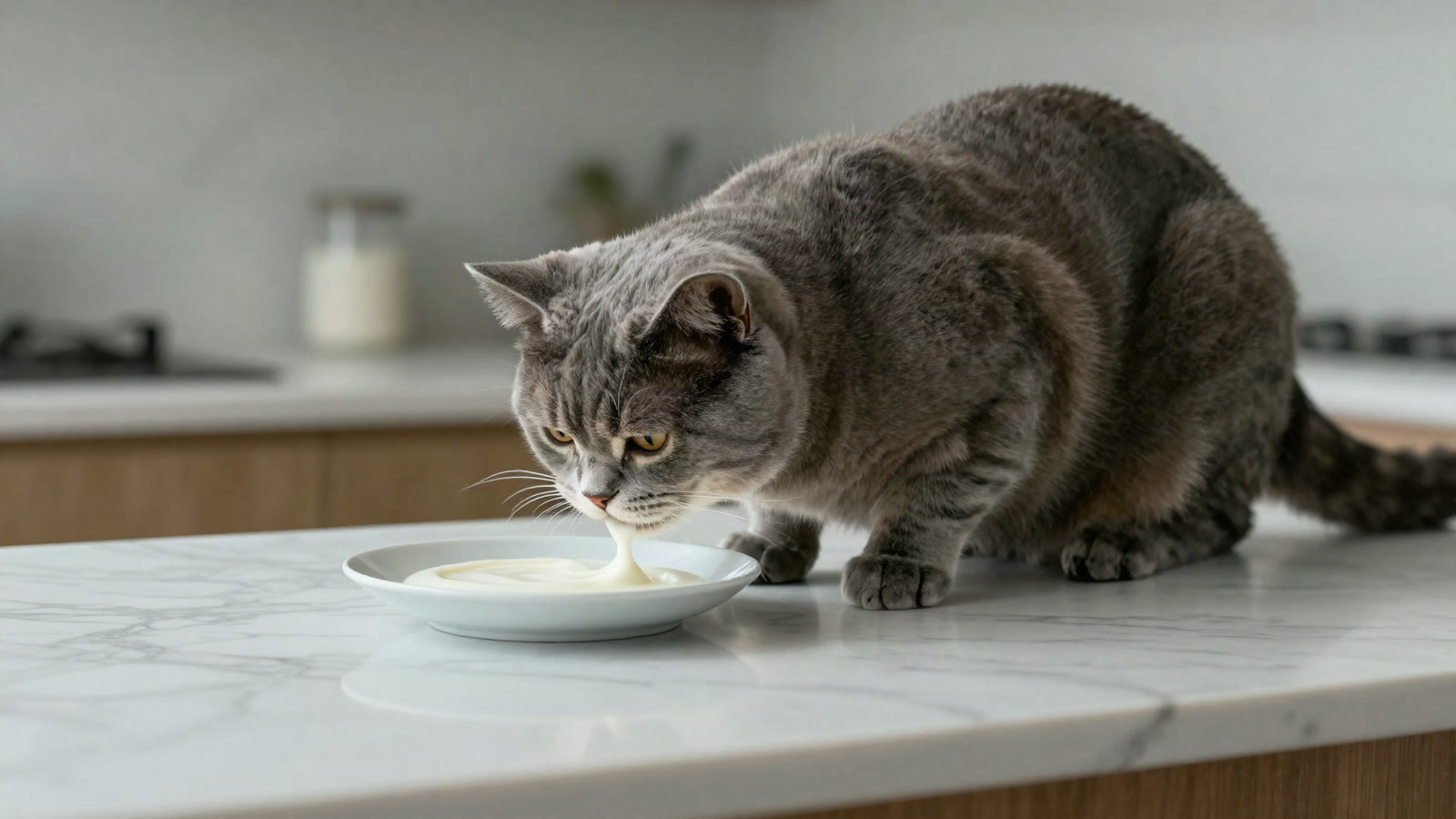
Why can't most cats handle milk?
Kittens produce an enzyme called lactase that lets them digest lactose, the sugar in their mother's milk. As cats grow up and are weaned, most stop producing enough lactase.
Without enough lactase, the lactose in cow's milk isn't properly digested. It ferments in the gut and draws water into the intestines, which is what leads to the classic diarrhea, gas, and bloating after a cat drinks milk. So the saucer-of-milk tradition is mostly a myth for adult cats.
What happens if a cat drinks milk?
A lactose-intolerant cat that drinks milk may develop symptoms within hours:
- Diarrhea and loose stool
- Vomiting
- Gas and bloating
- Stomach discomfort
Milk is also high in fat and calories. Even a cat that tolerates it can gain weight or lose interest in their balanced food if given milk regularly. It offers no nutrition a cat can't get from proper cat food.
Are there any cat-safe alternatives?
A tiny amount of milk won't poison a cat, and a few cats tolerate it, but there's no real benefit. If you want to offer something special:
- Lactose-free or specially formulated "cat milk" is gentler, but still a treat, not a staple.
- Fresh water is the best drink for cats — some prefer a fountain or a wide bowl.
Avoid giving kittens cow's milk as a substitute for their mother's milk; orphaned kittens need a proper kitten milk replacer, not cow's milk.
What if my cat drank milk?
If your cat lapped up some milk, watch for diarrhea, vomiting, or gas over the next day. Make sure fresh water is available, and the upset should pass on its own as most cases are mild.
Call your vet if the diarrhea or vomiting is severe or lasts more than a day, if your cat seems lethargic or dehydrated, or if a young kitten was fed cow's milk. Logging what your cat drank and any symptoms in Tavi gives your vet a clear timeline and helps you avoid repeat upsets.
Frequently asked questions
Why do cats like milk if it upsets them?
Cats are drawn to the fat and protein in milk, so they enjoy the taste even though many can't digest the lactose. Liking it and tolerating it are two different things — the appeal is why milk seems like a natural treat, but most adult cats pay for it with an upset stomach.
Can kittens drink cow's milk?
No. Kittens need their mother's milk or a proper kitten milk replacer, not cow's milk, which lacks the right nutrients and can cause diarrhea. If you're caring for an orphaned kitten, get a kitten formula from a vet or pet store and ask your vet for feeding guidance.
Is lactose-free milk safe for cats?
Lactose-free milk or specially formulated cat milk is gentler on the stomach since the problem lactose is removed. It's still a treat with extra calories, not a necessity. Offer only a small amount occasionally, and remember fresh water is what your cat truly needs.
Can cats have cheese or yogurt instead?
Some cats tolerate tiny amounts of plain yogurt or a nibble of cheese better than milk because they contain less lactose, but many are still sensitive. If you offer any, keep it to a very small, occasional taste and watch for stomach upset.
Tavi's guides are informational and not a substitute for professional veterinary advice, diagnosis or treatment. When in doubt, call your veterinarian.