Russian Blue Cat Health Issues & Lifespan
Start here
Russian Blues have a reputation as one of the healthiest, longest-lived cat breeds; the 15-20 years usually quoted is breed convention rather than a measured figure, and the median age at death recorded for 118,016 UK cats was 14.0 years. They carry few breed-specific defects, but their strong appetite makes them prone to obesity, and like all cats they can develop bladder stones, dental disease, and kidney problems with age. Steady weight and routine screening keep most issues manageable.
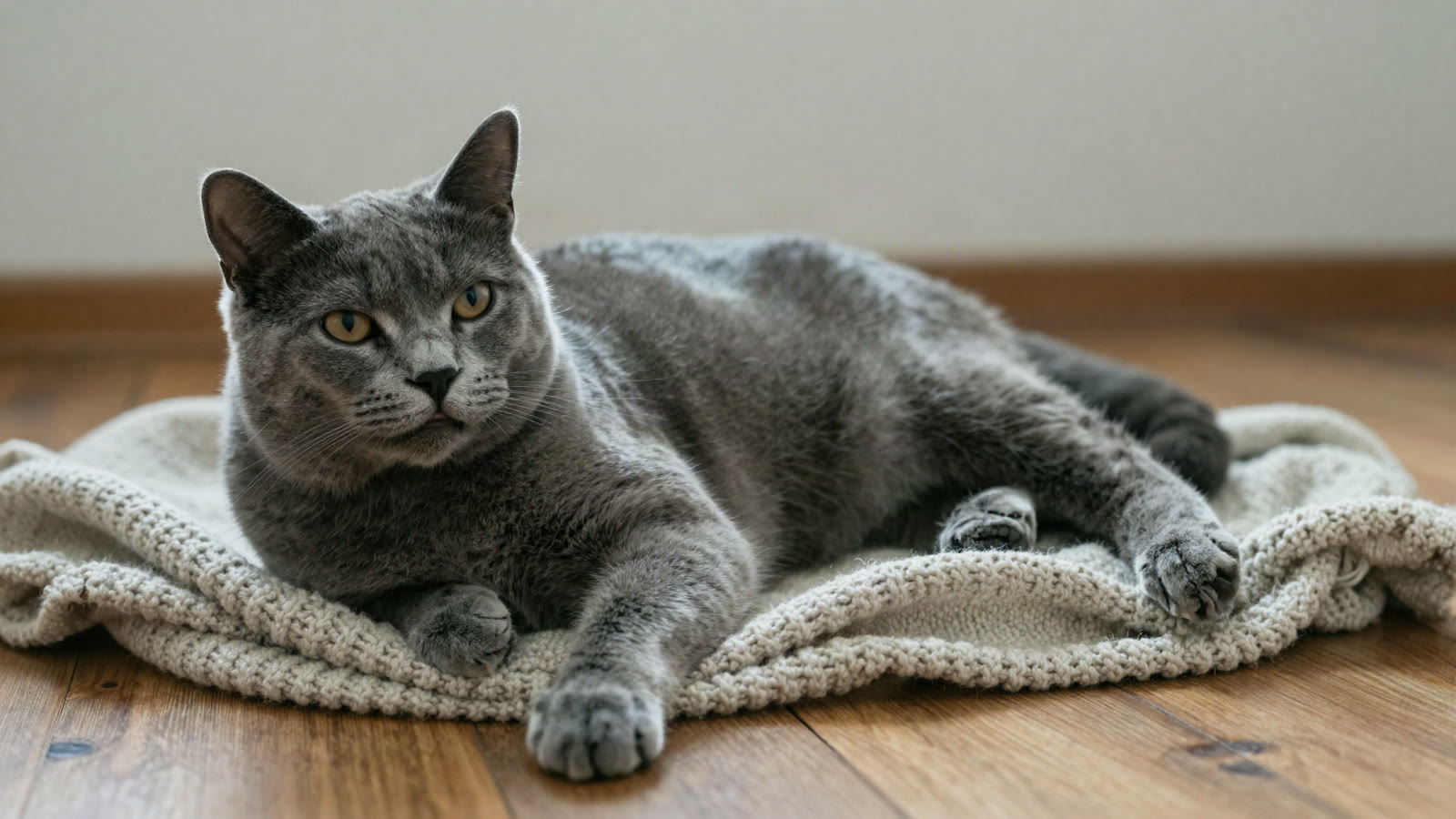
What health problems are Russian Blues prone to?
The Russian Blue is a naturally robust breed with no widespread genetic diseases, which is part of why it's so long-lived. That said, a few issues come up often enough to watch for:
- Obesity - Russian Blues love food and will beg convincingly. Excess weight is by far their most common health problem and drives diabetes, joint strain, and urinary issues.
- Bladder and urinary stones (FLUTD) - straining, blood in urine, or frequent trips to the litter box need prompt vet attention, especially in males.
- Dental disease - tartar, gingivitis, and tooth resorption are common in most cats by middle age.
- Chronic kidney disease - a leading concern in senior cats of every breed.
What early signs should I watch for?
Because this breed hides discomfort well, subtle changes matter. Book a vet visit if you notice increased thirst or urination (possible kidney or diabetes signs), straining or crying in the litter box, dropping food or chewing on one side, or gradual weight change either way.
Russian Blues are creatures of habit, so behavior shifts - hiding, less jumping, reduced grooming - are meaningful clues that something physical may be wrong.
How do I keep a Russian Blue healthy?
The single most valuable thing you can do is manage weight. Measure meals rather than free-feeding, use puzzle feeders, and keep this active, intelligent cat playing daily.
- Feed a measured, complete diet and skip the constant treats their begging invites.
- Provide fresh water and consider some wet food to support urinary and kidney health.
- Brush teeth or use dental treats and get professional cleanings as advised.
- Keep vaccines and parasite prevention current, and do annual exams (twice yearly once senior).
Because weight creeps up slowly, it helps to log it regularly. In Tavi you can track weight and vet visits over time, so a breed tendency like obesity or a slow kidney decline shows up as a trend before it becomes a crisis.
How long do Russian Blues live, and when should I see the vet?
15 to 20 years is the range usually quoted for a well-cared-for Russian Blue, with some reaching their early twenties. Treat it as breed convention rather than a published figure: the median age at death recorded for 118,016 UK cats was 14.0 years, and purebred cats in that study were shorter-lived than crossbreds, not longer (12.5 against 14.0 years). The breed's low rate of inherited disease is a genuine advantage even so.
See a vet promptly for straining to urinate (an emergency in male cats), sudden appetite loss, repeated vomiting, labored breathing, or noticeable weight loss. From about age seven, ask your vet about senior wellness bloodwork to catch kidney disease, thyroid changes, and diabetes early, when they're most treatable.
How does a Russian Blue's temperament affect its health care?
Russian Blues are famously reserved, sensitive cats that thrive on routine and can be stressed by change - new people, travel, or a chaotic household. That temperament matters for health in two ways.
First, stress can worsen urinary problems; feline lower urinary tract issues in cats are often triggered or aggravated by anxiety, so a calm, predictable environment with clean litter boxes and quiet spaces genuinely protects their health. Second, because they hide from strangers, they often mask illness at the vet and at home. A cat that's usually shy but affectionate with you becoming withdrawn even from you is a meaningful signal.
Give them enrichment - climbing space, play, and consistency - and don't dismiss subtle behavior changes. With this breed, knowing your cat's normal baseline is one of the best diagnostic tools you have.
Frequently asked questions
Are Russian Blues a healthy breed?
Yes. Russian Blues are considered one of the healthiest cat breeds, with no major inherited diseases and a long average lifespan. Their biggest practical health risk is obesity from overfeeding, which is entirely preventable with measured meals and daily play. Routine vet care handles the rest.
How long do Russian Blue cats live?
The range usually quoted for the breed is 15 to 20 years, with some cats reaching their early twenties, but it is breed convention rather than a measured figure: in a UK primary-care study of 118,016 cats the median age at death was 14.0 years, and purebred cats sat below that at 12.5. Keeping them at a healthy weight, staying current on veterinary care, and screening for kidney disease as they age all help them reach the top of that range.
Why is my Russian Blue always hungry?
Russian Blues are known for a strong food drive and persuasive begging, so constant hunger is usually normal breed behavior rather than illness. Feed measured meals and use puzzle feeders. However, a sudden, dramatic increase in appetite or thirst can signal diabetes or thyroid disease, so mention it to your vet.
Are Russian Blues hypoallergenic?
No cat is truly hypoallergenic, but Russian Blues are often better tolerated. Their dense coat and reportedly lower levels of the Fel d 1 protein mean some allergy sufferers react less. Spend time with the cat before adopting, and reduce dander with regular grooming and cleaning.
Tavi's guides are informational and not a substitute for professional veterinary advice, diagnosis or treatment. When in doubt, call your veterinarian.