Can Dogs Eat Cashews? What's Safe
Start here
Yes, in small amounts. Plain, unsalted, roasted cashews are not toxic to dogs and are safe as an occasional treat for most healthy dogs. Keep it to a few nuts at most, avoid salted or flavored ones, and skip them entirely for dogs prone to pancreatitis or weight problems, since cashews are high in fat.
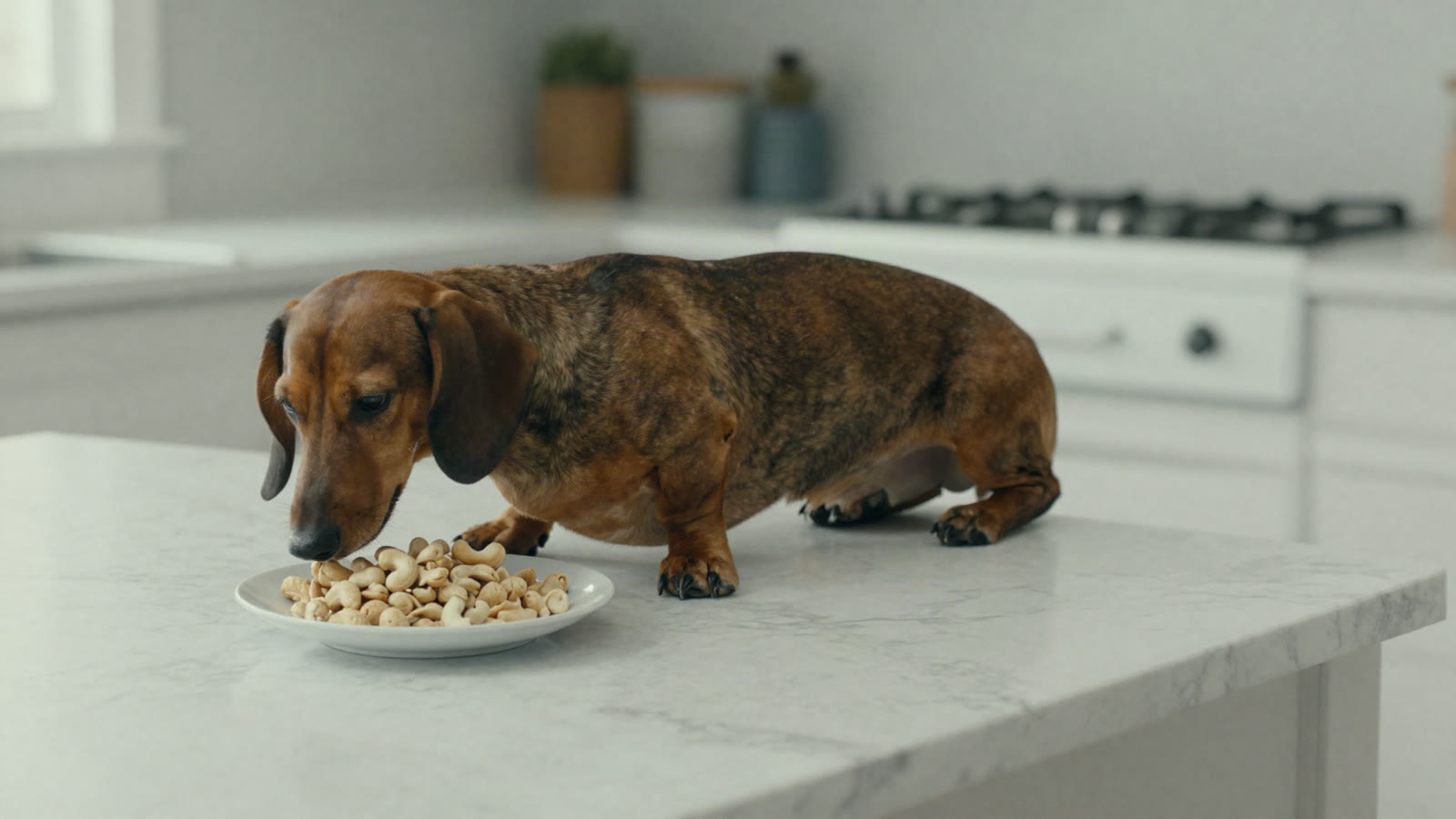
Are cashews safe for dogs?
Unlike macadamia nuts, cashews are not toxic to dogs. A few plain, unsalted, cooked cashews make a fine once-in-a-while treat for a healthy adult dog. Cashews do contain some protein, healthy fats, and minerals like magnesium.
The catch is the fat and calorie load. Cashews are rich, and too many can upset the stomach or, over time, contribute to weight gain and pancreatitis. Always serve them roasted or otherwise cooked, never raw: raw cashews can contain a toxin (urushiol, related to poison ivy) that's removed by processing, and store-bought cashews are already treated.
How many cashews can a dog have?
Moderation is everything. For a small dog, one or two cashews is plenty; a larger dog can handle a few. Think of them as a rare treat, not a daily snack.
To serve them safely:
- Choose plain, unsalted, roasted cashews with no seasoning.
- Avoid mixed nuts, which often contain toxic macadamias.
- Break large cashews in half for small dogs to reduce choking risk.
- Keep all treats to about 10% of daily calories.
What should I watch out for?
Even though cashews aren't toxic, a few risks are worth knowing:
- Salt: Salted cashews can add too much sodium, which is hard on dogs, especially with heart or kidney issues.
- Pancreatitis: The high fat content can trigger this painful condition, particularly if your dog eats a lot at once or is already prone to it.
- Weight gain: Cashews are calorie-dense and add up quickly.
- Choking or allergy: Whole nuts can be a choking hazard, and some dogs are sensitive to new foods.
If you're tracking your dog's weight over time, logging treats and portions in Tavi makes it easy to spot when snacks are creeping the numbers up.
What if my dog ate too many cashews?
A handful of extra plain cashews usually causes nothing worse than a mild stomachache. Offer water, skip the next fatty treat, and watch for vomiting or diarrhea over the next day.
Call your vet if your dog ate a large quantity, ate salted or flavored cashews in bulk, or shows signs of pancreatitis: repeated vomiting, a painful or bloated belly, loss of appetite, or lethargy. If the nuts were part of a trail or mixed-nut blend, mention that, since macadamias in the mix would be a more urgent concern.
Frequently asked questions
Are cashews toxic to dogs?
No. Plain cashews are not toxic to dogs, unlike macadamia nuts. The main concerns are their high fat content, added salt or seasonings, and the calories they pack. A few plain, unsalted cashews are safe as an occasional treat for most healthy dogs, but they shouldn't be a regular part of the diet.
How many cashews can a dog eat?
Keep it small: one or two for a small dog and a few for a larger dog, only occasionally. Cashews are calorie- and fat-dense, so treats like these should stay within about 10% of your dog's daily calories. Too many at once can cause stomach upset or, over time, weight gain and pancreatitis risk.
Can dogs eat salted cashews?
It's best to avoid them. Salted cashews add unnecessary sodium, which can be a problem for dogs, especially those with heart or kidney conditions. A single salted cashew won't poison a healthy dog, but plain, unsalted cashews are always the safer choice for an occasional treat.
Why should dogs avoid macadamia nuts but not cashews?
Macadamia nuts are specifically toxic to dogs and can cause weakness, tremors, vomiting, and fever even in small amounts, for reasons that aren't fully understood. Cashews don't contain this toxin. This is why you should never give mixed nuts, which often include macadamias, and stick to plain cashews on their own.
Tavi's guides are informational and not a substitute for professional veterinary advice, diagnosis or treatment. When in doubt, call your veterinarian.