Can Cats Eat Blueberries? Safe Treat
Start here
Yes, blueberries are a safe, non-toxic occasional treat for cats. They're low in sugar compared with many fruits and contain antioxidants, but cats are obligate carnivores and don't need fruit, so blueberries stay a small, once-in-a-while snack rather than part of the diet.
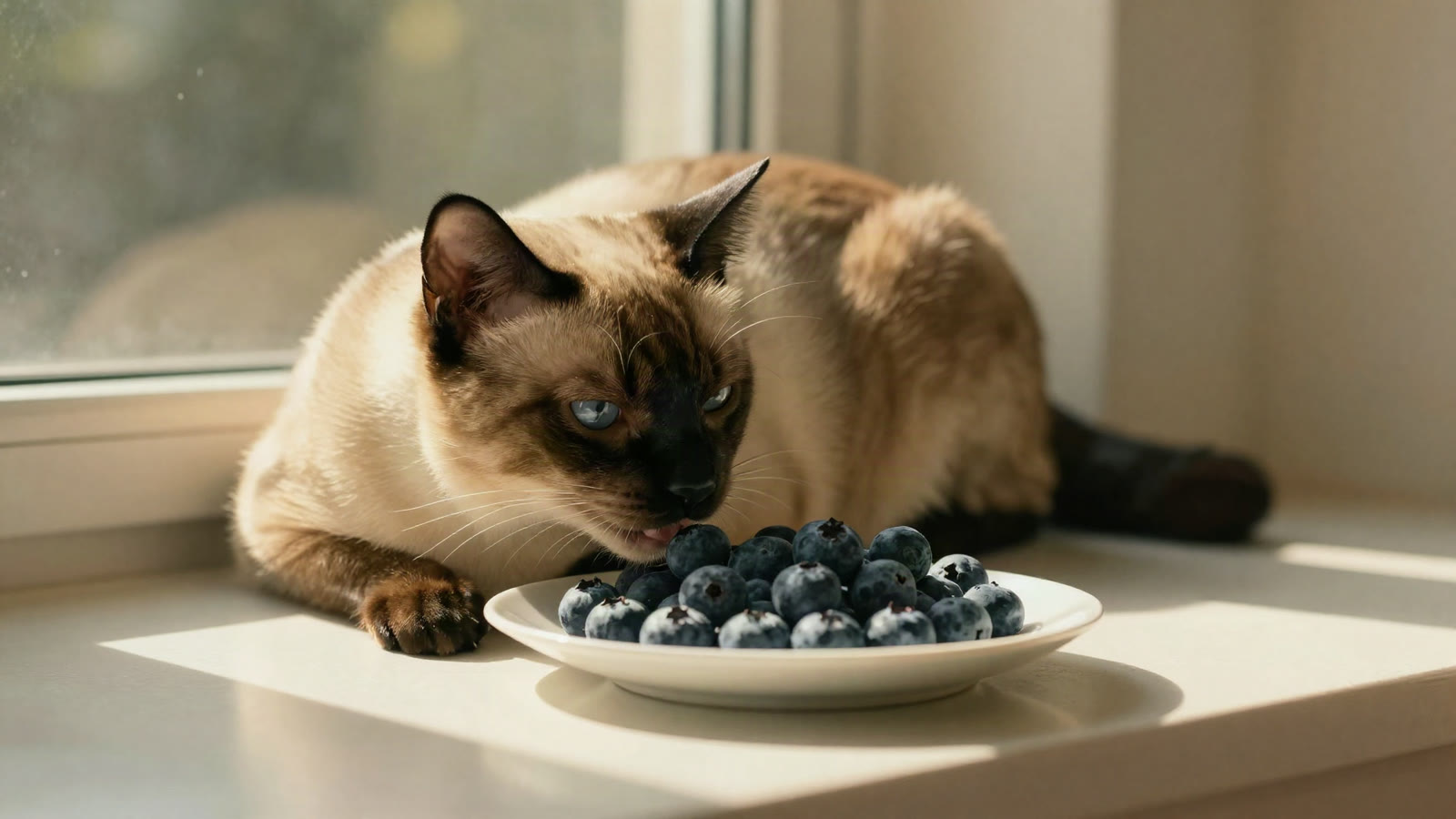
Are blueberries good for cats?
Blueberries are one of the safer fruits for cats. They're non-toxic, relatively low in sugar, and contain antioxidants, fiber, and vitamins. You'll even find blueberry extract listed as an ingredient in some commercial cat foods, where it's used in controlled amounts.
That said, the benefit for a cat is modest. Cats get complete nutrition from meat-based food, and the antioxidants in a couple of berries won't transform their health. Think of blueberries as a fun, harmless treat rather than a supplement or a health booster.
Because cats can't taste sweetness, some will enjoy batting a berry around or nibbling out of curiosity, while others will ignore it completely. Both reactions are perfectly normal.
How many blueberries can a cat have?
Two or three blueberries at a time, occasionally, is plenty for most cats. There's no reason to offer more, and larger amounts only raise the chance of an upset stomach.
- Wash them well and serve them fresh, or thawed if you're using frozen.
- Cut larger berries in half to reduce choking risk, especially for kittens.
- Skip anything with added sugar, syrup, or blueberries baked into muffins or other treats.
- Introduce them slowly so you can watch for any reaction.
Keep all treats under about 10% of daily calories. Even a healthy fruit shouldn't crowd out the protein a cat actually needs.
What should I watch for?
Even a low-sugar fruit can cause mild digestive upset, like soft stool or a mildly upset stomach, if a cat eats too many. Whole berries can also be a choking hazard for small cats and kittens, which is why halving them helps.
Overweight or diabetic cats should have fruit only with a vet's okay, since even a little added sugar can matter for them. Watch for diarrhea or vomiting after any new treat, and stop offering it if you see either.
As with any new food, the goal is to introduce it in a small amount and pay attention to how your individual cat responds.
Do blueberries offer real health benefits?
Blueberries are famous as a "superfood" for people, and it's natural to wonder whether that carries over to cats. The antioxidants and fiber they contain are why some pet foods include them, but a healthy cat on a complete, balanced diet is already getting what it needs.
A few berries now and then won't hurt, and may add a little variety, but they're not a substitute for good nutrition or veterinary care. If you're feeding blueberries hoping to fix a specific health concern, talk to your vet instead. A balanced diet and regular checkups do far more for your cat than any single fruit.
If you do like offering blueberries, one nice use is as a low-calorie training or bonding treat for a cat that happens to enjoy them. Because they're small and low in sugar compared with many fruits, a single berry can be handed over during play or a grooming session without meaningfully affecting the day's calories, as long as you're still counting it toward the overall treat budget.
You might also see blueberries mashed into homemade cat treats or frozen into little ice cubes for a summer snack. These can be fine in principle, but they're only as safe as what goes with them, so keep any homemade treat free of sugar, sweeteners like xylitol, chocolate, and dairy your cat can't tolerate. When in doubt, a plain fresh or thawed berry, given by hand, is the simplest and safest way to share blueberries, and it lets you control exactly how much your cat gets.
What if my cat ate a lot of blueberries?
Blueberries aren't toxic, so a larger-than-usual serving is most likely to cause a bout of loose stool. Offer water, hold off on more treats, and let things settle on their regular food.
Contact your vet if diarrhea or vomiting lasts more than a day or your cat seems unwell. Logging the treat in Tavi, along with the amount and any reaction, helps you learn which snacks your cat handles best and gives your vet a clear history if you ever need one.
Frequently asked questions
Do blueberries have health benefits for cats?
Blueberries contain antioxidants and fiber, which is why some cat foods include them. For a healthy cat on a complete diet, though, the benefit from a few berries is minor. They're best viewed as a safe treat rather than a supplement. If you want to support your cat's health, a balanced diet matters far more.
Can cats eat frozen or dried blueberries?
Frozen blueberries are fine once thawed and can be a cool treat, though very cold berries may upset a sensitive stomach. Dried blueberries are more concentrated in sugar and sometimes have additives, so they're best avoided. Plain fresh or thawed berries in tiny amounts are the safest choice.
Will my cat even like blueberries?
Maybe not. Cats can't taste sweetness, so the appeal of a blueberry is lost on them, and many will ignore it. Some cats enjoy batting one around or nibbling out of curiosity. There's no need to encourage it, and it's perfectly normal for a cat to have zero interest.
How often can cats eat blueberries?
A couple of berries once or twice a week is reasonable for a cat that enjoys them and tolerates them well. They should never replace a meal. If your cat gets loose stool or an upset stomach, or is diabetic or overweight, skip fruit and offer a protein-based treat instead.
Tavi's guides are informational and not a substitute for professional veterinary advice, diagnosis or treatment. When in doubt, call your veterinarian.