Basset Hound Health Issues & Lifespan
Start here
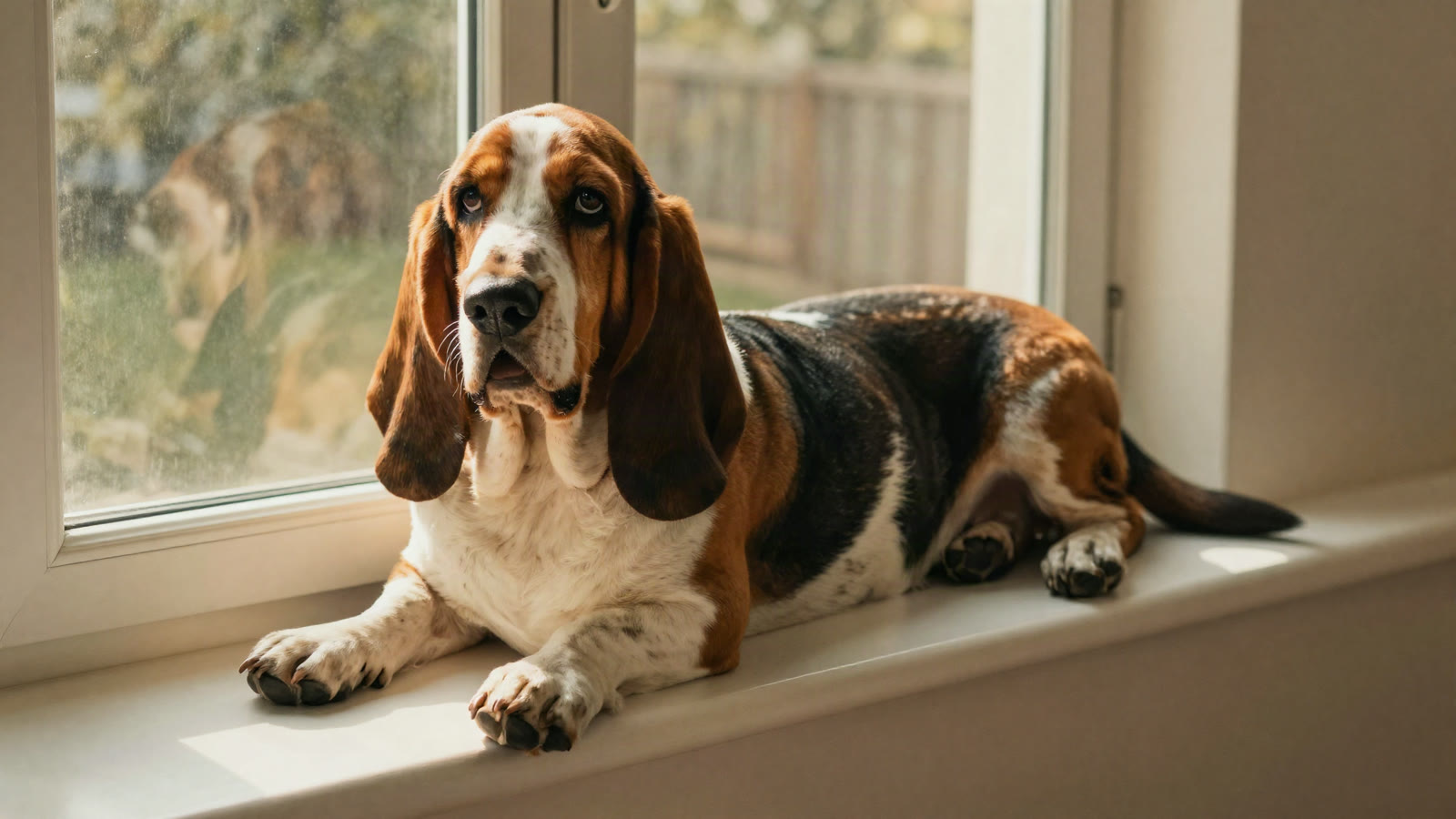
Basset Hounds are laid-back, long-eared scent hounds that typically live 10-13 years, and their distinctive build drives their main health issues. Chronic ear infections, back problems, and joint strain from their long body and short legs are the concerns to watch, along with a strong tendency toward obesity.
What health problems are Basset Hounds prone to?
The Basset's unique shape, long body, short legs, heavy build, and long droopy ears, creates a predictable set of issues:
- Ear infections: their long, floppy ears trap moisture and reduce airflow, making chronic ear infections one of the most common problems.
- Intervertebral disc disease (IVDD) and back problems: the long spine and short legs put strain on the back, risking disc issues.
- Obesity: Bassets love food and are prone to weight gain, which worsens joints and back.
- Joint and elbow problems: their dwarf-like conformation stresses the elbows and shoulders.
- Glaucoma and cherry eye: their droopy lower lids and eye shape predispose them to eye issues.
- Bloat (GDV): a risk in this deep-chested breed.
- Von Willebrand disease and thrombopathia: inherited bleeding disorders in some lines.
What early signs should Basset Hound owners watch for?
Watch closely for:
- Head shaking, ear odor, scratching at the ears, or dark discharge (ear infection)
- Reluctance to jump, a hunched back, yelping when moved, or weakness in the legs (possible back or disc problem, see a vet)
- Weight gain and a thickening waist (obesity, which compounds every other issue)
- A red mass in the eye corner, cloudiness, or a painful eye (eye disease)
- A swollen belly with retching (bloat emergency)
- Excessive bleeding from minor cuts (possible clotting disorder)
Because their ears are so prone to infection, weekly ear checks and cleaning are essential.
How do you keep a Basset Hound healthy?
Weight control and ear care are the twin pillars of Basset health:
- Keep them lean: this is critical. Extra weight badly strains the back and joints. Measure food and limit treats, since Bassets will overeat.
- Clean and dry the ears regularly to prevent chronic infections.
- Protect the back: use ramps, and support the body when lifting (support both front and rear). Keeping them lean does more for the spine than restricting movement: in a study of 43,517 dogs, overweight dogs had about 1.7 times the odds of disc disease, and more daily activity went with lower odds.
- Provide moderate, regular exercise to maintain muscle without overstraining joints.
- Feed smaller meals and use a floor-level bowl and a slow-feeder: a study of about 1,900 large and giant-breed dogs found faster eating and raised-bowl feeding both went with higher bloat risk. Keeping things calm around mealtimes is widely advised but was not tested.
Tracking weight and vet visits over time helps breed issues show as trends. Logging each weigh-in and ear infection in Tavi makes it easy to see creeping weight gain, which is the root of so many Basset problems, before it strains the back.
How long do Basset Hounds live, and when should you see the vet?
Basset Hounds typically live 10 to 13 years. Keeping them at a healthy weight is one of the biggest factors in reaching the upper end of that range comfortably.
See your vet for recurring ear infections, any back pain or reluctance to move, eye problems, or unexplained bleeding, and seek emergency care for bloat or sudden hind-leg weakness (a possible disc problem). Annual checkups (twice yearly for seniors) with attention to weight, ears, and joints keep this easygoing breed comfortable.
Frequently asked questions
Why do Basset Hounds get so many ear infections?
Their long, heavy, floppy ears hang over the ear canal, trapping moisture and blocking airflow, which creates an ideal environment for yeast and bacteria. Signs include head shaking, odor, scratching, and dark discharge. Regular cleaning and drying of the ears helps a lot, and any suspected infection should be seen by your vet, since chronic, untreated ear infections become painful and hard to clear.
Are Basset Hounds prone to back problems?
Yes. Their long spine, short legs, and heavy build strain the back and can lead to intervertebral disc disease (IVDD). Signs include reluctance to jump, a hunched posture, yelping when moved, or hind-leg weakness. Keeping your Basset lean is the best-evidenced step: in a study of 43,517 dogs, overweight dogs had about 1.7 times the odds of disc disease, and more daily activity went with lower odds. Ramps and supporting the whole body when lifting help too. The familiar advice to stop a long-backed dog jumping on furniture is not backed by the evidence we have. See a vet promptly for back pain.
How do I keep my Basset Hound from getting overweight?
Measure meals rather than free-feeding, limit treats, and resist those pleading eyes, since Bassets are food-motivated and gain weight easily. Provide regular moderate exercise, and weigh your dog periodically to catch gains early. Keeping a Basset lean is one of the most important things you can do, because excess weight worsens their back, joints, and overall health. Ask your vet for a target weight.
Do Basset Hounds have eye problems?
They can. Their droopy lower eyelids and eye shape predispose them to conditions like cherry eye (a red mass in the eye corner), glaucoma, and entropion or ectropion (eyelid abnormalities). Watch for redness, cloudiness, discharge, or a painful eye, and have any changes checked promptly. Glaucoma in particular can threaten vision quickly, so sudden eye pain warrants same-day veterinary attention.
Tavi's guides are informational and not a substitute for professional veterinary advice, diagnosis or treatment. When in doubt, call your veterinarian.