Pug Health Issues & Lifespan
Start here
Pugs are affectionate, comical companions that typically live 12-15 years, but their extreme flat face makes breathing problems (BOAS) and eye injuries their defining health risks. The very features that make a Pug charming, the short muzzle and big eyes, are also the source of most of their medical needs.
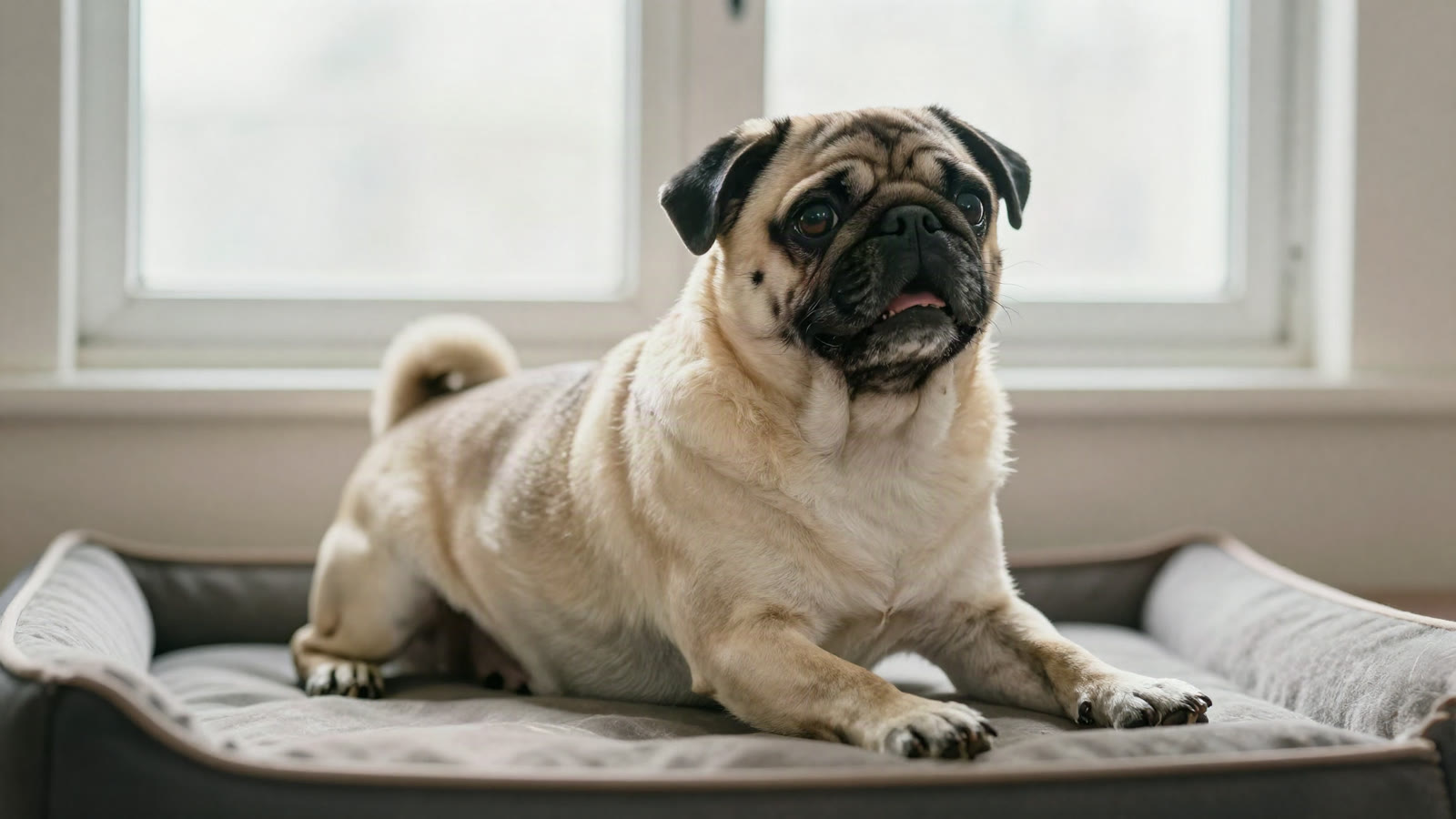
What health problems are Pugs prone to?
The Pug is one of the most brachycephalic breeds, and that shapes its health profile:
- Brachycephalic obstructive airway syndrome (BOAS): pinched nostrils and a long soft palate cause snorting, snoring, gagging, and serious heat intolerance.
- Eye problems: large, protruding eyes are prone to corneal ulcers, dry eye, pigmentary keratitis, and even proptosis (the eye popping out of the socket after trauma).
- Obesity: Pugs love food and gain weight easily, which worsens breathing and joints.
- Skin fold dermatitis: their facial wrinkles trap moisture and can become infected.
- Pug dog encephalitis (PDE): a serious inflammatory brain disease seen almost only in this breed.
- Hip dysplasia and patellar luxation: joint issues that cause limping.
- Hemivertebrae: malformed spinal bones linked to the curly tail can occasionally cause neurological signs.
What early signs should Pug owners watch for?
Know the warning signs so you can act quickly:
- Loud snoring, snorting, gagging, blue-tinged gums, or collapse (airway emergency)
- Squinting, cloudiness, a dull or brown film over the eye, or a bulging eye after any bump
- Redness, odor, or moist irritation in the facial folds
- Circling, seizures, disorientation, or sudden behavior changes (possible PDE, see a vet urgently)
- Skipping gait or reluctance to jump (joint issues)
A Pug's eye can prolapse from surprisingly minor trauma. If an eye ever bulges out, keep it moist and go to an emergency vet immediately.
How do you keep a Pug healthy?
Pug care centers on weight, temperature, and hygiene:
- Keep them lean: this is the single most important thing. Extra weight makes breathing much harder. Measure food and limit treats.
- Avoid heat and overexertion: Pugs overheat dangerously fast. Exercise in cool hours and always offer shade and water.
- Use a harness instead of a collar to protect the airway.
- Clean the facial folds regularly and dry them to prevent infection.
- Protect the eyes and treat any squinting or cloudiness promptly.
Because breed issues often show up gradually, tracking weight and vet visits helps. Logging each weigh-in in Tavi lets you see creeping weight gain as a trend and act before it strains your Pug's breathing.
How long do Pugs live, and when should you see the vet?
Pugs typically live 12 to 15 years. Many enjoy a long life when kept slim and protected from heat.
Seek emergency care for any breathing crisis, overheating, or a prolapsed eye. See your vet promptly for eye cloudiness or squinting, fold infections, persistent limping, or neurological signs like circling or seizures. Regular checkups, plus dental and eye monitoring, keep small problems from becoming big ones.
Frequently asked questions
Are Pugs unhealthy dogs?
Pugs are prone to more health issues than many breeds, mostly because of their extreme flat face, which causes breathing difficulty and eye vulnerability, plus a tendency toward obesity. That said, a Pug kept lean, cool, and well cared for can live a happy 12-15 years. Choosing a responsible breeder who screens for airway and eye health improves the odds.
Why do Pugs snore and snort so much?
Their brachycephalic anatomy, narrow nostrils, a long soft palate, and a compressed airway, makes moving air noisy and effortful, which is why Pugs snore, snort, and gag. Mild noise is common, but loud, labored breathing, blue gums, or collapse signal a serious problem. Keeping weight down and avoiding heat helps; severe BOAS can be improved surgically.
How do I clean my Pug's face wrinkles?
Gently wipe inside each facial fold with a damp cloth or a vet-approved pet wipe, then dry thoroughly so moisture does not linger. Do this a few times a week, and more often if folds get dirty or damp. Trapped moisture and debris cause fold dermatitis, so redness, odor, or irritation means it is time to see your vet.
Can a Pug's eye really pop out?
Yes. Because Pug eyes are large and shallow-set, trauma, or even rough handling or a dog fight, can cause proptosis, where the eye bulges out of the socket. It is an emergency. Keep the eye moist with saline or a wet cloth and get to an emergency vet immediately. Prompt treatment gives the best chance of saving the eye and vision.
Tavi's guides are informational and not a substitute for professional veterinary advice, diagnosis or treatment. When in doubt, call your veterinarian.