Kitten Feeding Schedule & Chart by Age
Start here
Kittens grow fast and eat little and often. From weaning to about 6 months, feed 3–4 small meals a day of a complete kitten food; from 6–12 months, move to 2–3 meals. Weaning starts around 3–4 weeks, and most kittens switch to adult food at about 12 months. Always follow the label and your vet.
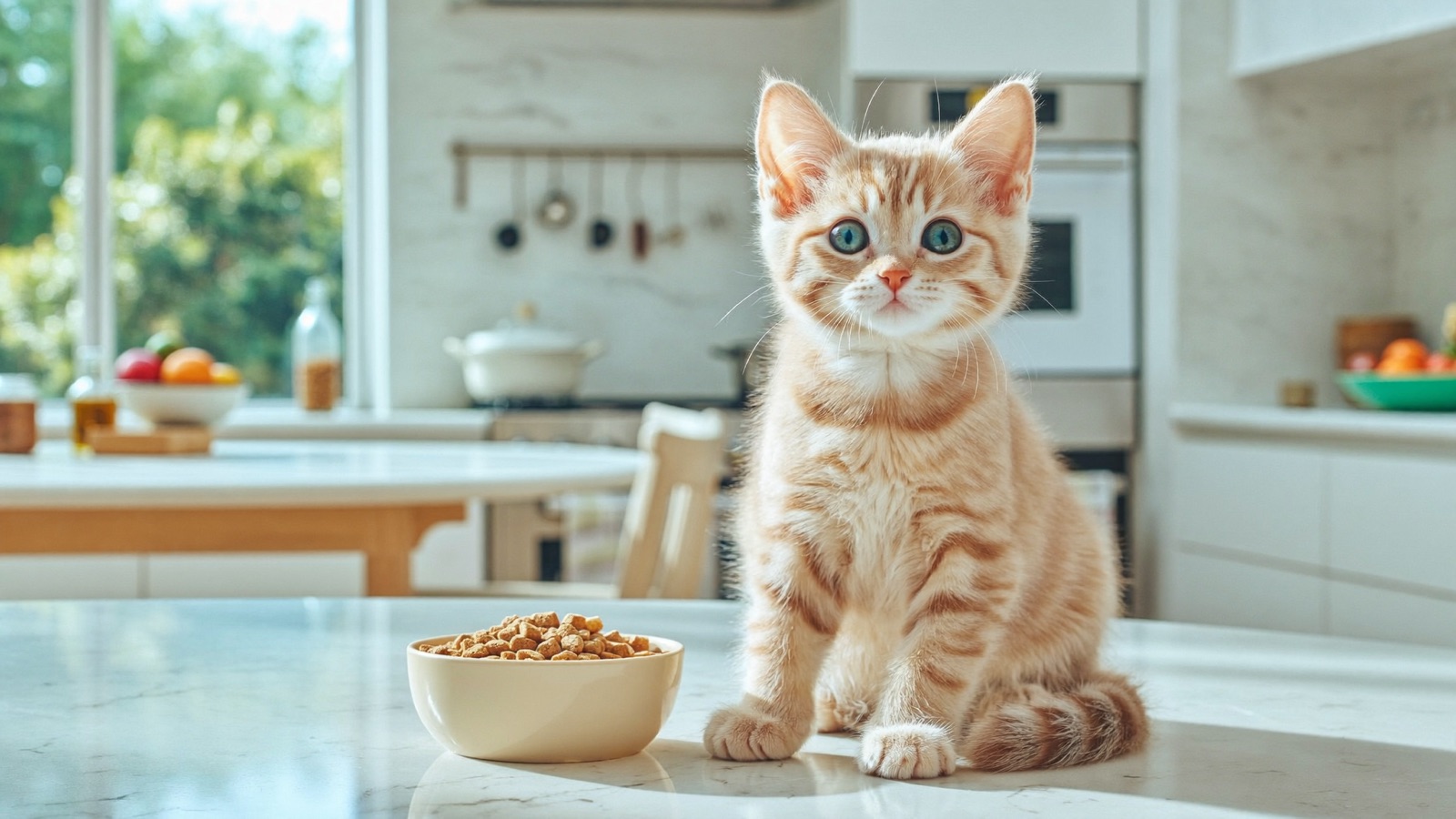
A kitten packs an enormous amount of growth into its first year, so it needs energy- and nutrient-dense food, fed frequently. The good news is that feeding one is simple once you know the rhythm for each stage. Here's a practical schedule from the first solid meals to the switch to adult food.
Kitten feeding chart by age
Use this as a starting framework, then follow the feeding guide on your specific food and your vet's advice — exact amounts depend on the brand's calorie density and your individual kitten.
| Age | Food & how often | Notes |
|---|---|---|
| 0–4 weeks | Mother's milk, or kitten milk replacer every few hours (including overnight for the youngest) | Never cow's milk. Orphaned kittens need a strict milk-replacer routine — ask your vet. |
| 3–4 weeks (weaning begins) | Gruel: kitten food moistened with warm water/milk replacer, offered a few times a day alongside nursing | Gradually thicken the gruel over ~2 weeks as they get the hang of it. |
| 6–8 weeks | Mostly solid kitten food (wet, dry or both), about 4 meals a day | Most kittens are fully weaned onto solid food by ~8 weeks. |
| 2–6 months | Complete kitten food, 3–4 meals a day | Peak growth. Many kittens eat roughly ⅓–¾ cup of dry food daily, split across meals (varies by brand). |
| 6–12 months | Complete kitten food, 2–3 meals a day | Growth slows; often about ½–1 cup of dry food daily. Keep them lean, not chubby. |
| ~12 months | Transition to adult cat food over 7–10 days | Large breeds may stay on kitten food a little longer. |
Cup amounts are only a ballpark — foods differ a lot in calories per cup, so the package guide for your kitten's weight is more reliable. The best check is your kitten's body: you should feel the ribs easily under a light layer, with a visible waist.
Wet vs. dry food
Both can be excellent as long as they're complete and balanced for growth. Each has strengths, and many vets suggest offering both:
| Wet food | Dry food | |
|---|---|---|
| Hydration | High (~70–80% water) — supports urinary health | Low — make sure fresh water is always available |
| Palatability | Very appealing, good for fussy or tiny kittens | Good; some kittens love the crunch |
| Convenience | Spoils if left out; best at set meals | Can be left out for grazing |
| Teeth & grazing | Fed as meals | Easy to portion for free-feeding growing kittens |
Offering both textures early also makes your cat more adaptable later — handy if they ever need a specific diet for health reasons. Whatever you choose, keep fresh water available at all times.
How much, and keeping a healthy weight
Kittens generally need more calories per pound than adult cats because they're building a whole body. Rather than fixate on a single number, feed to condition:
- Start with the label's guide for your kitten's current weight and age, split across the day's meals.
- Weigh your kitten regularly — a steady upward curve is what you want. Sudden stalls or drops deserve a vet call.
- You should be able to feel the ribs easily and see a slight waist from above. Adjust portions up or down to keep that.
- Growing kittens usually self-regulate well, but if yours is gaining too fast, switch from free-feeding to measured meals.
Want a starting estimate tailored to your kitten's weight and food? Try our cat feeding calculator — then confirm the amount with your vet.
Transitioning to adult food
Around a cat's first birthday, growth slows and their calorie needs drop. Switching to an adult diet at that point helps prevent unwanted weight gain. Do it gradually over 7–10 days to avoid an upset stomach:
- Days 1–3: about 25% new food, 75% old.
- Days 4–6: roughly half and half.
- Days 7–9: about 75% new, 25% old.
- Day 10: fully on the new adult food.
Track growth, not just guesswork
A kitten's needs change almost monthly. Tavi lets you log weight and meals and see the growth curve, so you know the portions are right — and you have a baseline as your cat grows up. Free for your first pet.
Frequently asked questions
How often should I feed my kitten?
Young kittens eat little and often. From weaning to about 6 months, feed 3 to 4 small meals a day. From 6 to 12 months you can usually move to 2 to 3 meals. Very young, bottle-fed kittens under 4 weeks need milk replacer far more frequently — follow your vet's guidance.
How much should I feed my kitten?
Amounts vary by kitten, food and brand, so start with the feeding guide on the package for your kitten's age and weight, then adjust to keep a lean, growing body. As a rough dry-food guide, many kittens eat about a third to three-quarters of a cup a day, split across meals. Your vet can fine-tune it.
Should I feed my kitten wet or dry food?
Both work if the food is labeled complete and balanced for growth or all life stages. Many vets suggest offering both: wet food supports hydration and appeals to fussy eaters, while dry food is convenient and can be left out. Feeding a mix early also helps your kitten accept different textures later.
When do kittens switch to adult cat food?
Most kittens move to adult food at around 12 months, when growth slows. Large breeds such as Maine Coons may stay on kitten food a little longer. Transition gradually over 7 to 10 days, mixing increasing amounts of the new food into the old, to avoid stomach upset.
When can kittens start eating solid food?
Weaning usually begins around 3 to 4 weeks. Start with a gruel of kitten food moistened with warm water or milk replacer, then gradually reduce the liquid over about two weeks. Most kittens are eating solid kitten food by 6 to 8 weeks. Kittens should stay with mom until at least 8 weeks where possible.
Can I free-feed my kitten?
Many owners leave dry food available for growing kittens, who tend to self-regulate, while offering wet food at set meals. As your kitten approaches adulthood, structured meals help prevent overeating and make it easier to spot appetite changes early. If your kitten is gaining too much weight, switch to measured meals.
Tavi's guides are informational and not a substitute for professional veterinary advice, diagnosis or treatment. Every kitten is different — feeding amounts depend on the food, breed and individual, and orphaned or sick kittens need veterinary guidance. Sources include the AAFCO nutrient profiles, Cornell Feline Health Center, International Cat Care, PetMD, Purina and VCA Animal Hospitals.