Mange in Dogs: Types, Signs & Treatment
Start here
Mange is a skin disease caused by microscopic mites. There are two main types: demodectic mange, which usually appears in puppies or dogs with weakened immune systems and isn't contagious, and sarcoptic mange (canine scabies), which is intensely itchy, highly contagious, and can spread to other pets and briefly to people. Both cause hair loss and skin problems, and both are diagnosed by your vet with a skin scraping and treated with prescription mite medication.
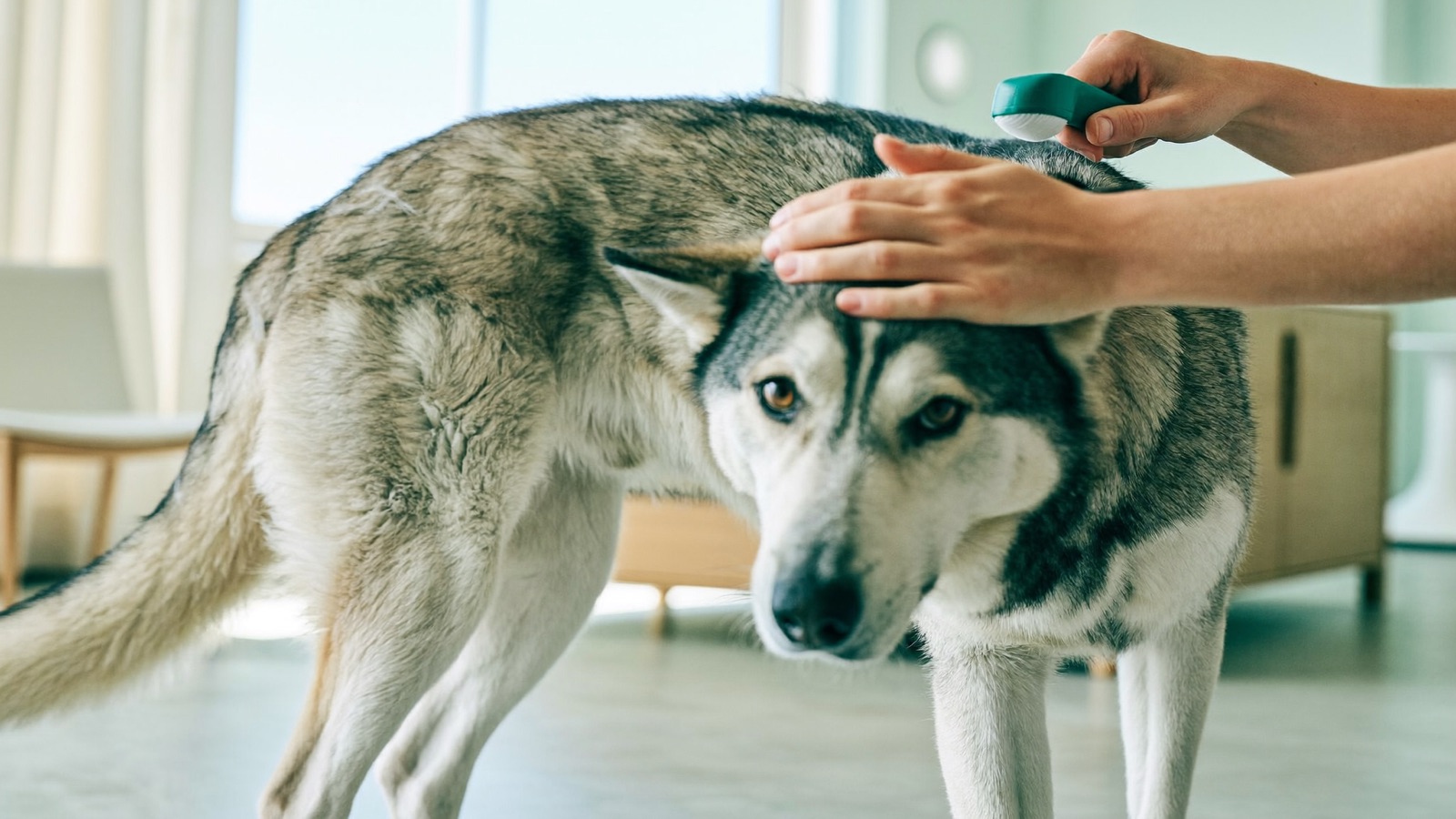
The two types of mange
Telling the types apart matters because their causes, contagiousness and treatment differ:
| Demodectic (demodex) | Sarcoptic (scabies) | |
|---|---|---|
| Cause | Overgrowth of mites normally present on skin | Contagious Sarcoptes mite from another animal |
| Itch level | Mild to moderate | Intense, relentless itching |
| Contagious? | No | Yes — to dogs and briefly to people |
| Typical dog | Puppies; dogs with weak immunity | Any dog exposed to an infected animal |
Because the signs overlap, a vet's skin scraping is the reliable way to know which one you're dealing with.
Signs of mange
Both types affect the skin and coat, but the pattern differs:
- Demodectic: patchy hair loss, often starting around the face, eyes and legs; mild redness; sometimes scaly or crusty skin. Localized cases in puppies can be mild.
- Sarcoptic: intense, frantic itching; hair loss; red bumps and crusts, especially on ear edges, elbows, hocks and belly; thickened, darkened skin over time.
Constant scratching from either type can lead to secondary skin infections, sores and a strong odor.
Is mange contagious?
Sarcoptic mange is very contagious. It spreads dog-to-dog through contact and shared bedding, and can cause a temporary itchy rash in people (though the mite can't complete its life cycle on humans). Isolate an affected dog and wash bedding until your vet confirms it's cleared. Demodectic mange, by contrast, is not contagious.
If you have multiple pets and one is diagnosed with scabies, your vet will often recommend treating the others too.
How mange is diagnosed and treated
Your vet confirms mange with a skin scraping examined under the microscope; sometimes several scrapings are needed, because sarcoptic mites can be hard to find. Treatment depends on the type but is generally very effective:
- Prescription anti-mite medication — modern oral products (the same class used for fleas and ticks) treat both types well; some vets use dips or spot-ons.
- Treating secondary infections with antibiotics or antifungals if the skin is infected.
- Soothing baths or medicated shampoos to relieve skin and remove crusts.
- Addressing underlying illness for generalized demodex, since it often signals a weakened immune system.
Never use over-the-counter or homemade dips without veterinary guidance — some are ineffective and others are dangerous at the wrong concentration.
Recovery and what to expect
Most dogs recover well with treatment, but it takes patience. Skin and coat can take weeks to months to fully heal, and follow-up scrapings confirm the mites are gone before stopping treatment. Localized demodex in a puppy often resolves as the immune system matures; generalized cases need longer care.
Practical take: Take photos and note how the skin looks each week. A visual and written log makes it easy to see whether treatment is working and gives your vet an accurate picture at rechecks.
Preventing mange
You can lower the risk with a few habits:
- Keep your dog on a broad parasite preventive that also covers mites, as your vet advises.
- Avoid contact with stray or visibly affected animals.
- Support overall health — good nutrition and prompt care for other illnesses keep the immune system strong, which matters for demodex.
- Wash and clean bedding during and after treating a contagious case.
Watch your dog's skin heal, week by week
Tavi lets you log skin symptoms, photos, medications and vet visits over time — so you can see whether mange treatment is working and share a clear history at every recheck. Free for your first pet.
Frequently asked questions
What's the difference between demodectic and sarcoptic mange?
Demodectic mange comes from an overgrowth of mites already living on the skin, is usually mild, and is not contagious — it often affects puppies or immune-compromised dogs. Sarcoptic mange (scabies) is caused by a contagious mite, is intensely itchy, and spreads to other dogs and briefly to people.
Can I catch mange from my dog?
You can catch a temporary itchy rash from sarcoptic mange (scabies), but the mite can't complete its life cycle on humans, so it resolves on its own once the dog is treated. Demodectic mange is not contagious to people or other pets.
How is mange diagnosed?
Your vet takes a skin scraping and examines it under a microscope to identify the mites. Sarcoptic mites can be hard to find, so several scrapings may be needed, and vets sometimes treat based on symptoms if scabies is strongly suspected.
Is mange curable in dogs?
Yes, most dogs recover well with prescription anti-mite medication, though healing the skin and coat can take weeks to months. Follow-up scrapings confirm the mites are gone. Localized demodex in puppies often resolves on its own as the immune system matures.
Can I treat mange at home without a vet?
No. Home and over-the-counter dips are often ineffective or, at the wrong concentration, dangerous. Mange also needs the correct diagnosis, since the two types are treated differently and demodex can signal an underlying illness. See your vet for a diagnosis and prescription treatment.
Tavi's guides are informational and not a substitute for professional veterinary advice, diagnosis or treatment. When in doubt, call your veterinarian.