Dog Dental Care: Brushing, Cleanings & Disease Stages
Start here
Most dogs show signs of periodontal disease by age 3, and it's linked to heart, kidney and liver problems. Good dog dental care means daily brushing with pet-safe toothpaste, watching for bad breath and tartar, and periodic professional cleanings under anaesthesia with X-rays. Never use human toothpaste — it can be toxic.
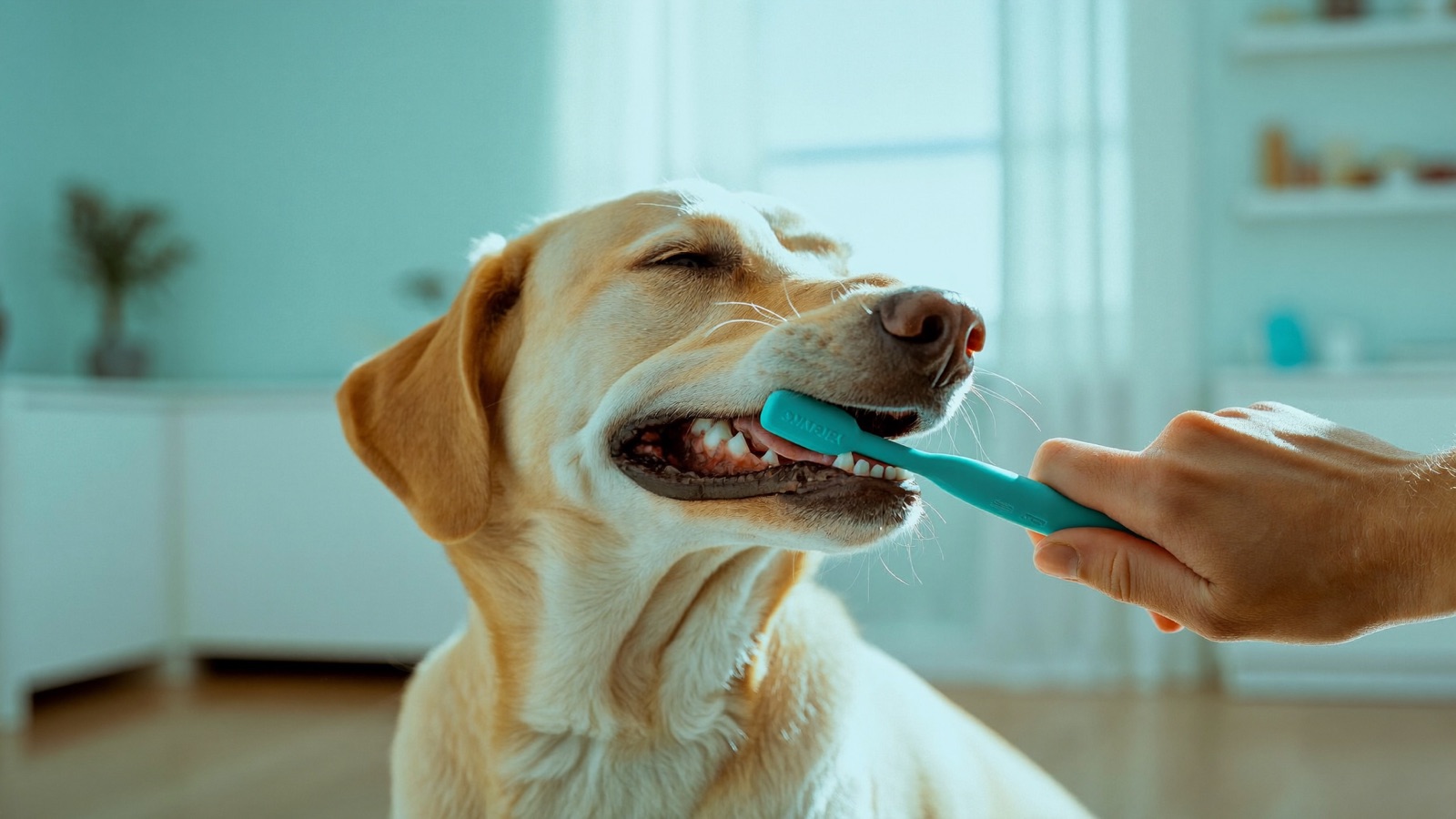
Dental disease is the most common health problem in dogs, and one of the most under-treated — largely because it hides. By the time you can smell it or see it, it's usually well established. The reassuring part: it's also one of the most preventable, and a few minutes of home care plus routine professional cleanings go a very long way.
Why dental disease matters (it's not just the breath)
Over 80% of dogs show early periodontal disease by age three, and small breeds are especially prone. It starts with plaque — an invisible film of bacteria along the gumline — which hardens into tartar and drives inflammation that gradually destroys the gum, ligament and bone anchoring each tooth. Left alone, it's painful and leads to tooth loss.
It also reaches beyond the mouth. Chronic oral infection has been linked to disease of the heart, kidneys and liver, as bacteria and inflammation affect the rest of the body. In other words, caring for your dog's teeth is part of caring for the whole dog.
Signs of dental problems to watch for
Overt signs usually mean disease is already advanced, so treat any of these as a prompt to book a dental check:
- Bad breath — the most common early clue owners notice.
- Brown or yellow tartar on the teeth, especially the back ones.
- Red, swollen or bleeding gums.
- Drooling, sometimes tinged with blood.
- Dropping food, chewing on one side, or eating more slowly.
- Reluctance to chew toys or hard food.
- Pawing or rubbing at the mouth, or shying away when the muzzle is touched.
The stages of periodontal disease
Vets grade periodontal disease by how much tooth-supporting attachment has been lost, usually confirmed with dental X-rays. Only the first stage is fully reversible — which is exactly why early care pays off.
| Stage | Name | What's happening |
|---|---|---|
| Stage 1 | Gingivitis | Gum inflammation with no attachment loss. The only fully reversible stage. |
| Stage 2 | Early periodontitis | Under 25% of the tooth's attachment/bone lost. |
| Stage 3 | Moderate periodontitis | 25–50% attachment loss; gum recession and pockets forming. |
| Stage 4 | Advanced periodontitis | Over 50% attachment loss; deep pockets, loose or lost teeth. |
Home brushing, step by step
Daily brushing is the single most effective thing you can do at home — plaque mineralises into tartar within about 24–48 hours, so consistency beats intensity. Go slowly and keep it positive; most dogs come around over a couple of weeks.
- Pick the right tools: a dog toothbrush or a finger brush, plus a pet-safe enzymatic toothpaste (poultry or malt flavours are popular).
- Let them taste it first: for a few days, just let your dog lick the paste off your finger so it becomes a treat, not a threat.
- Touch the mouth: gently lift the lip and rub a finger along the outer gumline so the sensation is familiar.
- Start small: brush just a few outer teeth along the gumline in small circles, then reward and stop. Build up to the whole mouth over several sessions.
- Focus on the outer surfaces: that's where plaque collects most; the tongue helps keep the inner surfaces cleaner.
- Be consistent: aim for daily, but several times a week still helps a lot.
Never use human toothpaste. It commonly contains fluoride, which isn't meant to be swallowed, and sometimes xylitol, which is toxic to dogs even in small amounts. Human paste also foams, and dogs can't rinse and spit. Use a toothpaste made for dogs — it's safe to swallow.
Professional cleaning: what it actually involves
A proper veterinary dental cleaning is done under general anaesthesia, which is what makes it thorough and pain-free. It typically includes a pre-anaesthetic exam and bloodwork, anaesthetic monitoring, full-mouth dental X-rays, scaling above and below the gumline, polishing, tooth-by-tooth charting, and any needed extractions. The below-the-gumline work and the X-rays are the whole point — that's where the disease that matters lives, and it's invisible from the outside.
Rough US cost: a routine cleaning commonly runs about $300–$700; with bloodwork, X-rays and extractions, $500–$1,500 is common, and complex cases or a board-certified veterinary dentist can exceed $2,000. Big-city pricing tends to run higher. (See our cost of owning a dog guide for how dental fits the wider budget.)
A word on "anaesthesia-free" cleanings: they only scrape the visible tooth surface, can't clean below the gumline or take X-rays, and may leave disease hidden while making the teeth look clean. Most veterinary dental bodies advise against them.
Never lose track of the next dental check
Tavi keeps your dog's vet visits, dental cleanings, weight and health notes in one place, with gentle reminders — so brushing stays a habit and the next cleaning doesn't slip a year. Free for your first pet.
Frequently asked questions
How do I clean my dog's teeth at home?
Use a pet toothbrush or finger brush and a pet-safe, enzymatic toothpaste. Let your dog taste the paste first, then lift the lip and brush the outer surfaces of the teeth along the gumline in small circles, working up to the whole mouth over several sessions. Daily is the goal.
How often should I brush my dog's teeth?
Daily is ideal, because plaque hardens into tartar within about 24–48 hours, and once it's tartar a brush can't remove it. If daily isn't realistic, several times a week still helps significantly. Consistency matters more than a perfect technique on any single day.
Can I use human toothpaste on my dog?
No. Human toothpaste often contains fluoride, which isn't meant to be swallowed, and sometimes xylitol, which is toxic to dogs. It also foams, which dogs can't rinse and spit. Always use a toothpaste made for dogs, which is safe to swallow and flavoured for them.
How much does a dog teeth cleaning cost?
A routine professional cleaning under anaesthesia commonly runs about $300–$700 in the US. With pre-anaesthetic bloodwork, dental X-rays and any extractions, the total is often $500–$1,500, and complex cases or a board-certified dentist can exceed $2,000. Big cities tend to run higher.
Why does a professional cleaning need anaesthesia?
Anaesthesia lets the vet clean below the gumline (where disease actually does its damage), take dental X-rays, probe each tooth and perform extractions safely and painlessly. Anaesthesia-free cleanings only scrape the visible surface and can miss the disease that matters, giving a falsely reassuring look.
What are the signs of dental disease in dogs?
Common signs include bad breath, brown tartar on the teeth, red or bleeding gums, drooling, dropping food or chewing on one side, reluctance to chew toys, and pawing at the mouth. Because these often appear only once disease is advanced, routine checks and cleanings matter.
Tavi's guides are informational and not a substitute for professional veterinary advice, diagnosis or treatment. Your veterinarian should assess your dog's teeth and recommend a dental plan — when in doubt, call.
Sources
- Cornell University College of Veterinary Medicine (Riney Canine Health Center)
- Merck Veterinary Manual
- American Veterinary Dental College (AVDC)
- Veterinary Oral Health Council (VOHC)
- American Kennel Club (AKC). Professional-cleaning cost ranges are approximate US estimates